Holography and AR: The Future of Human Interaction with the Digital Environment
Holography and AR

Introduction
Combining the Real World with Three-Dimensional Images
The advancement of digital technologies has gradually blurred the boundaries between the real world and virtual space. Today, users no longer interact with digital information only through conventional displays. Instead, technologies such as Augmented Reality (AR) and Holography make it possible to view and interact with digital content within real-world environments. By combining three-dimensional images, digital data, and physical spaces, these technologies create a new form of user experience.
Augmented Reality places digital information and elements over the real environment, while Holography uses the reconstruction of optical properties to display three-dimensional images with depth and perspective. Combining these two technologies can create a new generation of interactive environments in which users interact directly with digital elements in their surroundings instead of viewing information on a screen.
This transformation can revolutionize fields such as medicine, education, architecture, e-commerce, entertainment, and industry. In this article, we examine how Holography and Augmented Reality work together to shape the future of human interaction with the digital environment.
What Are the Differences Between Augmented Reality and Holography?
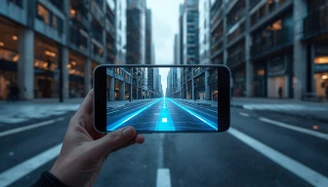
Augmented Reality and Holography are both important technologies in developing three-dimensional and interactive experiences, but they have different operating methods and applications. Augmented Reality uses cameras, sensors, and image-processing software to add digital information to the view of the real environment. For example, a user can view a virtual object on a table through a mobile phone or receive information about a building while looking at it.
In contrast, Holography relies on recording and reconstructing optical information and attempts to create a three-dimensional image with depth and a more realistic viewing angle. In holographic technology, information about light and how it propagates is highly important. This feature allows reconstructed images to create a different spatial perception compared with ordinary two-dimensional images.
The main difference between these two technologies lies in how digital content is displayed and interacted with. Augmented Reality usually places virtual elements over an image of the real environment through a mobile phone, tablet, or headset display, while Holography can make the spatial presentation of images possible through optical and three-dimensional methods.
How Do Holography and Augmented Reality Work Together?
Combining Holography and Augmented Reality depends on a set of hardware and software technologies that must be able to identify the physical environment, process digital information, and display three-dimensional content in the appropriate position. In this process, cameras and depth sensors first examine the surrounding environment to identify the positions of surfaces, objects, and the distances between different elements.
After the environment is identified, computer vision and image-processing algorithms analyze the received information. These algorithms help the system recognize real objects, track user movements, and determine the exact positions of virtual elements. Three-dimensional graphics engines then generate and process digital models based on environmental information.
In the next stage, display technologies and optical systems come into operation. Depending on the type of device, digital images can be placed in the environment through mixed reality headsets, transparent displays, specialized projectors, or holographic display systems. The goal is to ensure that virtual content is aligned with the real environment in terms of position, size, viewing angle, and movement.
Artificial Intelligence also plays an important role in improving this process. Intelligent systems can analyze user behavior, suggest appropriate content, and make interaction with three-dimensional elements more natural. For example, an educational system can rotate a holographic model of an organ based on the user's hand movements or display specific details of it.
Applications of Holography and Augmented Reality in Medicine and Education
One of the most important fields for using the combination of Holography and Augmented Reality is the medical industry. Doctors need accurate and understandable information to examine complex structures of the human body. Three-dimensional holographic images can display models of organs, bones, blood vessels, and body tissues in real-world spaces and help doctors better understand the relationships between different structures.
In complex surgeries, this technology can convert medical imaging information such as CT scans and MRI scans into three-dimensional models so that surgeons can examine the positions of organs and sensitive areas before starting an operation. In some applications, imaging information can also be placed within the surgeon's field of view, providing access to essential data without the need to constantly change their line of sight.
This topic has a direct connection with the article "The Transformation of Surgery with Smart Glasses and Artificial Intelligence", which discusses the role of intelligent technologies in increasing accuracy, improving access to information, and enhancing surgical processes.
In education, Holography and Augmented Reality can also change learning methods. Medical students can examine three-dimensional models of the human body from different angles instead of viewing two-dimensional images in books. In engineering, architecture, and basic sciences, it is also possible to observe complex structures and simulate scientific processes in real-world spaces.
These technologies can also make remote learning more interactive. Students can view three-dimensional models in a shared digital environment and interact with them using hand movements or voice commands.

Transforming E-Commerce and the Shopping Experience with Augmented Reality
E-commerce is one of the fields that can benefit the most from combining Augmented Reality and three-dimensional display technologies. One of the main challenges of online shopping is users' inability to physically view products before purchasing them. Two-dimensional images and textual descriptions cannot always accurately convey the size, appearance, and details of a product.
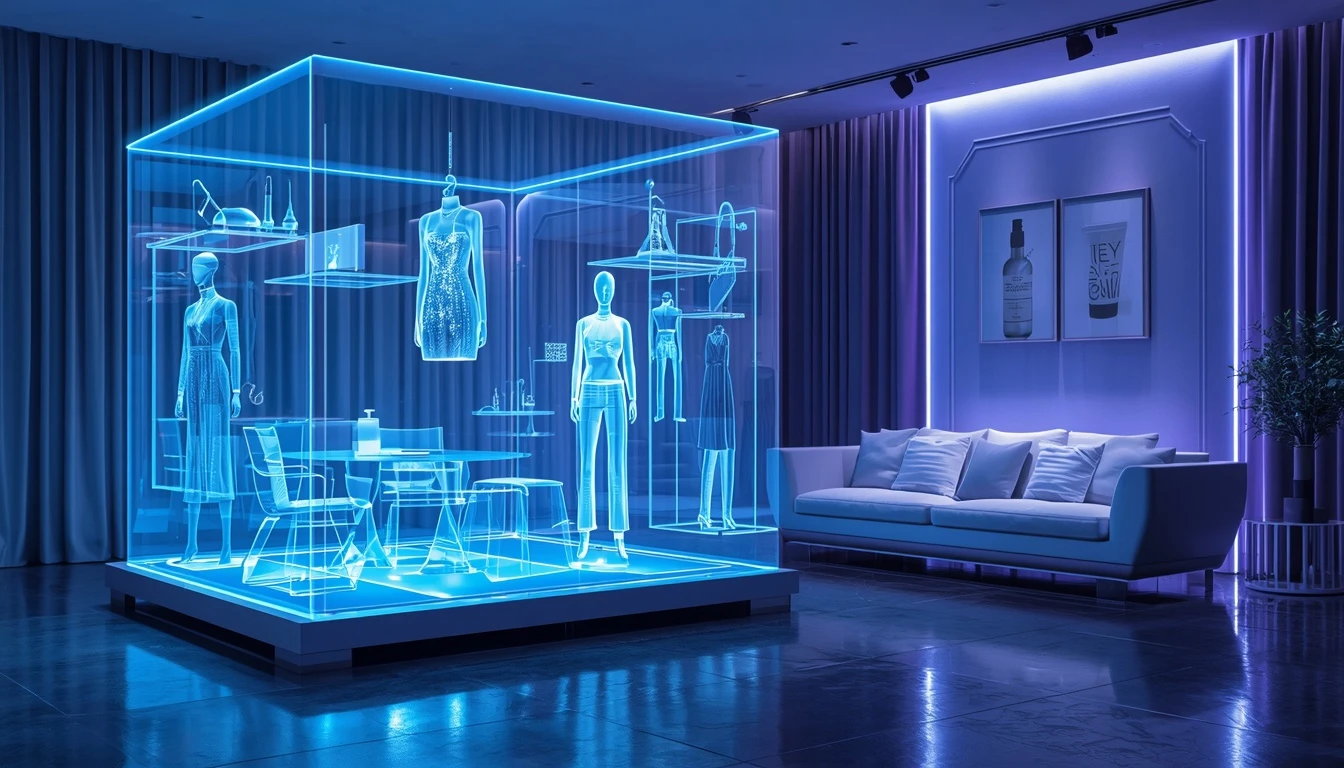
Augmented Reality has partially addressed this limitation. Users can view products in their real environment using their mobile phone cameras. For example, they can virtually place furniture in a room, examine how the colors of objects match the interior design, or virtually try on clothes and glasses.
With the addition of holographic models and advanced three-dimensional displays, this experience can become more accurate and natural. Users will be able to examine products from different angles, view their structural details, and even simulate how products work in interactive environments.
In this context, the article "Online Shopping with AR: Virtual Try-On and Home Decor Visualization" discusses one of the important applications of Augmented Reality in digital commerce. This technology can reduce the gap between in-person and online shopping and increase customers' confidence in their product choices.
For businesses, using three-dimensional experiences and Augmented Reality can help increase user engagement, improve the shopping experience, and reduce the possibility of incorrect choices. Developing online stores equipped with three-dimensional product displays will be one of the important paths of digital commerce transformation in the coming years.
The Role of Artificial Intelligence and Touchless Interaction in Holographic Environments
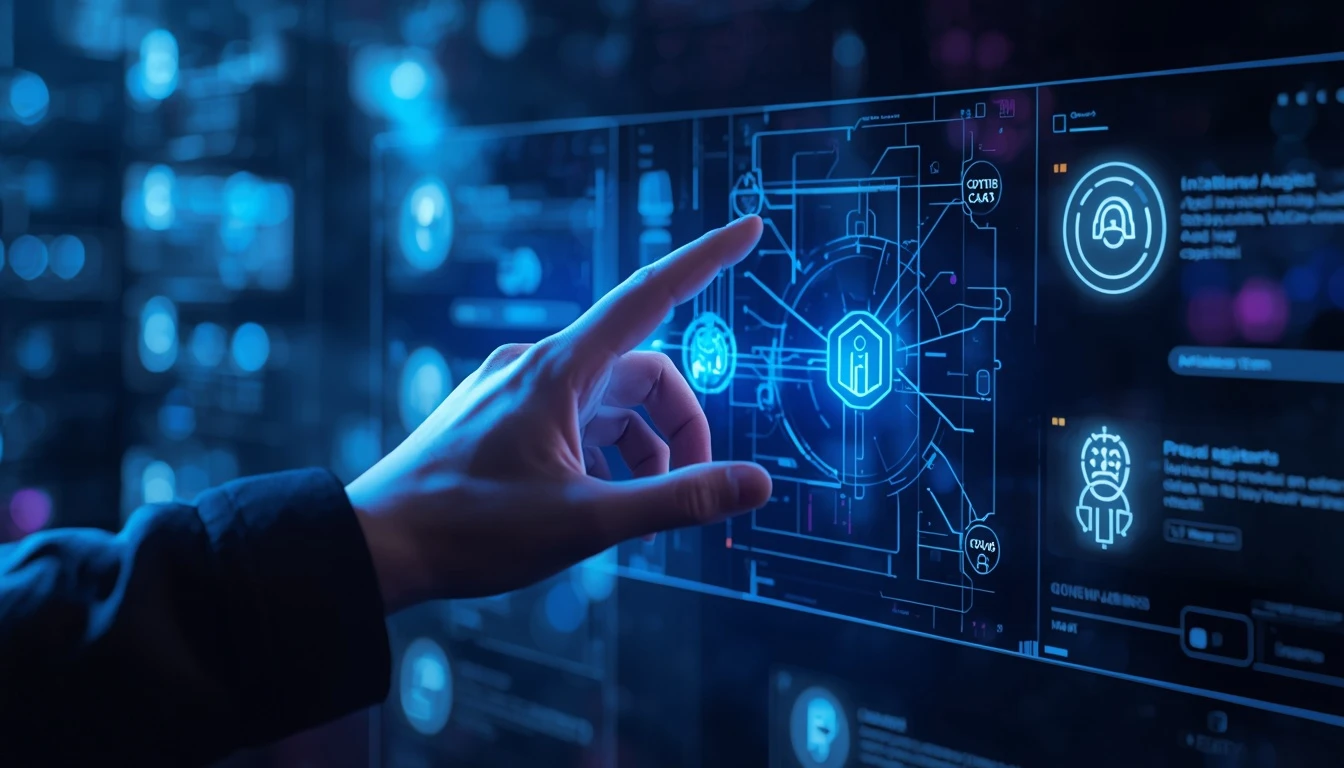
One of the important features of the next generation of Holographic and Augmented Reality technologies is the move toward more natural interaction with digital content. In traditional systems, users need a keyboard, mouse, or touchscreen to control software. However, in three-dimensional environments, methods such as hand gesture recognition, voice commands, eye tracking, and user behavior analysis can be used.
Artificial Intelligence plays the role of a processing and decision-making layer in this process. Machine learning algorithms can recognize users' movements and analyze their intentions through movement or voice patterns. As a result, users can interact with the system without physical tools by pointing at a holographic model, rotating it, selecting a section, or requesting more information.
For example, in an industrial environment, a technician can open a three-dimensional model of a device using hand movements and view its internal components. The intelligent system can also display maintenance information according to the selected component.
Developing such experiences requires software tools and three-dimensional processing engines. The article "No-Code AR Development" discusses the capabilities of simpler tools for creating Augmented Reality experiences. This approach can make it easier for businesses to enter the world of interactive experiences and allow them to build prototypes more quickly.
In the future, intelligent assistants can also be present in holographic environments and provide information to users not as text responses, but as three-dimensional models, spatial charts, and interactive displays.
Mixed Reality Headsets and the Future of Holographic Displays
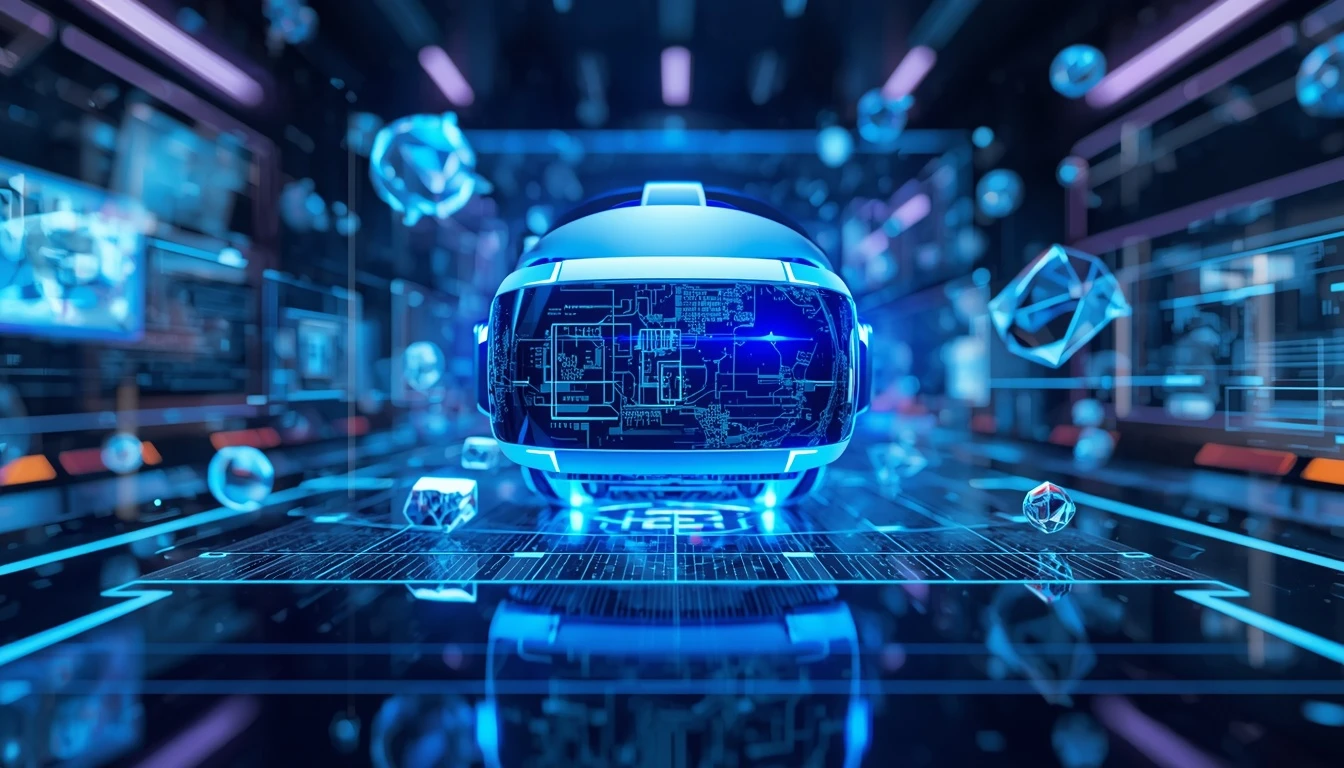
Wearable hardware is one of the main factors in developing Augmented Reality and Holography technologies. AR and MR headsets allow users to view digital content in relation to the real environment. These devices usually use a combination of cameras, motion sensors, displays, and powerful processors to create a spatial and interactive experience.
In this area, competition among technology companies to develop more advanced headsets has made display quality, motion-tracking accuracy, processing power, and ease of use more important. The article "VR vs AR Headsets" also discusses the differences and competition between these technologies and their role in the future of digital experiences.
However, a distinction must be made between Augmented Reality headsets and actual holographic displays. Many modern headsets show virtual images on displays close to the user's eyes and do not necessarily create real holograms in open space. Holography depends on specific methods of recording and reconstructing the light field and is not the same as displaying ordinary three-dimensional images.
With the advancement of optical displays, waveguide technologies, depth sensors, and graphics processors, it can be expected that future devices will provide a more natural experience of combining real and digital spaces. Reducing headset weight, increasing image resolution, improving the field of view, and extending battery life will also be important factors in the widespread adoption of these technologies.
Challenges and Limitations of Developing Holographic and AR Technologies
Despite the extensive capabilities of Holography and Augmented Reality, developing and widely using these technologies involves various challenges. One of the most important limitations is the need for advanced hardware and intensive processing of image and three-dimensional data. To create a smooth and accurate experience, the system must be able to process environmental information with very low latency and place digital images in the correct positions.
The cost of producing specialized equipment, limited field of view, energy consumption, and the complexity of designing three-dimensional user interfaces are also important obstacles to the development of these technologies. In addition, precise coordination between user movement and virtual content is highly important because any delay or mismatch can reduce the quality of the user experience.
Security and privacy issues must also not be overlooked. Augmented Reality devices are usually equipped with cameras, environmental sensors, and motion-tracking systems and may collect sensitive information about users' living environments or activities. Therefore, data protection, access management, and transparency in how information is processed must be considered from the initial stages of designing these systems.
On the other hand, designing user experiences for three-dimensional environments requires a different approach from designing conventional websites and applications. Designers must consider factors such as depth, distance, viewing angle, movement, and spatial interaction so that using the digital environment is natural and understandable for users.
The Future of Human Interaction with the Digital Environment
In the future, Holography and Augmented Reality can become an inseparable part of digital life. With the development of lighter hardware, smarter algorithms, and advanced display systems, users will be able to view and manage digital information more naturally in their surrounding environments.
In work environments, virtual meetings can go beyond displaying people's images on screens and become interactive three-dimensional spaces. Engineers can examine industrial models at their actual size, architects can view designed buildings in real-world spaces, and educational teams can use holographic models to explain complex concepts.
In everyday life, digital assistants can also display the information users need as three-dimensional elements in their environment. Imagine that while repairing a device, a step-by-step guide appears holographically over the real components, or while visiting a historical site, information about its past is displayed in the same physical space.
From the perspective of Pishgaman Lotus, developing these technologies is not limited to building advanced displays. User experience design, intelligent software development, image data processing, and creating integrated digital infrastructure also play essential roles in shaping this future.
Businesses that focus on developing AR-based experiences, three-dimensional modeling, and Artificial Intelligence today can gain an important competitive advantage in interacting with customers and providing digital services in the future.

Conclusion
Moving Toward a World Beyond Screens
Holography and Augmented Reality are two important technologies in the transformation of human interaction with the digital environment. Augmented Reality adds virtual information to the real world, while Holography provides the ability to reconstruct three-dimensional images. Together, they create new opportunities for interactive experiences. Combining these technologies with Artificial Intelligence, computer vision, and three-dimensional processing can pave the way for a new generation of user interfaces and digital services.
From medicine and education to e-commerce, architecture, and industry, the applications of these technologies can change how users view information, learn, make decisions, and interact with their surroundings. Although hardware limitations, costs, and security issues remain important challenges, technological progress can gradually reduce many of these obstacles.
Pishgaman Lotus, by focusing on innovative software development, Artificial Intelligence, and digital experience design, can play a role in shaping a new generation of interactive and intelligent solutions. The future of human interaction with technology is gradually moving away from two-dimensional screens and toward environments in which the real and digital worlds exist together in an integrated way.
Our articles:"BCI and Holography: Direct Brain Interaction with 3D Images"
Similar Blogs
Have special project to begin?
Contact us if you need a unique website for your special requirements, if you think having a mobile application help you reach your business’s goals or you still do not recognize which product can help you implement your ideas. Lotus Pioneers accompany you to develop your business through consulting and by designing special products.