What Is an AI Agent? The AI That Works for You
What Is an AI Agent?

Introduction: From Chatbots to Intelligent Agents
Until a few years ago, when we talked about artificial intelligence, we were mostly referring to tools that answered questions, generated text, or summarized information. However, the new generation of AI has taken things one step further.
An AI Agent does not simply wait for an instruction and generate a response. It can receive a goal, break it down into multiple steps, gather the required information, use different tools and services, and continue following the necessary steps until it reaches a result.
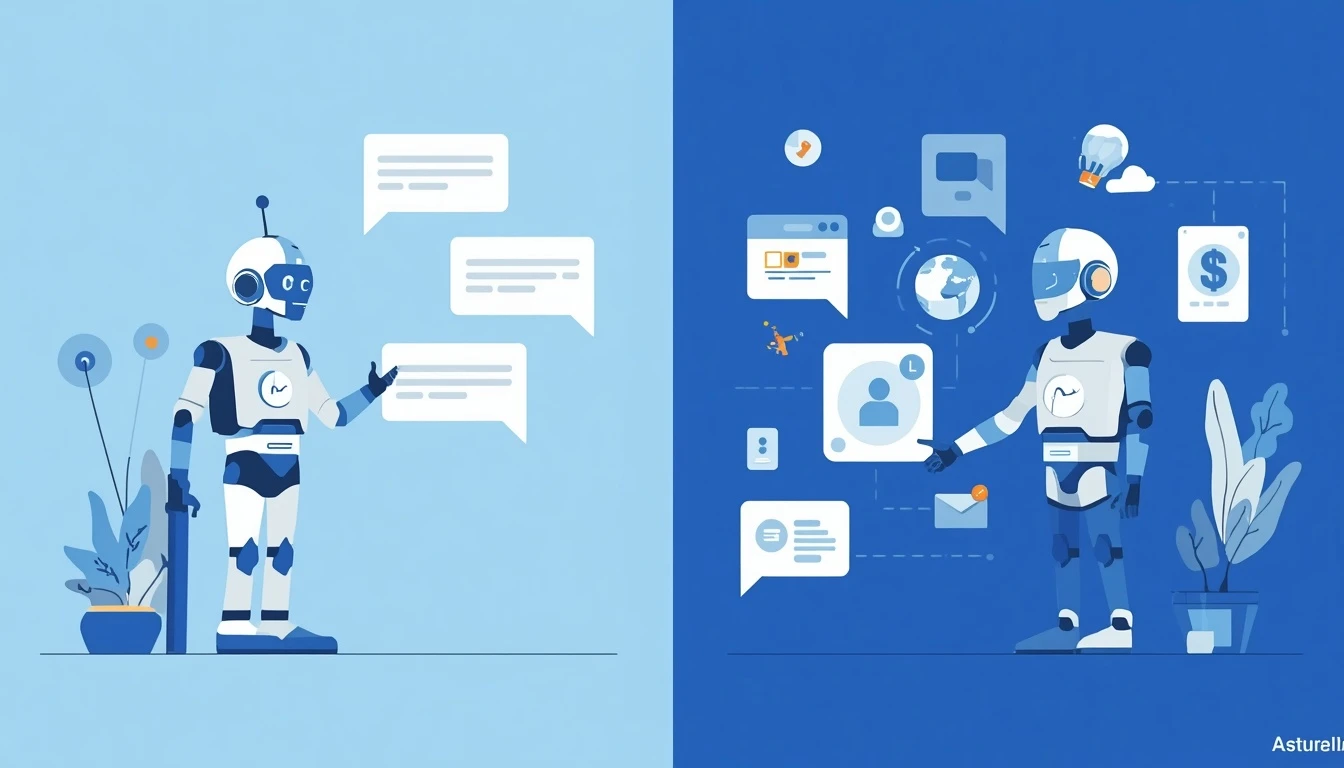
Simply put, the difference between a conventional chatbot and an AI Agent can be described as follows:
A chatbot responds; an AI Agent takes action.
For example, if you ask a chatbot to “plan a trip,” it may provide you with a suggested itinerary. An advanced Agent, however, can check flight and hotel information in a controlled environment, compare available options, and, when it has the required access and authorization, carry out the next steps as well.
This transformation can change how many everyday and business activities are performed, creating new opportunities for technology companies such as Pishgaman Lotus to design and develop intelligent solutions.
What Exactly Is an AI Agent?
An AI Agent is an AI-powered software system designed to understand, make decisions, plan, and take action in order to achieve a specific goal.
At the core of many modern Agents are large language models, or LLMs. However, an Agent is not simply a language model. To turn an AI model into a practical agent, additional components such as memory, tools, planning mechanisms, data, APIs, and control and monitoring layers are also required.
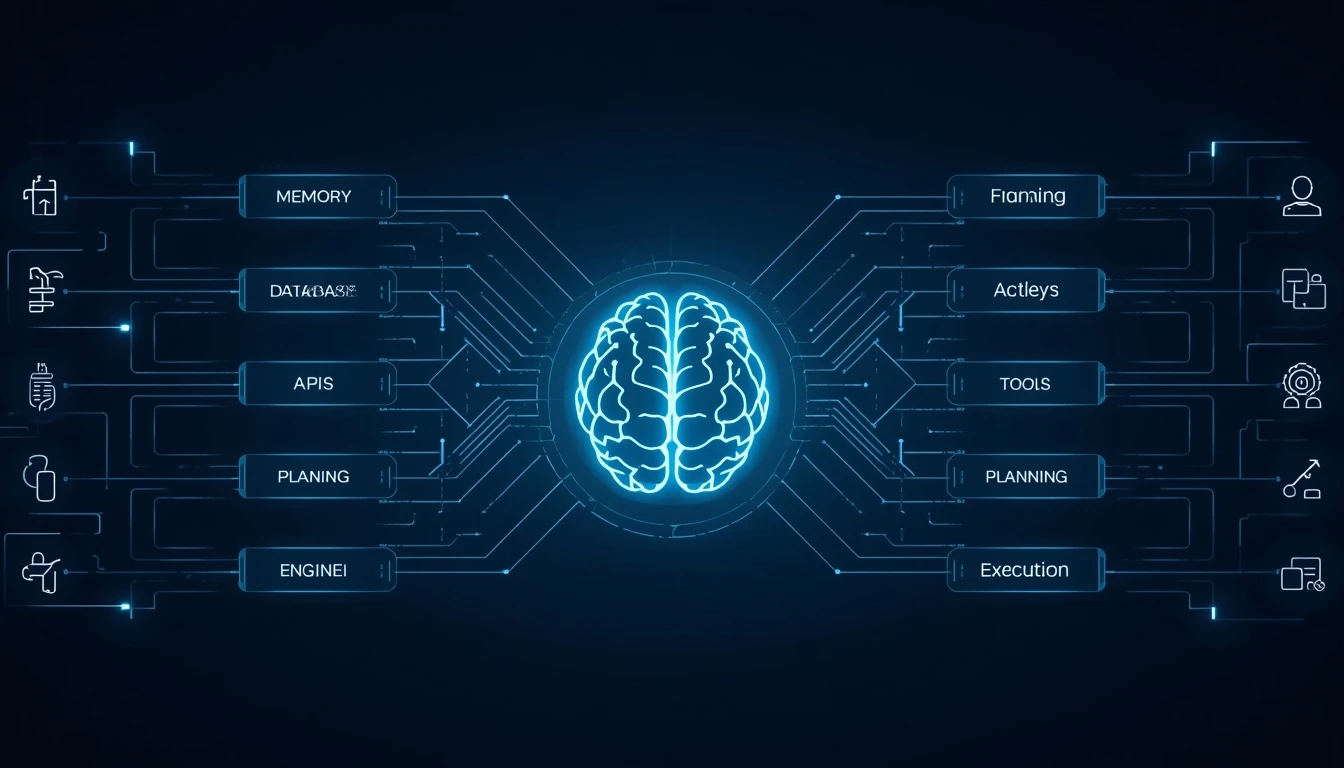
For this reason, the architecture of an AI Agent can be viewed as a combination of several key components:
AI Model: The reasoning and decision-making component
Memory: Storing information relevant to the task
Tools: Access to APIs, databases, software, and other services
Planning: Breaking a larger goal into smaller tasks
Orchestration: Coordinating different stages of the process
Execution: Carrying out actions
Guardrails: Security rules and limitations that control the Agent’s behavior
In practice, Pishgaman Lotus can combine artificial intelligence, software development, and infrastructure technologies to design and implement such systems according to the needs of each business.
How Does an AI Agent Work?
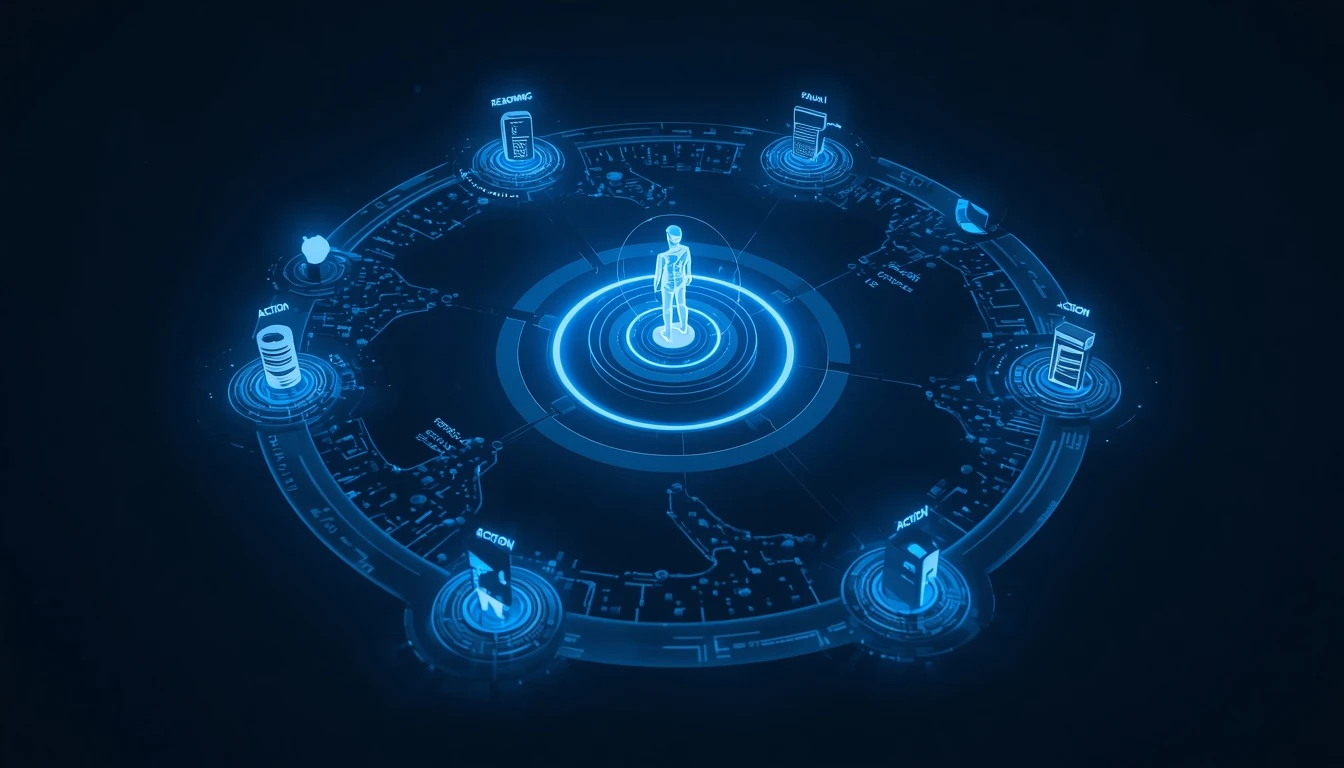
The operation of an intelligent agent is usually a cycle rather than a simple response.
1. Receiving a Goal
The user expresses a goal in natural language.
For example:
“Prepare last month’s sales report and identify the weak points in sales.”
The Agent first needs to understand the desired outcome.
2. Analysis and Planning
The Agent converts the main goal into a series of smaller tasks.
For example:
Retrieve sales data → analyze data → identify trends → compare with the previous month → identify weaknesses → generate a report.
3. Using Tools
At this stage, the Agent can connect to different tools, such as databases, APIs, CRM systems, organizational files, or internal services.
These tools are what enable an Agent to move beyond simply responding and actually perform actions.
4. Reviewing the Result
The Agent evaluates the result of each step and changes its approach when necessary.
5. Completing the Goal
Finally, the Agent provides the result or, when it has the appropriate authorization, performs the requested action.
The overall cycle can therefore be summarized as:
Goal → Understanding → Planning → Tool Use → Action → Evaluation → Next Action → Result
What Is the Difference Between an AI Agent and a Chatbot?
One of the most important questions about this technology is how it differs from conventional chatbots.
A traditional chatbot is generally designed to answer questions or execute predefined scenarios. An AI Agent, however, can manage multiple steps toward achieving a goal.
For example, a customer support chatbot may tell a customer:
“Enter your order number to track your order.”
An AI support Agent, with controlled access to the order management system, could find the customer’s information, check the order, retrieve shipping status, identify a potential issue, generate an appropriate response, and, if necessary, create a new request for the relevant department.
Therefore, the main difference is not simply more intelligent responses; it is the ability to perform multi-step operations.
Applications of AI Agents in Business
The potential of Agents is not limited to a specific industry. Organizations can use them to perform multi-step processes and connect different systems.
Customer Service
An Agent can receive a customer request, review interaction history, find product information, and, within defined access permissions, advance the problem-solving process.
Sales and Marketing
A sales Agent can review new leads, update customer information in a CRM, categorize potential customers, and recommend or perform follow-up actions.
Human Resources
HR Agents can support processes such as answering employee questions, reviewing documents, categorizing requests, and managing recruitment workflows.
Data Analysis
An Agent can connect to data sources, retrieve required information, perform analysis, and generate an initial report.
Software Development
In software engineering, Agents can assist with code analysis, code generation, debugging, testing, and other development tasks.
Operations Management
In large organizations, multiple specialized Agents can work together. For example, a data Agent, a finance Agent, and a support Agent can collaborate through an orchestration layer.

Why Are Companies Moving Toward AI Agents?
The main reason is reducing repetitive work and increasing productivity.
Many organizational processes consist of numerous small activities that are individually simple, but performing them repeatedly can consume significant amounts of employees’ time.
AI Agents can automate parts of these processes and allow employees to spend more time on creative activities, decision-making, and strategic work.
Key benefits include:
Reducing Process Time
Tasks that require repeatedly switching between multiple systems can be completed faster.
Automating Complex Processes
An Agent does not have to perform only one specific task; it can manage several related steps.
Scalability
An Agentic system can be designed to handle large numbers of requests.
Faster Access to Information
An Agent can gather information from authorized sources and make it available to users.
Personalized Experiences
By using memory and relevant information, an Agent can create more tailored interactions.
Challenges and Risks of AI Agents
Despite their advantages, using AI Agents without proper architectural design can create risks.
The more access an Agent has to an organization’s systems and tools, the more important security, access control, and monitoring become. Organizations therefore need to define exactly which data and tools an Agent can access and which actions it is authorized to perform.
Key challenges include:
Data Security
An Agent may have access to sensitive organizational information. Access should therefore be limited and carefully controlled.
Decision-Making Errors
Even advanced AI systems can make incorrect decisions under certain conditions. For sensitive actions, human oversight or step-by-step approval should therefore be considered.
Access Control
An Agent should not be allowed to perform every technically possible action simply because it has the capability to do so.
Cost and Scale
Continuously running powerful models and calling multiple tools can create computational and operational costs.
Monitoring and Activity Logging
In enterprise environments, recording Agent actions and maintaining an Audit Trail is particularly important when an Agent directly performs operations on real systems.

The Future of AI Agents: From Digital Assistant to Intelligent Coworker
The development of AI Agents is moving toward systems that can operate more independently and manage increasingly complex tasks.
In the future, instead of entering a separate instruction for every step, users may only specify the final objective, while the Agent becomes responsible for planning and executing the necessary steps.
At the same time, multi-agent collaboration may become increasingly important. In these architectures, each Agent has a specific area of expertise, while an orchestration system coordinates their activities to achieve the final goal.
The boundary between software and the physical world is also changing. New approaches are exploring how Agents can interact with equipment such as robotic arms and laboratory devices.
This means that AI Agents may eventually move beyond purely digital environments and become part of industrial systems, robotics, and intelligent infrastructure.

The Role of Pishgaman Lotus in Developing Intelligent Solutions
Successful AI Agent implementation is not limited to choosing an AI model. A real Agent must be able to communicate with an organization’s data, software, APIs, and infrastructure while remaining controlled and monitored.
Pishgaman Lotus, with its focus on areas such as artificial intelligence, enterprise software development, web and mobile development, and network and infrastructure, can play a role in designing Agentic solutions tailored to business requirements.
For example, a customized solution could include an intelligent customer support Agent, a data analysis Agent, or a group of specialized Agents for managing organizational processes.
In these projects, the goal is not simply to add a chatbot to a product; it is to build a system capable of making decisions and taking actions within a defined scope.
Conclusion
AI Agents are one of the most important emerging directions in practical artificial intelligence. Their key difference from many traditional AI tools is that, instead of simply providing an answer, they can analyze a goal, break it into multiple steps, use the necessary tools, and take actions to achieve the desired result.
However, automation does not mean completely eliminating humans from the process. In real-world projects, security, access control, human oversight, performance evaluation, and activity logging are essential parts of Agent design.
The future will likely belong to systems in which humans define the goal and intelligent agents manage a significant part of the path toward achieving it.
For companies such as Pishgaman Lotus, this trend creates an opportunity to combine artificial intelligence with software development, data, infrastructure, and user experience to build the next generation of digital products and services.
Our articles:"AI for Product Managers: From Conceptual Understanding to Product Decision-Making"

Have special project to begin?
Contact us if you need a unique website for your special requirements, if you think having a mobile application help you reach your business’s goals or you still do not recognize which product can help you implement your ideas. Lotus Pioneers accompany you to develop your business through consulting and by designing special products.