AI for Product Managers: From Conceptual Understanding to Product Decision-Making
AI for Product Managers
Introduction
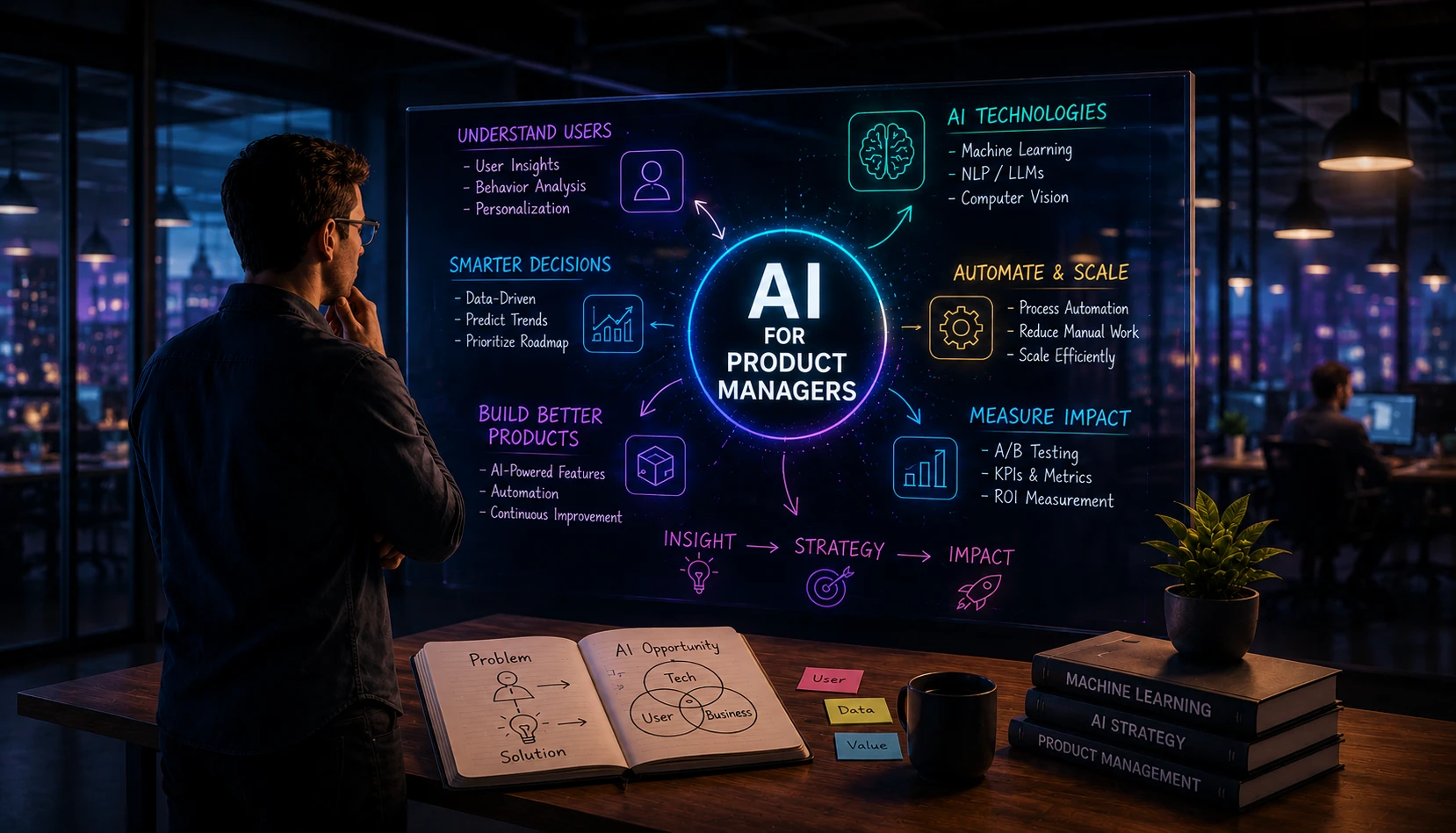
The product landscape is not just evolving—it is undergoing a fundamental shift in how software is built, delivered, and experienced. Artificial Intelligence is no longer a “nice-to-have” feature; it is increasingly becoming an infrastructural layer within modern products. For a Product Manager, the real question is no longer whether to use AI, but where, why, and how to integrate it effectively.
In organizations like Pishgaman Lotus, this question becomes even more critical when balancing technological complexity with real user value. A superficial understanding of AI can lead to expensive yet ineffective decisions, while a deep understanding can unlock sustainable competitive advantages.
Understanding AI Beyond the Buzzword
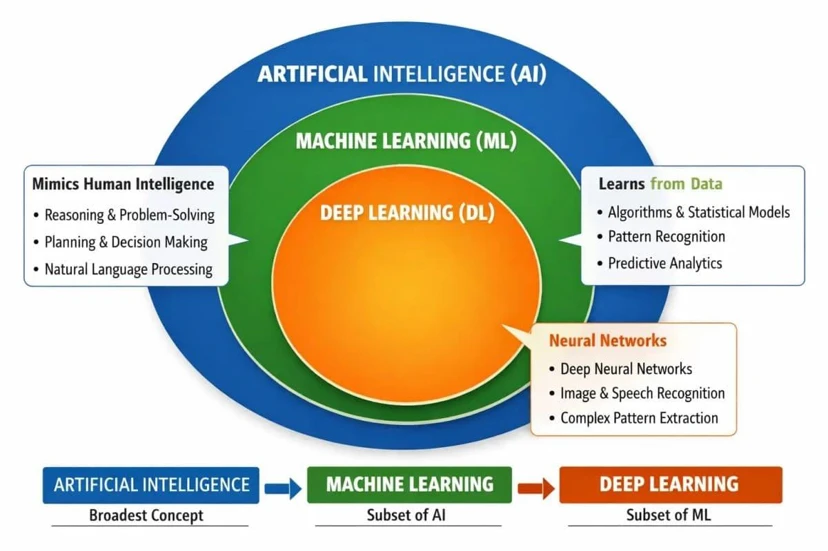
When we talk about AI, we are dealing with a multi-layered abstraction. At a high level, AI refers to systems capable of performing tasks that traditionally required human cognition. However, for Product Managers, this definition is insufficient. What matters is how this intelligence is constructed and what constraints it operates under.
Machine Learning sits at the core of modern AI systems. Instead of explicitly defining rules, we build models that learn patterns from data distributions. This introduces a critical paradigm shift: system behavior is no longer purely code-driven, but data-driven. As a result, PMs are no longer just designing features—they are shaping emergent system behaviors.
Large Language Models (LLMs) represent a significant leap in this paradigm. Unlike traditional models trained for narrow tasks, LLMs are general-purpose systems capable of generating text, reasoning (to some extent), and interacting naturally with users. For PMs, this lowers the barrier to building complex features, but simultaneously increases uncertainty in outputs.
The Conceptual Gap Between Traditional AI and Generative AI
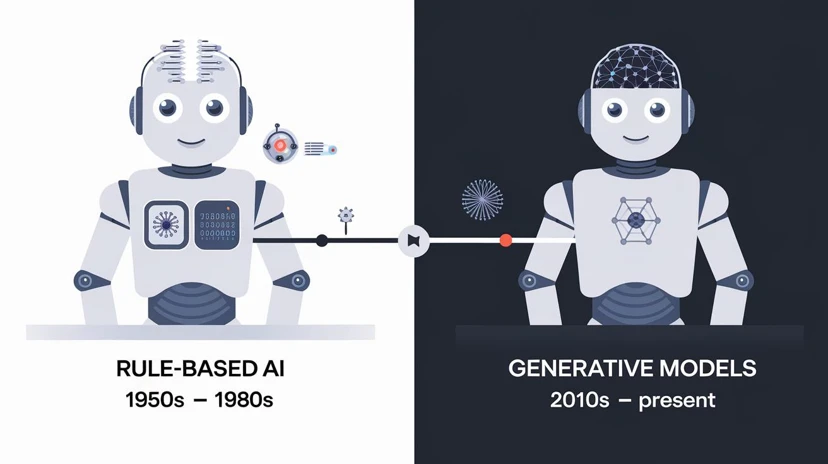
Traditional AI systems typically operate within constrained output spaces. They perform tasks such as classification, regression, or ranking. Even when powered by deep learning, these systems map inputs to predictable outputs, allowing performance to be measured through well-defined metrics.
Generative AI, however, fundamentally changes this paradigm. Instead of producing a single correct answer, these systems learn underlying data distributions and generate outputs by sampling from them. This means that outputs are inherently probabilistic and diverse.
This shift has profound implications for product design. In a traditional recommendation system, success might be measured through click-through rates or conversions. In contrast, systems powered by LLMs introduce challenges such as coherence, hallucination, and alignment—concepts that are far less straightforward to quantify.
In environments like Pishgaman Lotus, adopting Generative AI requires accepting non-determinism as a core system property. This necessitates the design of guardrails, fallback mechanisms, and human-in-the-loop processes.
AI as a Capability, Not a Feature
One of the most common mistakes in product teams is treating AI as a standalone feature—such as simply “adding a chatbot.” In reality, AI should be viewed as a capability that permeates multiple layers of a product.
For example, a basic search function can evolve into semantic search that understands user intent rather than just matching keywords. Similarly, a support system can transition from static responses to dynamic, context-aware interactions.
The real value of AI rarely comes from replacing a single feature. Instead, it emerges from incremental improvements across multiple touchpoints in the user journey. This requires PMs to shift from feature-centric thinking to system-level thinking.
At Pishgaman Lotus, this could mean rethinking entire user flows rather than layering AI on top of existing ones.

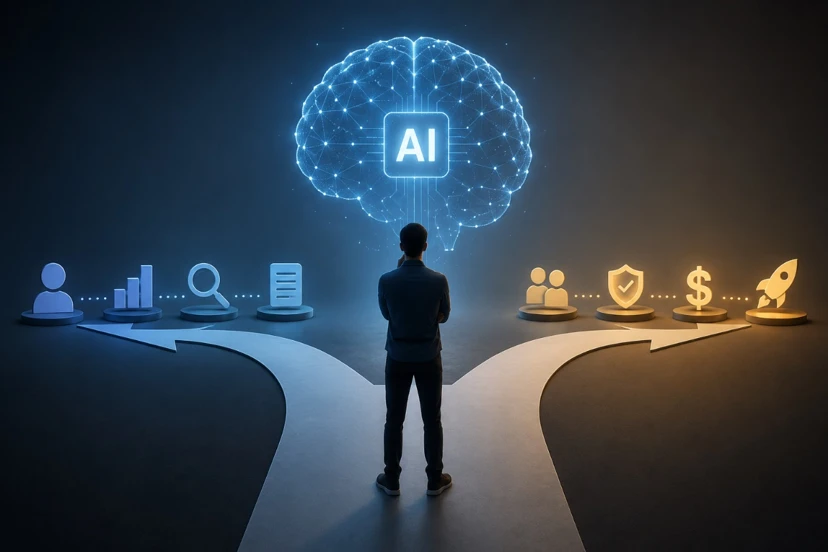
Product Decision-Making in the Age of AI
For Product Managers, the most critical question is not “Which AI model should we use?” but rather “Is AI the right solution for this problem?”
Many problems attributed to AI can be solved more efficiently with rule-based systems. AI becomes valuable when the problem space is complex, data-rich, and involves a degree of acceptable uncertainty.
Cost structure is another critical consideration. Unlike traditional software with mostly upfront development costs, AI systems often incur ongoing inference costs. This directly impacts unit economics and scalability.
Data dependency is equally important. Models are only as good as the data they are trained on. In many cases, the primary bottleneck is not the model itself, but data quality and accessibility.
Real-World Challenges Often Overlooked
Trust remains one of the biggest challenges in AI-powered systems. Users are more likely to adopt systems whose behavior is understandable and predictable. Generative AI struggles in this regard, as outputs can be convincing yet incorrect.
Alignment is another major issue. Ensuring that model outputs align with business goals and product values requires continuous iteration, prompt engineering, fine-tuning, and thoughtful UX design.
Integration complexity is also frequently underestimated. AI systems rarely operate in isolation—they must integrate with existing backends, databases, analytics systems, and even human workflows.
Conclusion: A Shift in Mindset, Not Just Tools
For Product Managers, learning AI is not about acquiring a new tool—it is about adopting a new way of thinking about products.
AI transforms systems from deterministic to probabilistic. This means managing distributions of behavior rather than defining exact outcomes. It requires embracing uncertainty instead of eliminating it.
Ultimately, competitive advantage does not come from using AI, but from using it correctly. Organizations like Pishgaman Lotus can unlock real value only when AI is applied to solve meaningful user problems, rather than being used as a technological label.
This is where a good Product Manager becomes a great one.

Our articles: "The Future of AI: From RLHF to Multimodal Intelligence & LLaMA vs PaLM"
Similar Blogs

AI Voice Deepfakes — How to Detect Audio Fraud and Prevent Voice Cloning Scams


AGI-Powered Intelligent Agents: The Future of Automation and Autonomous Decision-Making

AI Voice Cloning: Business Opportunities and Security Threats
Have special project to begin?
Contact us if you need a unique website for your special requirements, if you think having a mobile application help you reach your business’s goals or you still do not recognize which product can help you implement your ideas. Lotus Pioneers accompany you to develop your business through consulting and by designing special products.