Virtual Reality Applications in Education and Learning
Virtual Reality Applications in Education and Learning
Introduction
Bringing Education into the World of Virtual Experiences
Traditional educational methods usually rely on transferring information through books, images, videos, and teachers' explanations. Although these methods still form an important part of the education system, in many cases, they cannot create a deep and interactive experience of complex concepts. By providing the possibility of entering three-dimensional and simulated environments, Virtual Reality offers a different approach to learning.
Virtual Reality allows students, university learners, and people interested in learning to enter educational environments directly instead of simply observing a subject, and interact with their different elements. For example, a medical student can simulate a surgical environment without being present in an operating room, or a student can move between planets in a three-dimensional environment instead of simply studying about the solar system.
By transforming abstract concepts into visual and interactive experiences, this technology can make understanding difficult subjects easier and increase learners' participation. In this regard, Pishgaman Lotus, by focusing on emerging technologies and developing intelligent software solutions, can play an effective role in shaping the next generation of digital experiences.
The Most Important Applications of Virtual Reality in Education
Virtual Reality is not limited to one educational level or field and can be used in different educational areas. The ability to simulate real environments and create conditions that are difficult or expensive to access in the physical world has turned this technology into a practical educational tool.
1. Medical and Healthcare Education
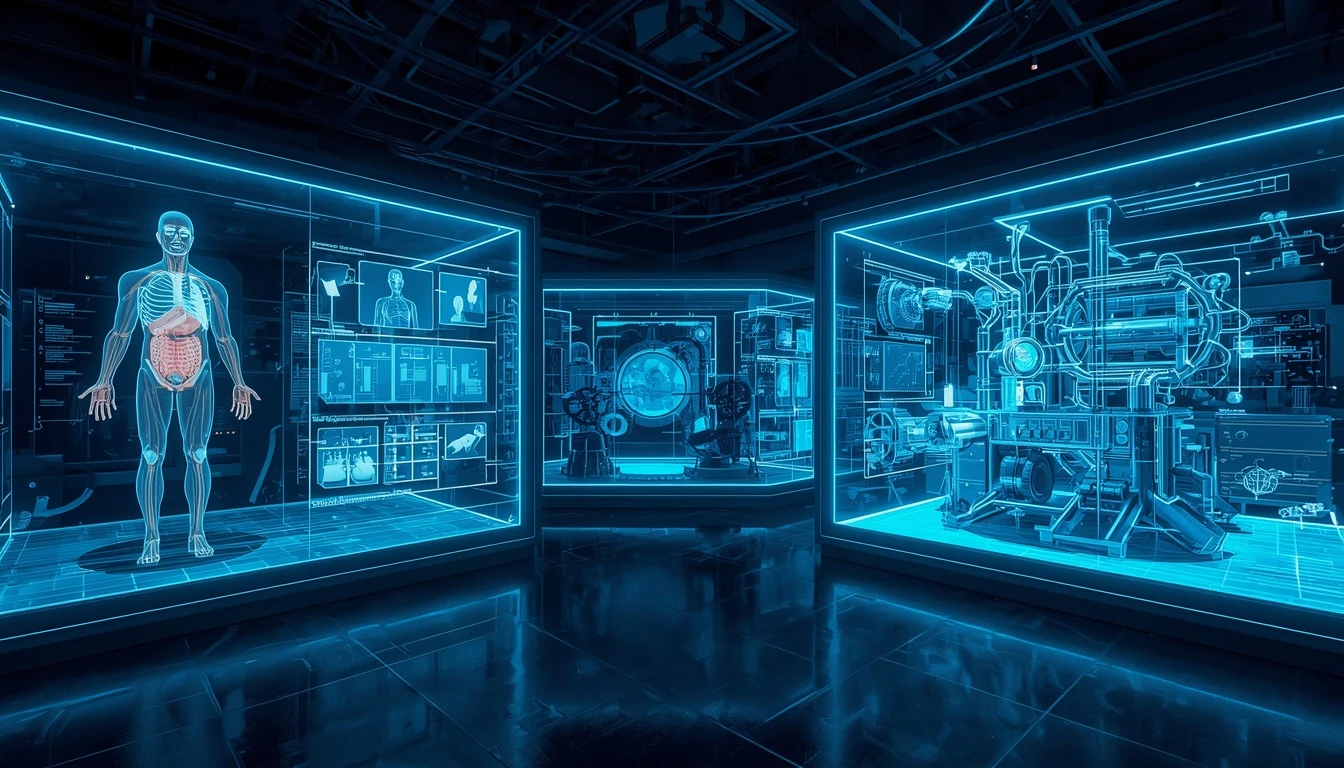
One of the most important applications of Virtual Reality is in medical education. Medical students can use virtual simulators to examine the structure of the human body in a three-dimensional environment, understand the functions of organs, and practice different surgical procedures under controlled conditions.
This method makes it possible to repeat exercises without creating risks for patients. Students can also face different medical conditions and develop their decision-making skills in simulated situations.
2. Teaching Science and Complex Concepts
In subjects such as physics, chemistry, biology, and astronomy, many concepts are difficult to understand because of their abstract nature. Virtual Reality can transform these concepts into observable experiences.
For example, students can enter the structure of a cell, observe chemical reactions at the molecular scale, or examine the movement of planets and celestial objects from a different perspective.
3. Technical and Practical Skills Training
In fields such as engineering, architecture, industrial maintenance, and working with specialized equipment, Virtual Reality provides the opportunity to practice practical skills in a safe environment.
Trainees can practice how to operate complex machines, repair equipment, or perform different stages of an industrial process without needing to use real equipment. In addition to reducing educational costs, this can also reduce the possibility of errors and injuries.
4. Language and Communication Skills Training
Virtual Reality can move the language-learning process beyond studying and repetitive exercises. Language learners can enter simulated environments such as restaurants, airports, stores, or business meetings and strengthen their conversation skills in situations close to real life.
This experience makes language learning a more practical activity and gives people more opportunities to use what they have learned.
Virtual Classrooms and Interactive Learning
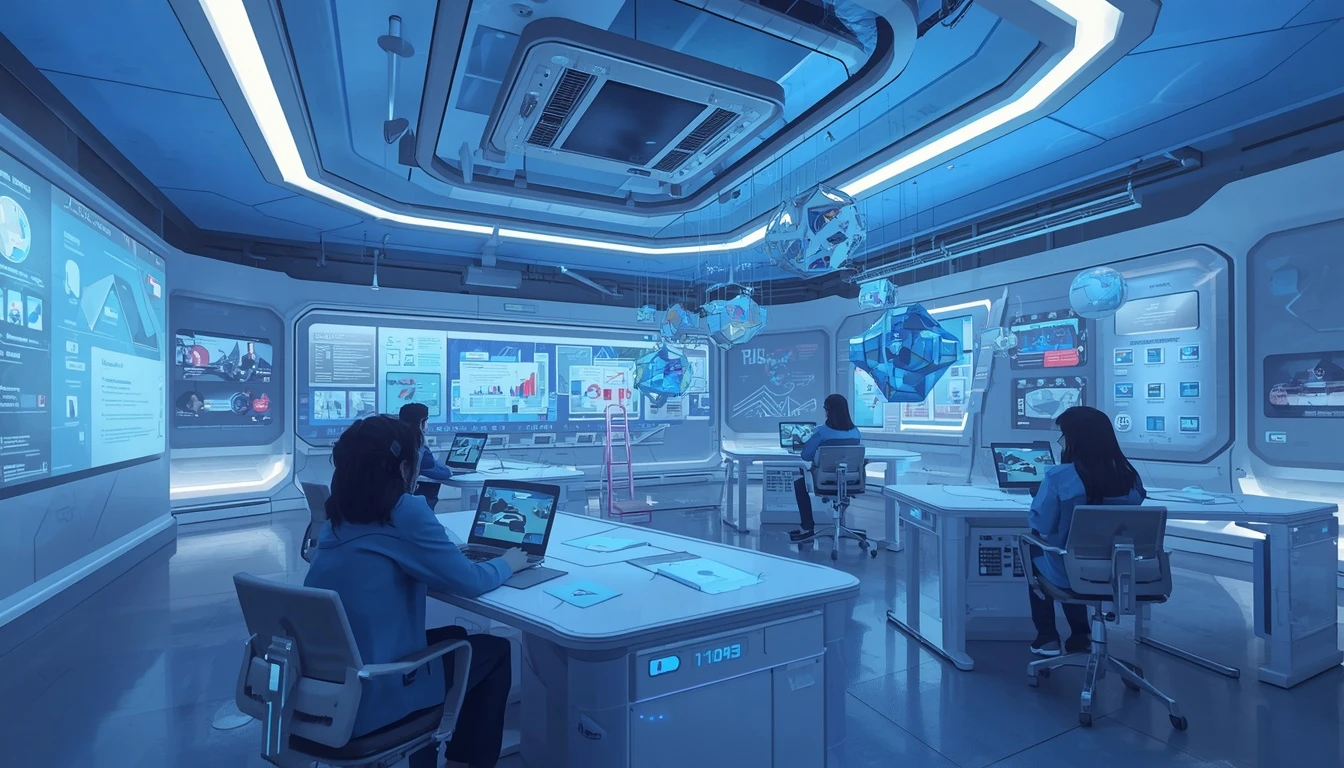
One of the most important changes that Virtual Reality creates in the education system is redefining the concept of the classroom. In traditional models, learning usually depends on the physical presence of students and teachers in a specific space; however, Virtual Reality environments reduce this limitation.
In a virtual classroom, learners can use Virtual Reality headsets to enter a three-dimensional environment in which the teacher, students, educational content, and interactive tools are virtually present. In such an environment, it becomes possible to observe three-dimensional models, conduct simulated experiments, participate in group activities, and interact directly with educational content.
This approach is closely related to the concept of education in the Metaverse. As discussed in the blog Education in the Virtual World: Metaverse Classrooms and Interactive Learning, Metaverse-based educational spaces can change the boundaries between in-person and virtual education and create environments for group and collaborative learning.
On the other hand, developing Virtual Reality educational environments can be accompanied by changes in the way people collaborate in digital spaces. This is not limited to schools and universities and is also applicable to corporate training, specialized meetings, and skill-development courses. Even the concepts discussed in the blog The Future of Remote Work: The End of Physical Offices? show how virtual environments can change the way people are present, collaborate, and interact in digital spaces.
As a result, a virtual classroom is not simply a digital version of a traditional classroom; rather, it is an interactive environment in which learning can be shaped through experience, participation, and discovery.
Combining Virtual Reality and Artificial Intelligence in Education
Combining Virtual Reality with Artificial Intelligence can create a new generation of educational systems that, in addition to providing interactive environments, also have the ability to understand learners' needs and behaviors.
In an educational system based on Virtual Reality and Artificial Intelligence, educational content can be adjusted according to each person's knowledge level, learning speed, and performance. For example, if a student faces difficulty with a scientific subject, the system can provide more exercises in the same area or offer additional explanations through an intelligent assistant.
Artificial Intelligence can also act as a virtual instructor. This instructor can answer learners' questions, analyze their performance, and suggest a more suitable learning path. In simulated environments, intelligent agents can also be used to create dynamic educational scenarios.
For example, in a medical training environment, Artificial Intelligence can change the conditions of a virtual patient based on the student's decisions. In language education, a virtual character can naturally communicate with a language learner and adjust the difficulty level of the conversation based on their responses.
This subject has a direct connection with the topics discussed in the blog Virtual Reality and Artificial Intelligence: The Future of Intelligent Experiences; because combining these two technologies can create experiences beyond observing three-dimensional environments and move digital interactions toward greater intelligence and personalization.
Benefits of Using Virtual Reality in the Learning Process
Using Virtual Reality in education can create multiple benefits for students, university learners, instructors, and educational organizations. The most important advantage of this technology is transforming the learning process from an activity mainly based on receiving information into an active and collaborative experience.
One of the most important benefits of Virtual Reality is increasing learners' participation and concentration. When people directly enter an educational environment and have the opportunity to interact with different elements, the learning process can become more engaging and active.
On the other hand, this technology makes it possible to experience practical subjects that are difficult to access in the real world. Conducting dangerous experiments, observing natural phenomena at extremely small or large scales, and practicing complex situations are among the activities that become possible with the help of Virtual Reality.
The ability to repeat exercises is also very important. Learners can perform an activity several times, examine their mistakes, and improve their skills without worrying about real-world consequences.
In addition, Virtual Reality can reduce geographical limitations in accessing certain educational environments. People from different regions can participate in a shared virtual space and interact with each other.
However, it should be noted that the effective use of this technology depends on appropriate educational content design, equipment quality, access to technical infrastructure, and alignment between the virtual experience and educational objectives. Virtual Reality alone does not guarantee better learning; rather, it creates the greatest value when it is properly integrated into the educational program.
Challenges and Limitations of Virtual Reality in Education
Despite the extensive capabilities of Virtual Reality, using this technology in the education system also involves challenges. One of the most important obstacles is the cost of purchasing specialized equipment such as VR headsets, powerful computers, and the systems required to run simulated environments.
In addition to equipment costs, producing three-dimensional and interactive educational content also requires technical expertise and financial resources. Designing an effective educational environment is not limited to creating an attractive virtual space; rather, learning objectives, difficulty levels, interaction methods, and user performance evaluation methods must also be considered.
Another issue that should be taken into account is the potential problems of using Virtual Reality headsets for long periods. Some people may experience eye strain, headaches, or dizziness as a result of prolonged use of these devices. Therefore, educational sessions should be designed by considering usage duration and users' conditions.
Unequal access to equipment and suitable internet connections can also create a digital divide among learners. As a result, solutions for reducing costs and providing broader access to educational facilities should be considered to expand this technology.
On the other hand, protecting users' privacy is also very important. Virtual Reality systems may collect data about body movements, interaction patterns, and user behavior. Protecting this information and using data responsibly must be an inseparable part of designing educational platforms.
The Future of Education with Virtual Reality
The future of education will probably move toward combining several advanced technologies; technologies that can each overcome some of the limitations of traditional methods. Virtual Reality, Artificial Intelligence, Augmented Reality, cloud computing, and interactive systems can work together to create smarter educational environments.
Under such conditions, educational classrooms can transform from fixed environments into dynamic digital spaces. Learners will be able to enter different educational scenarios based on their needs, interact with intelligent instructors, and practice the skills they need in simulated environments.
In addition, the advancement of Virtual Reality equipment and its potential cost reduction can make access to this technology more widespread. Developing lighter wearable devices, higher-quality displays, and more accurate tracking systems will also help make the learning experience more natural.
In the future, the boundaries between in-person education, online education, and Virtual Reality-based learning will probably become less distinct. Universities, schools, and organizations can use a combination of these methods to create more flexible educational paths.
Pishgaman Lotus, through its activities in software development, Artificial Intelligence, and digital solutions, can play a role in developing the infrastructure and intelligent experiences required for this transformation. The future of education will not depend only on transferring knowledge; rather, the ability to create personalized, interactive, and accessible learning experiences will become one of the most important criteria for the success of educational systems.
Conclusion
Virtual Reality is one of the technologies that can significantly change the structure of education and learning. By creating three-dimensional environments, simulating real situations, and providing the possibility of direct interaction with educational content, this technology creates new opportunities for deeper and more practical learning.
From medical education and basic sciences to technical skills, language learning, and Metaverse classrooms, Virtual Reality can move the educational experience beyond traditional methods and turn it into a more interactive activity.
Combining this technology with Artificial Intelligence also makes it possible to develop personalized educational systems and intelligent assistants. However, the success of this transformation depends on solving challenges such as equipment costs, developing appropriate content, technical infrastructure, and information security.
Ultimately, Virtual Reality is not intended to completely replace traditional educational methods; rather, it can act as a complementary tool, increase the quality and effectiveness of the learning process, and create a new path for the future of digital education.
Our articles:"Virtual Reality and Artificial Intelligence; The Future of Intelligent Experiences"
Similar Blogs
Virtual Reality and Augmented Reality; Differences and Applications

Metaverse and Virtual Reality: The Future of the Digital World
Virtual Reality and Artificial Intelligence; The Future of Intelligent Experiences
Have special project to begin?
Contact us if you need a unique website for your special requirements, if you think having a mobile application help you reach your business’s goals or you still do not recognize which product can help you implement your ideas. Lotus Pioneers accompany you to develop your business through consulting and by designing special products.