Unbounded Reality: The Ultimate Guide to Cross-Platform AR for Mobile, Web, and Smart Glasses
The Ultimate Guide to Cross-Platform AR for Mobile, Web, and Smart Glasses

The Cross-Platform Revolution: A Comprehensive Guide to Unified Augmented Reality (AR) Development
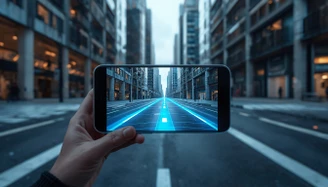
In today’s world, Augmented Reality (AR) is no longer a futuristic concept confined to science fiction—it has become an integral part of modern digital experiences. However, the key challenge remains: how can we design an AR experience that runs seamlessly across smartphones, web browsers, and smart glasses?
Pishgaman Lotus, as a pioneer in emerging technologies, delivers unified AR solutions across three main platforms—mobile, web, and wearable devices—enabling businesses to reach the widest possible audience without dependency on a specific hardware ecosystem.
1. Foundational AR: Mobile Applications (Native & Cross-Platform)
Mobile devices remain the primary gateway for users entering the AR world. With powerful GPUs and advanced camera systems (especially LiDAR sensors), smartphones provide an ideal environment for high-quality rendering.
- Core frameworks: ARKit for iOS and ARCore for Android
- Advantages: Native processing power, accurate surface tracking, realistic lighting, and high stability
- Challenge: Requires users to install an application, which can reduce initial engagement
To overcome the installation barrier, Pishgaman Lotus experts recommend a hybrid architecture, where the core processing logic is shared between mobile and web platforms.
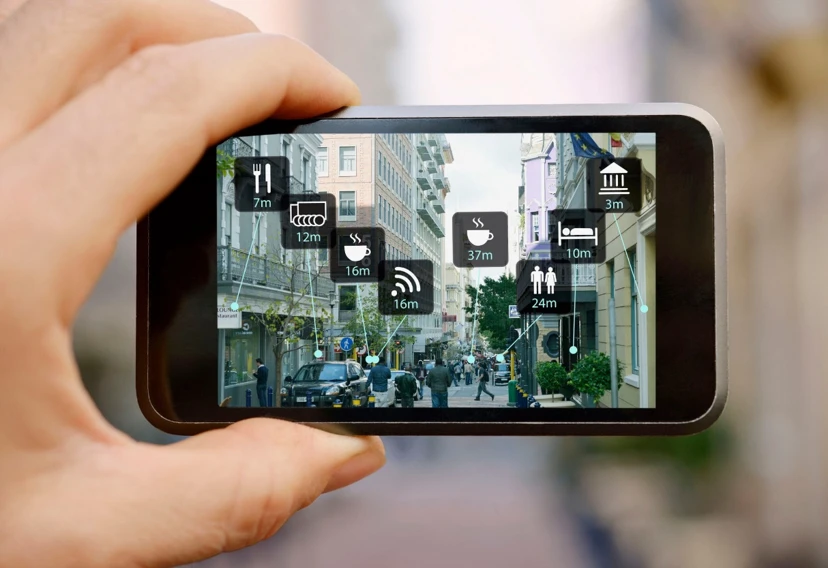
2. Borderless Access: Web-Based AR (WebAR)
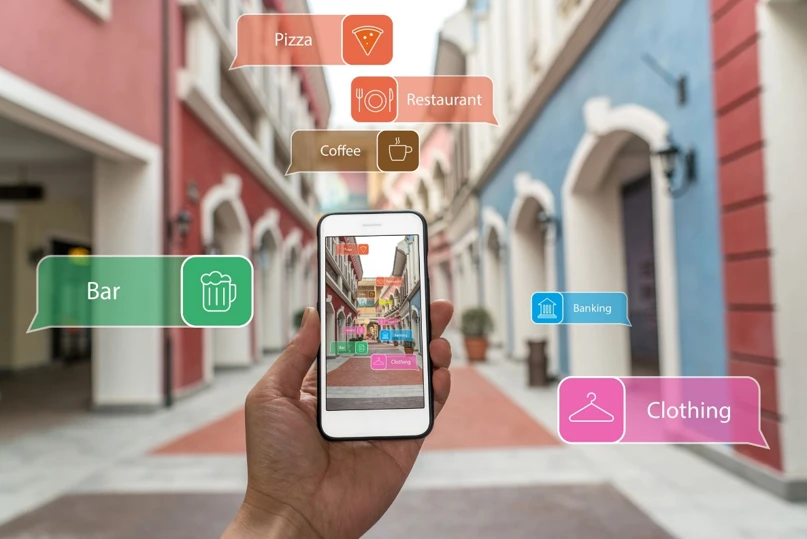
Why require users to download a heavy application when they can enter an AR experience instantly by scanning a simple QR code? WebAR technology makes this possible.
Comparison: Mobile Apps vs. WebAR
- User Entry
- Mobile Apps: Requires downloading and installing an app
- WebAR: Instant, frictionless access via QR code or link
- Graphics Quality
- Mobile Apps: Very high-quality native rendering
- WebAR: Moderate to good quality, depending on browser capabilities
- Hardware Access
- Mobile Apps: Full, direct access to device sensors and hardware
- WebAR: More limited access, but rapidly improving with evolving standards
The Pishgaman Lotus development team leverages WebAR for marketing campaigns and e-commerce platforms to minimize user friction and maximize engagement.
3. The Future of Interaction: Smart Glasses & Wearables
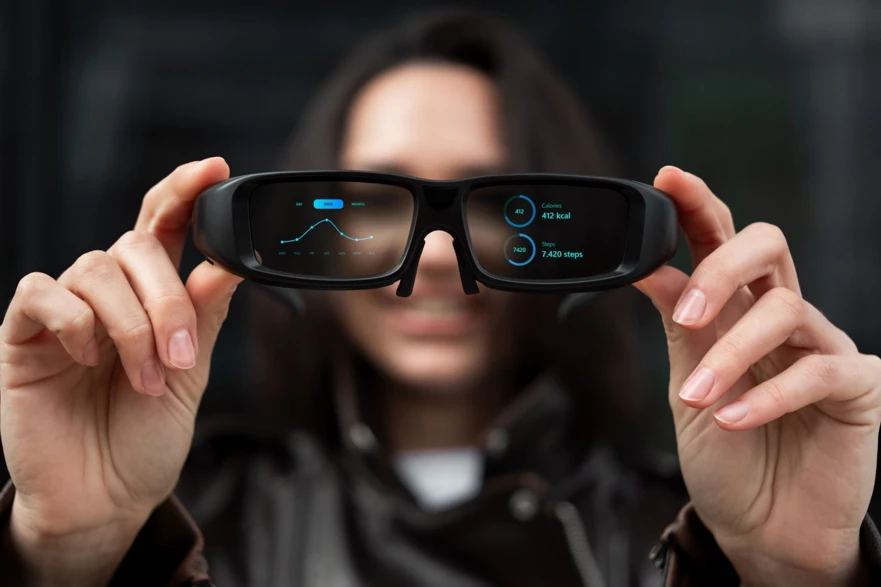
The final step in AR unification is moving the experience from hands to eyes. Devices such as Apple Vision Pro, Meta Quest, and lightweight smart glasses like XREAL are transforming how humans interact with digital information.
Two critical principles in developing for smart glasses:
- Spatial Interaction: Inputs are based on hand gestures (hand tracking) and eye movement (eye tracking)
- Energy Optimization: Due to battery limitations, optimizing 3D models is essential
4. Unified Architecture: Build Once, Run Everywhere
The biggest technical challenge is avoiding redundant development. Pishgaman Lotus addresses this by leveraging modern game engines such as Unity and Unreal Engine alongside cross-platform architectures.
Key principles of unified AR development:
- 3D Asset Pipeline: Using standard formats like glTF and USDZ that render seamlessly across web, mobile, and wearables
- Shared Logic: Separating computational logic from rendering layers to ensure consistency across platforms
- Responsive Spatial UI: Designing interfaces that adapt—2D touch-based on mobile and 3D spatial in smart glasses
Pishgaman Lotus plays a key role in designing these infrastructures, enabling businesses to deliver a cohesive AR ecosystem through a unified strategy.

Conclusion: The Next Step in the AR Ecosystem
Augmented Reality is no longer a novelty or a short-term marketing tool—it has evolved into a new standard for digital interaction. Success in this space requires moving beyond single-platform thinking toward a unified, cross-platform approach.
In this model, users can seamlessly engage with AR experiences—whether through a simple QR code on the web (WebAR), powerful mobile applications, or next-generation smart glasses.
The core value of this transformation lies in three principles:
- Reducing user friction through web-based solutions
- Deep technical optimization of 3D models and performance
- Building unified infrastructure to reduce costs and enable scalable development
With cutting-edge expertise and modern development infrastructure, Pishgaman Lotus empowers you to transform creative AR ideas into scalable, engaging, and practical products across all platforms.
The future of digital interaction has already begun—now is the time to claim your place in this visual revolution.
If you want, I can also optimize this English version for SEO or adapt it for a landing page or LinkedIn article.
Our articles:"AI Revolution in Software Development: From Idea to Execution with Intelligent SDLC"
Similar Blogs

Have special project to begin?
Contact us if you need a unique website for your special requirements, if you think having a mobile application help you reach your business’s goals or you still do not recognize which product can help you implement your ideas. Lotus Pioneers accompany you to develop your business through consulting and by designing special products.