Text-to-Video: The AI Revolution in Video Creation
The AI Revolution in Video Creation

Introduction: When Text Becomes Moving Images
Creating a professional video traditionally required cameras, filming equipment, actors, editors, and hours of production. However, the emergence of Text-to-Video technologies is significantly transforming this process.
With this technology, users can generate new visual content simply by writing a textual description. AI analyzes the prompt, understands the different elements of the scene, and generates a video based on the user's description.
This transformation is the result of combining several technologies, including Generative AI, Image Processing, Computer Vision, Language Models, and Multimodal Content Generation.
For companies such as Pishgaman Lotus, this technology is more than simply a content creation tool. It can become part of a new generation of digital products, intelligent platforms, and interactive experiences.
What Is Text-to-Video?
Text-to-Video refers to technologies that receive a textual description and generate a new video based on that input.
For example, a user could write:
“A futuristic city at night, with autonomous cars driving through wet streets.”
The AI system attempts to identify concepts such as city, night, wet street, cars, and movement, and then reconstruct them as a sequence of video frames.
The system therefore needs to understand more than just the meaning of individual words. It must also understand relationships between objects, movement, lighting, depth, camera angles, and the overall atmosphere of a scene.
This makes Text-to-Video one of the most fascinating applications of Image Processing and Generative AI.

How Does Text-to-Video Work?
The video generation process can be divided into several major stages.
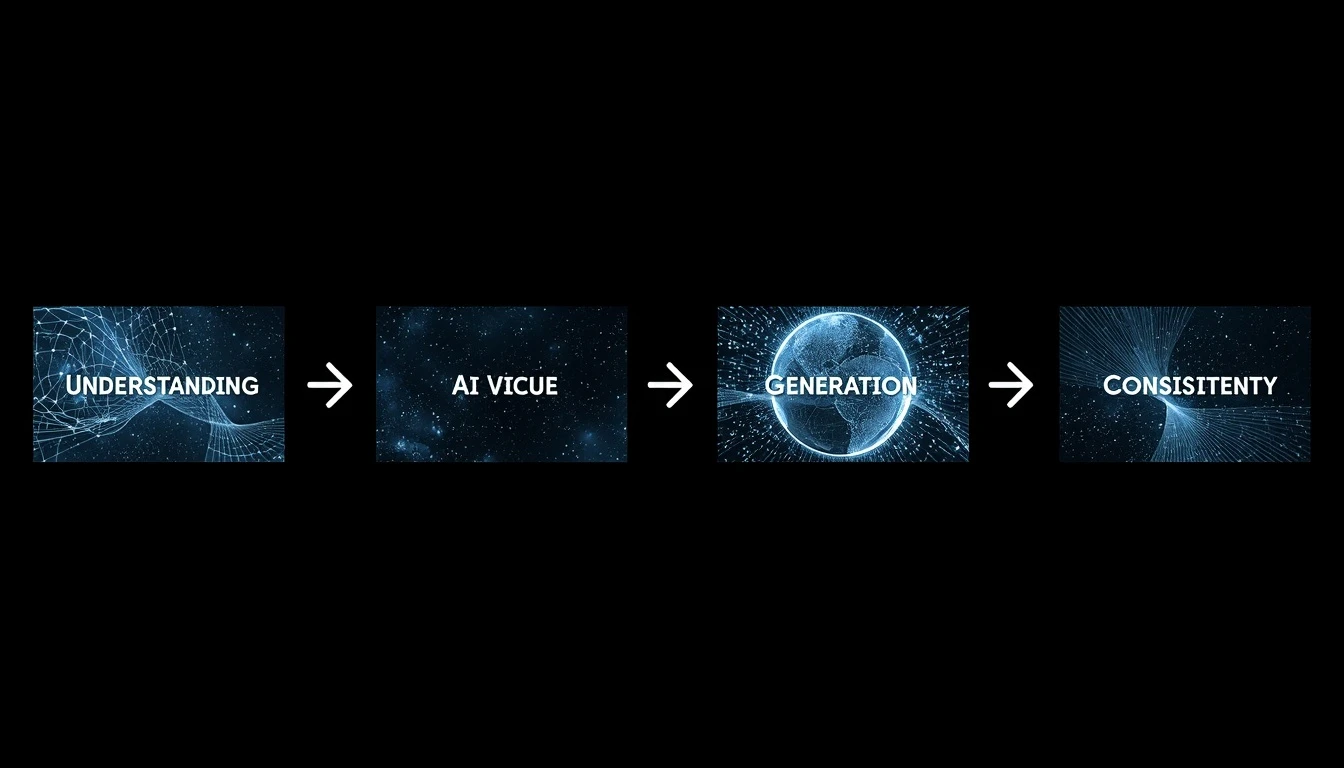
1. Understanding the Text
First, the AI model analyzes the input text. At this stage, it identifies key concepts, objects, environments, visual characteristics, and relationships between different elements.
For example, the difference between “a car moving down a street” and “a car stopped on a street” must be clearly understood by the model.
2. Converting Concepts into Visual Representations
After understanding the text, the model needs to convert linguistic information into a representation that can be used to generate visual content.
At this stage, technologies such as Generative AI, Computer Vision, and Image Processing play an important role.
3. Generating Video Frames
The model then generates a sequence of images that together form a continuous movement.
One of the biggest challenges at this stage is maintaining consistency between elements. For example, a car should not suddenly change its shape, color, or dimensions from one frame to another.
4. Creating Motion and Temporal Consistency
Finally, the system needs to maintain the relationship between consecutive frames so that the movement appears natural.
This is what makes Text-to-Video considerably more complex than generating a single image.
The Role of Image Processing in Video Generation
Although Text-to-Video is primarily known as an AI technology, Image Processing is one of its fundamental components.
The system needs to analyze and reconstruct characteristics such as:
Object shapes and structures
Colors and lighting
Scene depth
Motion
Object positions
Backgrounds
Camera angles
Image-processing techniques can also be used after generation to improve quality, reduce noise, correct colors, increase resolution, and enhance generated frames.
With its focus on areas such as Artificial Intelligence and Image Processing, Pishgaman Lotus can leverage these technologies to develop intelligent visual solutions and products based on generative content.
How Do AI Models Generate Videos?
Modern Text-to-Video models generally use sophisticated deep-learning architectures to transform textual information into visual content.
One important approach involves Diffusion Models. In this approach, the model starts from a noisy or random representation and gradually transforms it into content that matches the user's request.
For video models, however, the challenge is not simply generating one image. The system must also maintain relationships between a large number of consecutive frames.
As a result, the model needs to handle two types of information simultaneously:
Spatial Information
Such as the shape, color, position, and structure of objects.
Temporal Information
Such as movement, changes in position, and continuity of elements over time.
Combining these two dimensions allows modern Text-to-Video models to produce much more realistic videos than previous generations.

Major Applications of Text-to-Video
The applications of this technology extend far beyond entertainment.
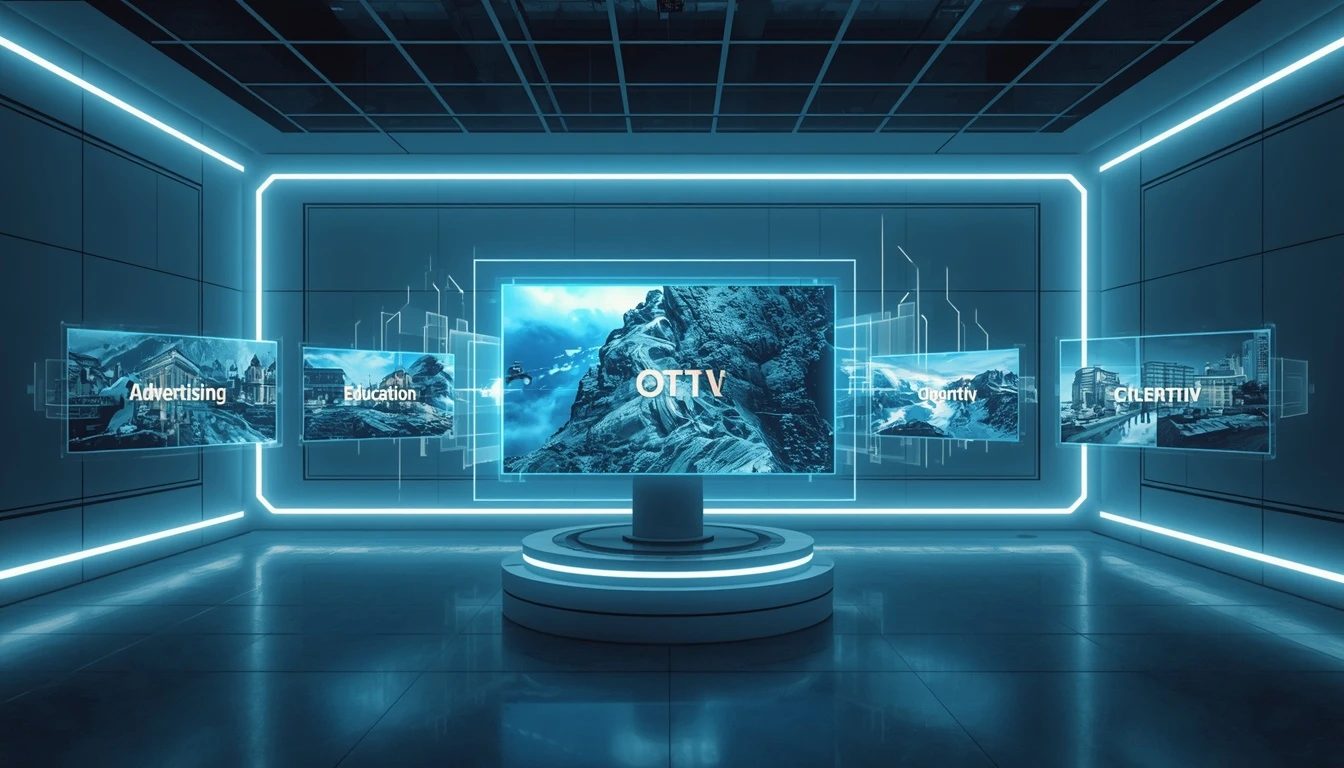
Advertising and Marketing
Brands can quickly transform advertising concepts into videos and test different versions of a campaign without relying entirely on traditional filming.
Education
Turning educational concepts into visual videos can make learning more engaging. For example, a scientific explanation can be transformed into a visual simulation.
Game Development
Text-to-Video can help generate environmental concepts, cinematic scenes, and prototypes for games.
Social Media Content Creation
Rapidly producing short-form videos is one of the most important applications of this technology.
Architecture and Design
Designers can transform early concepts into moving visualizations and explore camera movements or the atmosphere of a project before actual implementation.
Benefits of Text-to-Video for Businesses
The most important advantage of this technology is that it reduces the distance between an idea and its visual execution.
Traditionally, turning an idea into a video could take days or even weeks. AI-powered tools can accelerate many stages of the initial production process.
Key benefits include:
Lower Production Costs:
Some parts of the visual content production process can be automated.
Faster Production:
Creating video prototypes and concepts becomes significantly faster.
More Opportunities for Experimentation:
Marketing and design teams can test different scenarios at a lower cost.
Content Personalization:
Different versions of video content can be created for different audiences.
Greater Creativity:
Users can explore ideas that would be difficult or expensive to produce using traditional equipment.

Challenges of Text-to-Video
Despite rapid advances in this technology, several important challenges remain.
One of the biggest challenges is temporal consistency. An AI model may generate an object with a particular appearance in one part of a video, while its details may change in subsequent frames.
Another challenge is precise output control. Users may have a very specific idea in mind, but the model may not be able to accurately implement every detail of the prompt.
High-quality video generation also requires significant computational resources.
Issues surrounding content ownership, deepfakes, misuse of people's images, and the detection of AI-generated content are also becoming increasingly important as this technology develops.
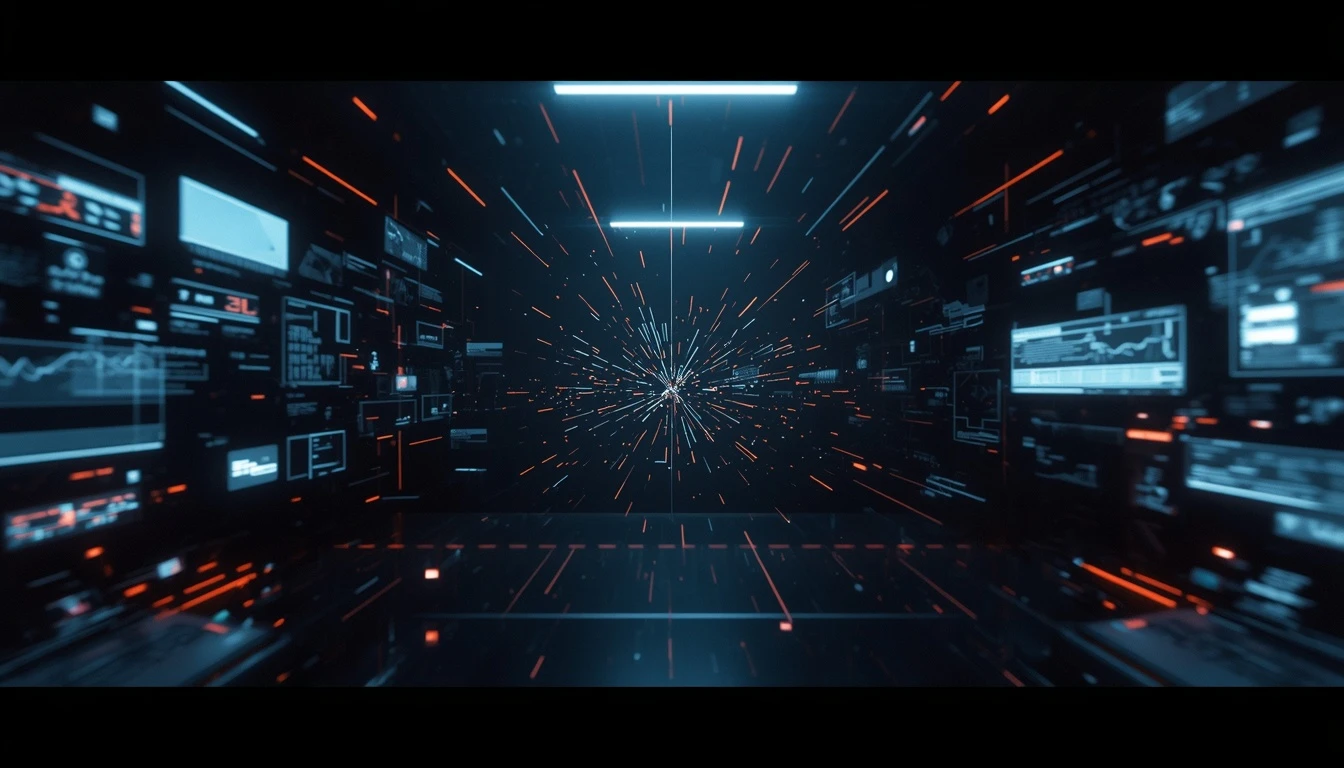
The Future of Text-to-Video: From Video Generation to Digital Worlds
The future of Text-to-Video will likely extend far beyond generating short video clips.
As AI models become more advanced, users may be able to describe complete environments using natural language, while AI systems generate the desired visual world.
For example, a designer might simply describe:
“Create a modern clothing store with minimalist architecture, where the camera enters through the entrance and showcases the products one by one.”
In the future, systems may generate not only videos, but also 3D environments, camera movements, audio, characters, and interactive elements.
This evolution could create a direct connection between Text-to-Video and technologies such as AR, VR, the Metaverse, Game Development, and Digital Twins.
From this perspective, Text-to-Video is part of a much larger movement toward creating digital worlds through natural language.
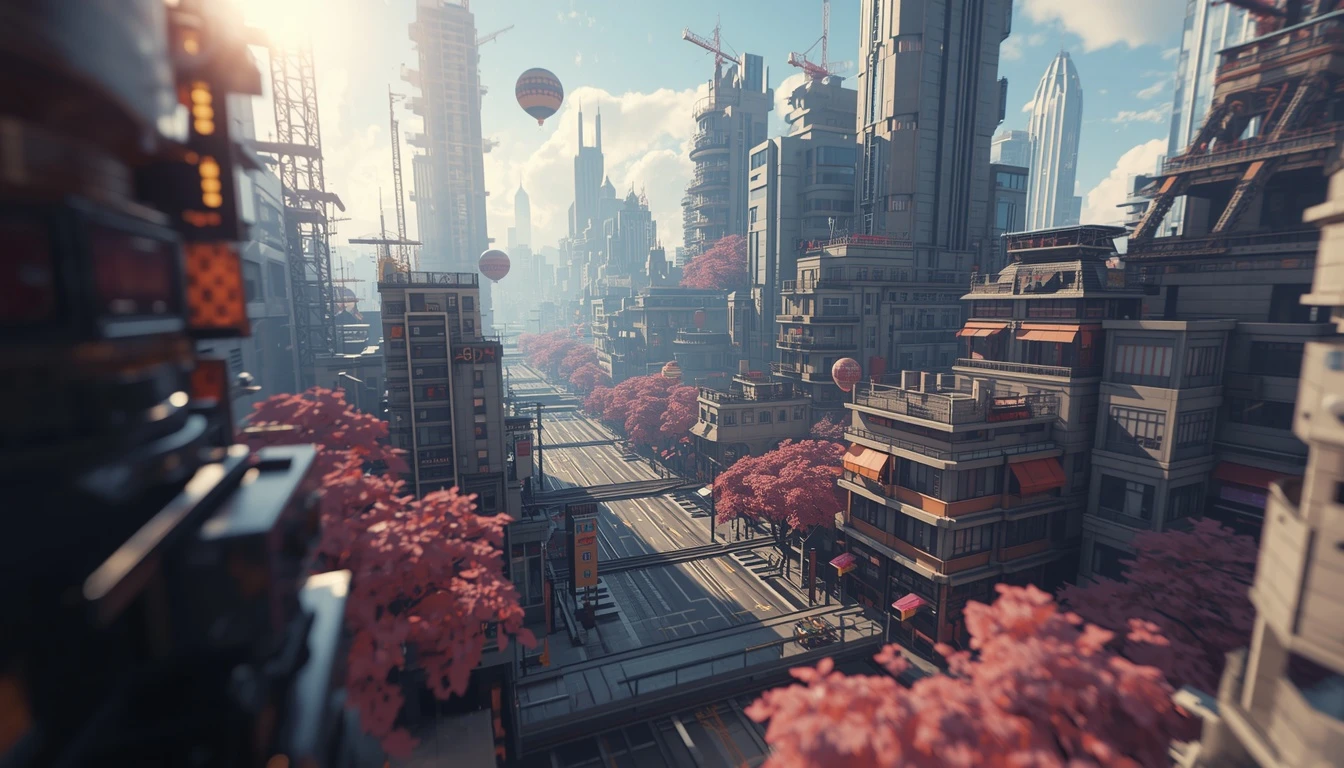
The Role of Pishgaman Lotus in the Next Generation of Intelligent Technologies
The growth of generative technologies creates new opportunities for technology companies. Combining Artificial Intelligence, Image Processing, Software Development, UI/UX Design, and Mobile Application Development can create new products based on intelligent content generation.
Pishgaman Lotus can leverage these technologies to design and develop solutions where the creation, analysis, and processing of visual content are performed intelligently.
For example, Text-to-Video could be integrated into a digital content creation platform, an intelligent advertising solution, an educational application, an enterprise content-generation system, or an AR/VR experience.
The key point is that the real value of Text-to-Video is not simply “generating videos.” Its greater potential lies in creating products that use AI to simplify creative and business processes.

Conclusion
Text-to-Video is one of the most important emerging areas of Generative AI, reducing the boundaries between text, images, and video.
The combination of language models, Image Processing, Computer Vision, and Deep Learning has transformed video production from a complex and resource-intensive process into something significantly faster and more accessible.
The technology still faces challenges involving output control, frame consistency, computational costs, and ethical considerations. However, its development strongly suggests that in the future, creating a video could become almost as simple as writing a text prompt.
For Pishgaman Lotus, this transformation represents an opportunity to develop a new generation of products based on AI, Computer Vision, Image Processing, and intelligent digital experiences—products where users can express an idea rather than operate complex tools, and the system transforms that idea into a visual experience.
Our articles:"Generative AI in Image Processing: From Creation to Visual Intelligence Revolution"
Similar Blogs
Industrial Machine Vision: The Quality Control Revolution

Facial Recognition & Deepfake: The New Biometric Security Challenge
Generative AI in Image Processing: From Creation to Visual Intelligence Revolution
Have special project to begin?
Contact us if you need a unique website for your special requirements, if you think having a mobile application help you reach your business’s goals or you still do not recognize which product can help you implement your ideas. Lotus Pioneers accompany you to develop your business through consulting and by designing special products.