Industrial Machine Vision: The Quality Control Revolution
Industrial Machine Vision
Introduction
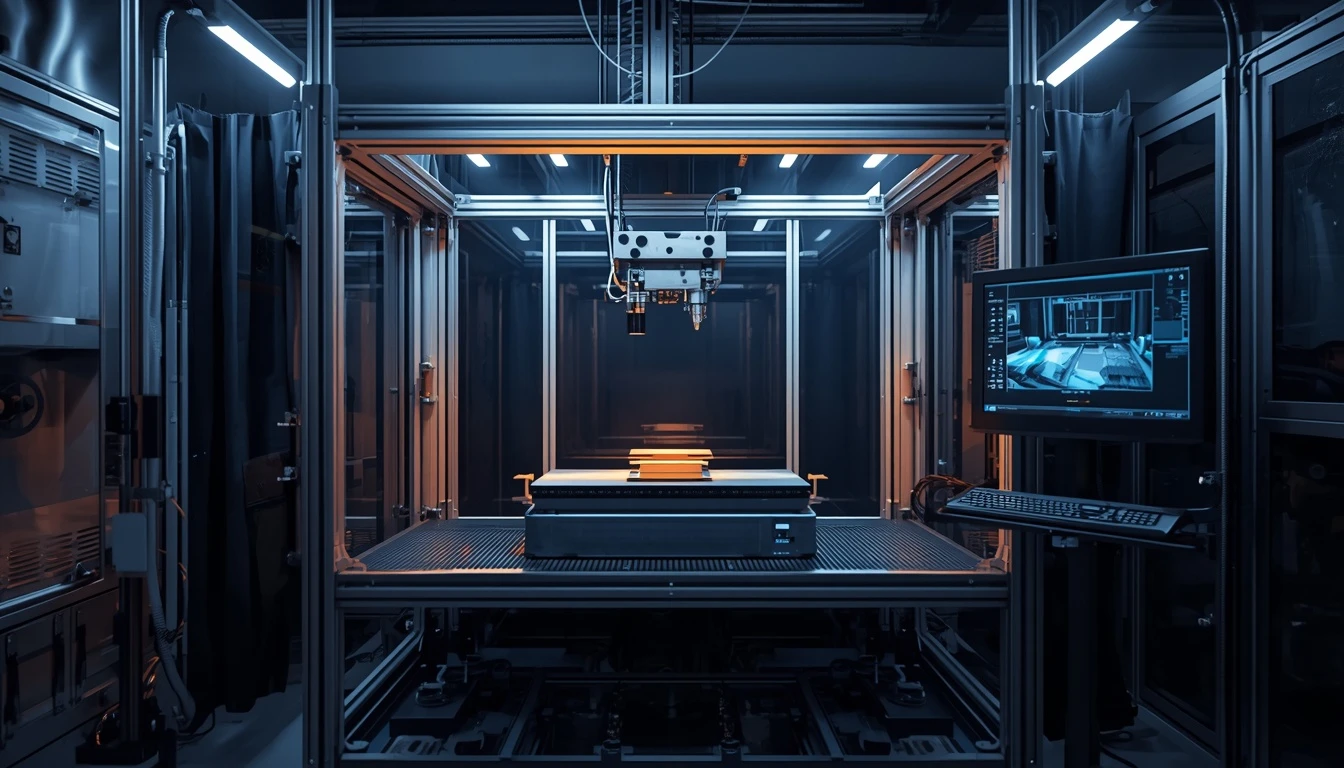
In modern manufacturing, quality control is no longer limited to manual inspection. As production lines become faster and products become more complex, manufacturers need automated systems capable of inspecting products accurately and consistently.
Machine Vision has emerged as one of the key technologies enabling this transformation. By combining industrial cameras, image processing, artificial intelligence, and machine learning, machine vision systems can inspect products in milliseconds, detect defects, measure components, verify assembly, and automatically remove defective products from the production line.
The technology goes far beyond simply taking pictures. A modern machine vision system can become an intelligent part of the manufacturing process, continuously collecting visual data and turning it into actionable decisions.
Companies such as Pishgaman Lotus can contribute to this transformation by combining expertise in artificial intelligence, software development, infrastructure, and digital solutions to support the development of intelligent industrial systems.
What Is Industrial Machine Vision?
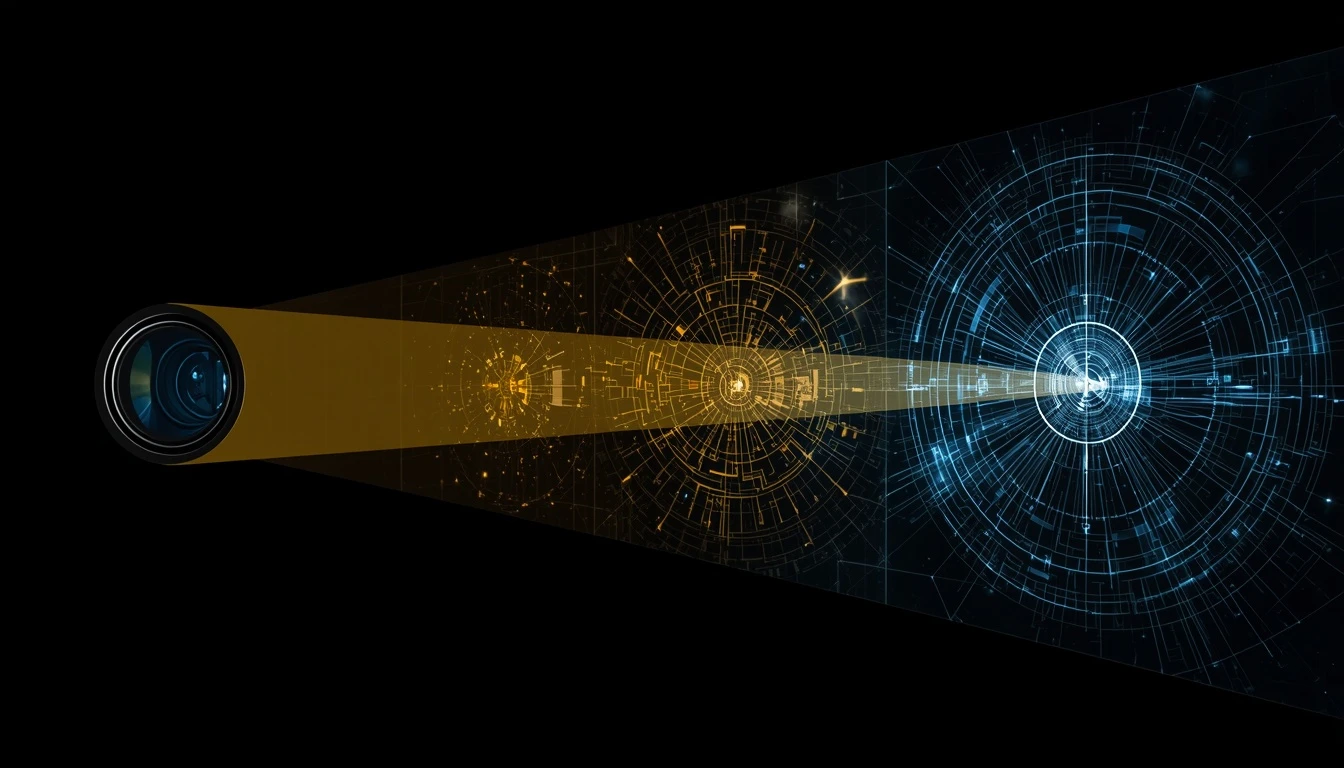
Industrial machine vision is a technology that enables machines to capture and interpret visual information from their environment.
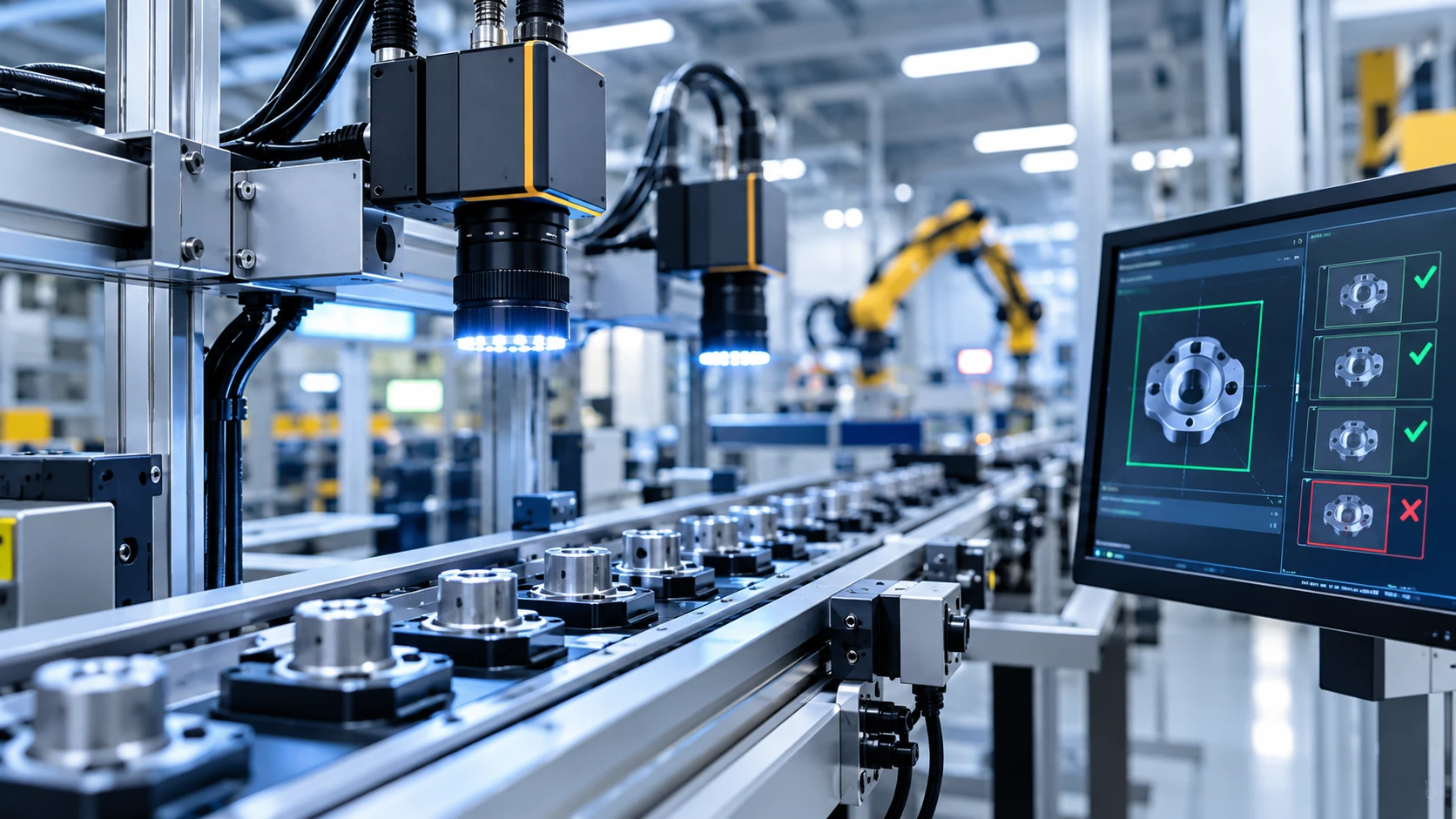
A basic system captures an image of a product using an industrial camera. The image is then processed by specialized software, which analyzes specific characteristics and determines whether the product meets predefined quality standards.
A typical machine vision system includes several components.
The industrial camera captures images of products or manufacturing processes.
The lighting system creates controlled illumination and reduces shadows, reflections, and other visual inconsistencies.
The industrial computer or processor handles image processing and analysis.
The image processing software extracts relevant information from the captured images.
In advanced systems, artificial intelligence models can identify complex patterns and distinguish between normal and defective products.
This means that an industrial camera is not simply a recording device. It becomes part of an automated decision-making system.
The Role of Smart Cameras in Production Lines
Smart cameras are among the most important components of modern machine vision systems.
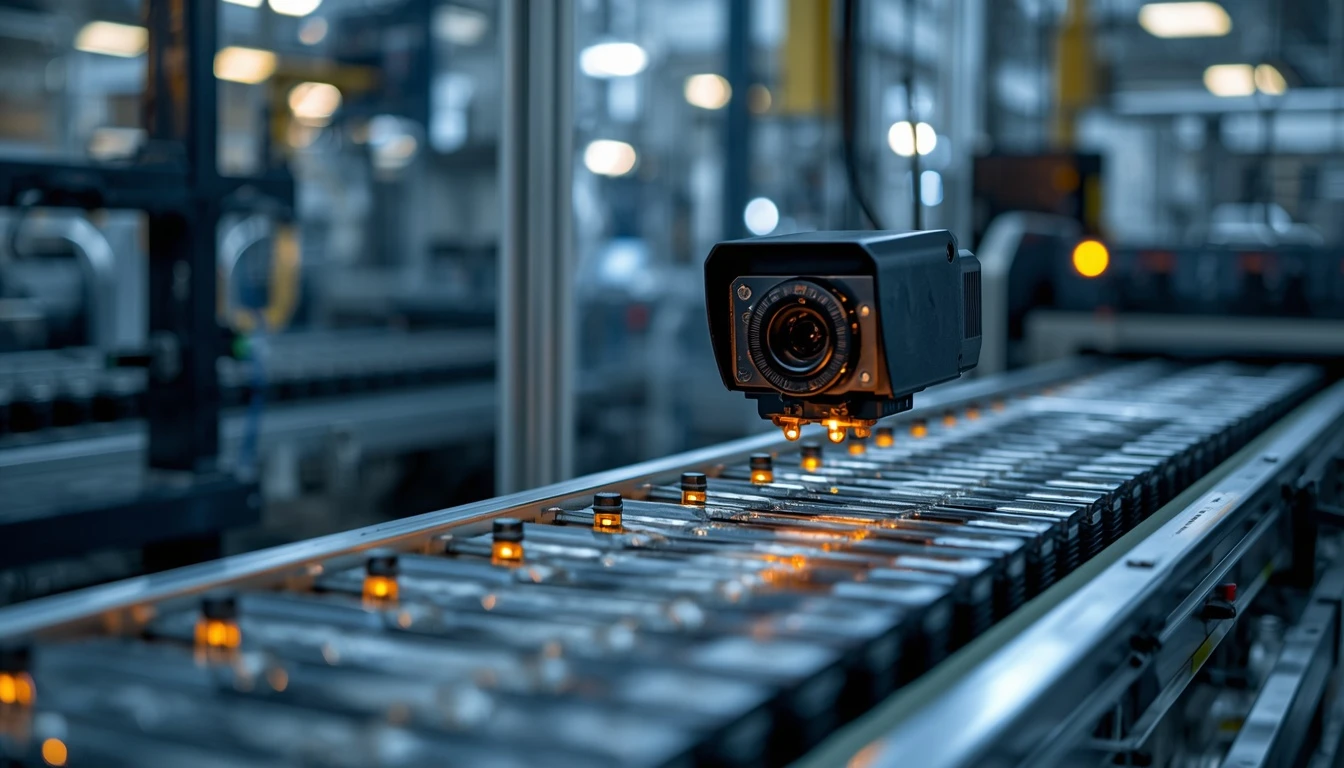
Unlike conventional cameras, smart cameras can perform part of the image processing directly within the camera or through integrated processing hardware.
For example, on an automotive production line, a smart camera can verify whether a specific component has been correctly installed. If the system detects a missing or incorrectly positioned component, it can immediately trigger an alert or send a signal to the production control system.
This changes quality control from a final inspection step into a continuous part of the manufacturing process.
Instead of discovering a large number of defective products at the end of the line, manufacturers can detect problems much earlier.
Automated Quality Control with AI
One of the most important applications of machine vision is automated quality inspection.
Traditional visual inspection depends heavily on human operators. Manual inspection can be time-consuming and may be affected by fatigue, environmental conditions, and human error.
Machine vision systems, on the other hand, can inspect large numbers of products at high speed according to consistent quality standards.
They can detect:
Cracks and fractures
Scratches and dents
Color variations
Surface contamination
Shape abnormalities
Incorrect dimensions
Assembly errors
Packaging defects
Incorrect labels
Invalid barcodes and QR codes
When artificial intelligence is integrated into the system, models can be trained using images of normal and defective products and then used to classify new samples.
Defect Detection with Computer Vision
Automated defect detection is one of the most powerful applications of computer vision in manufacturing.
Traditional image processing often relies on predefined rules. For example, a system may determine that a product is defective when a particular region exceeds a specific color, size, or shape threshold.
Modern AI-based systems can analyze much more complex visual patterns.
Deep learning models and Convolutional Neural Networks (CNNs) can be trained to recognize different types of defects.
Another approach is Anomaly Detection, where the system primarily learns what a normal product looks like and identifies significant deviations from that standard.
This approach can be particularly useful when defects do not have a consistent appearance.
Precision Measurement with Machine Vision
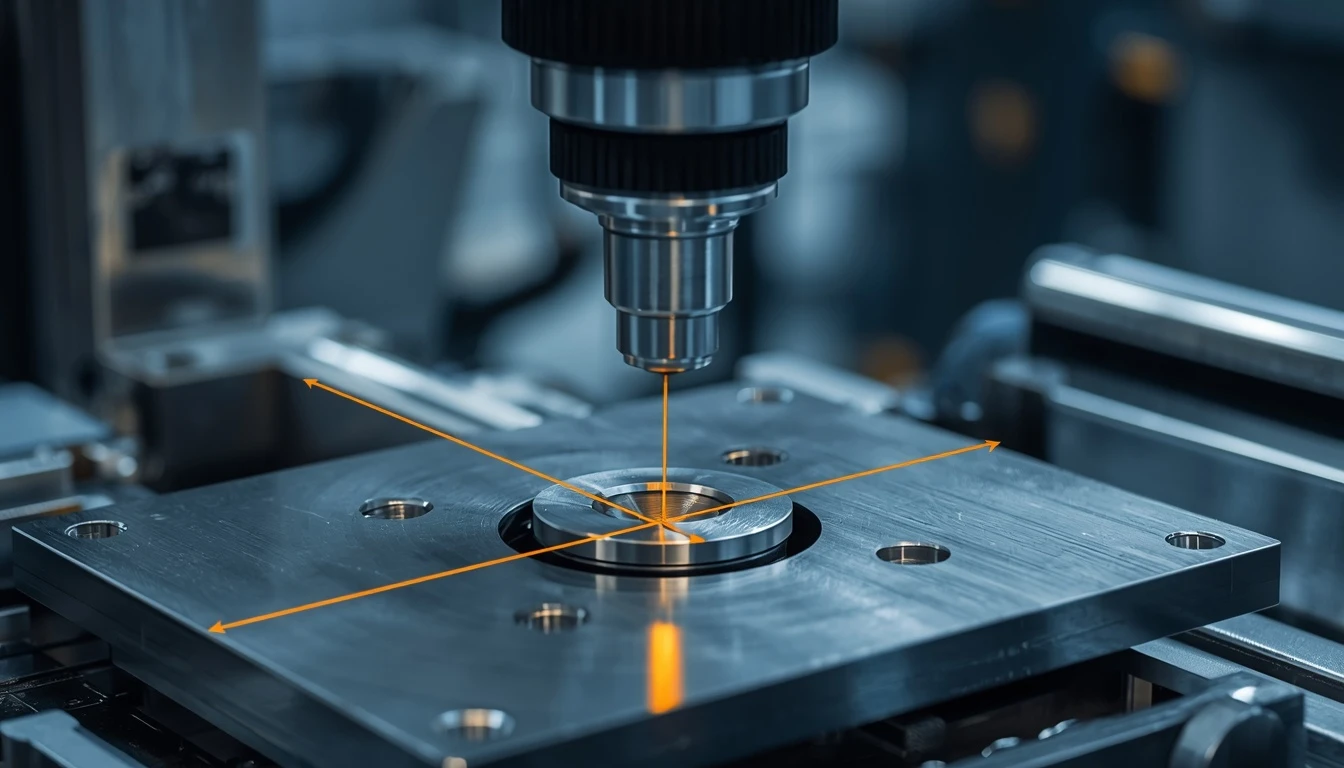
Machine vision is not limited to visual defect detection. It can also perform automated and highly accurate measurements.
Manufacturing components often need to comply with strict dimensional requirements. Machine vision systems can measure parameters such as length, width, diameter, position, and distance.
For example, a vision system can verify whether the diameter of a hole or the length of a manufactured component falls within the required tolerance.
Automating these measurements reduces the need for manual inspection and allows manufacturers to inspect a larger number of products in less time.
Machine Vision Applications Across Industries
Machine vision can be applied to almost any industry involving physical products and automated manufacturing processes.
In the automotive industry, it can be used to inspect components, verify assembly, detect surface damage, and check connections.
In the food industry, cameras can inspect product size, shape, color, and appearance while detecting damaged or improperly packaged products.
In the pharmaceutical industry, machine vision can support packaging inspection, label verification, product counting, and visual quality control.
In electronics manufacturing, machine vision can inspect printed circuit boards, small components, and soldering quality.
In the packaging industry, vision systems can verify product positioning, printed information, barcodes, and packaging integrity.

How Machine Vision Makes Production Lines Smarter
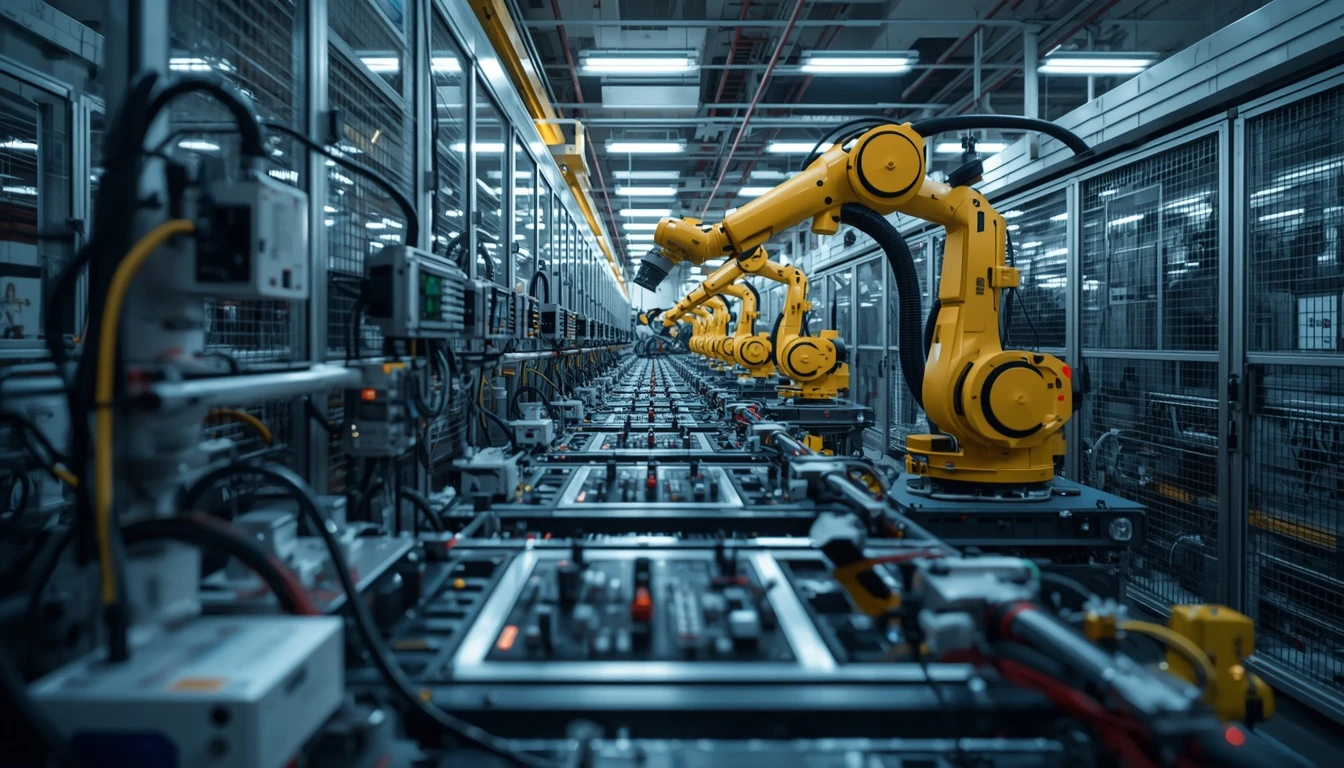
Combining machine vision with industrial automation can transform a conventional production line into a more intelligent manufacturing environment.
Imagine a product moving along a conveyor belt. A camera captures its image at a specific point. The software analyzes the image and determines whether the product meets quality requirements.
If the product passes inspection, production continues. If a defect is detected, the system can trigger a mechanical or robotic mechanism to remove the product from the main line.
This requires integration between cameras, AI software, PLCs, robots, and manufacturing management systems.
As a result, quality control becomes an integrated part of the production cycle rather than an isolated inspection stage.
Benefits of Industrial Machine Vision
Machine vision can provide significant benefits for manufacturers.
The first is faster inspection. Automated systems can inspect products at high speed and maintain consistent performance throughout the production process.
Another major advantage is reduced human error. When inspection criteria are implemented through software and algorithms, decisions can become more consistent.
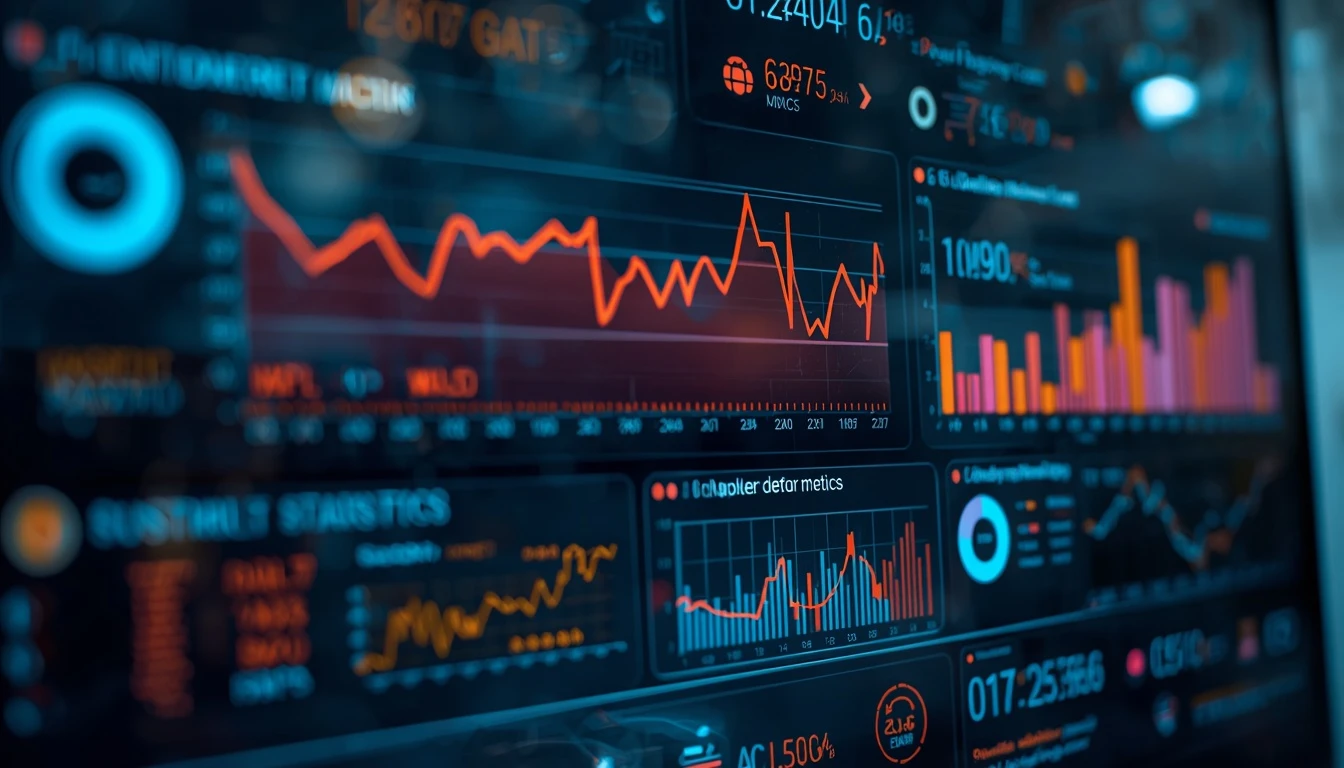
Machine vision also enables manufacturers to create digital records of inspection results. These records can later be analyzed to identify production problems and improve manufacturing performance.
Early defect detection can also prevent large batches of defective products from being produced, reducing waste, rework, and production costs.
Machine Vision + AI: The Next Generation of Quality Control
The future of machine vision goes beyond traditional image processing.
The combination of Machine Vision and Artificial Intelligence can make quality inspection systems more flexible and capable of handling complex visual patterns.
Traditional systems may require a separate rule for each defect type. AI-based systems can instead learn patterns from large collections of product images.
This is especially useful when defects vary significantly in appearance.
For example, scratches may appear in different shapes and locations across products. A trained AI model may be able to identify these variations more effectively than a fixed rule-based system.
However, the success of an AI-powered inspection system depends on high-quality training data, reliable image acquisition, appropriate lighting, and the right model architecture.
Challenges of Implementing Machine Vision
Despite its advantages, implementing an industrial machine vision system requires careful planning.
Lighting is one of the most important challenges. Changes in illumination can significantly affect image quality and algorithm performance.
Camera and lens selection is another critical factor. Production speed, product dimensions, camera distance, and required image detail all influence the appropriate hardware.
AI-based systems also require high-quality datasets. Training images should represent the different conditions that the system may encounter in real production environments.
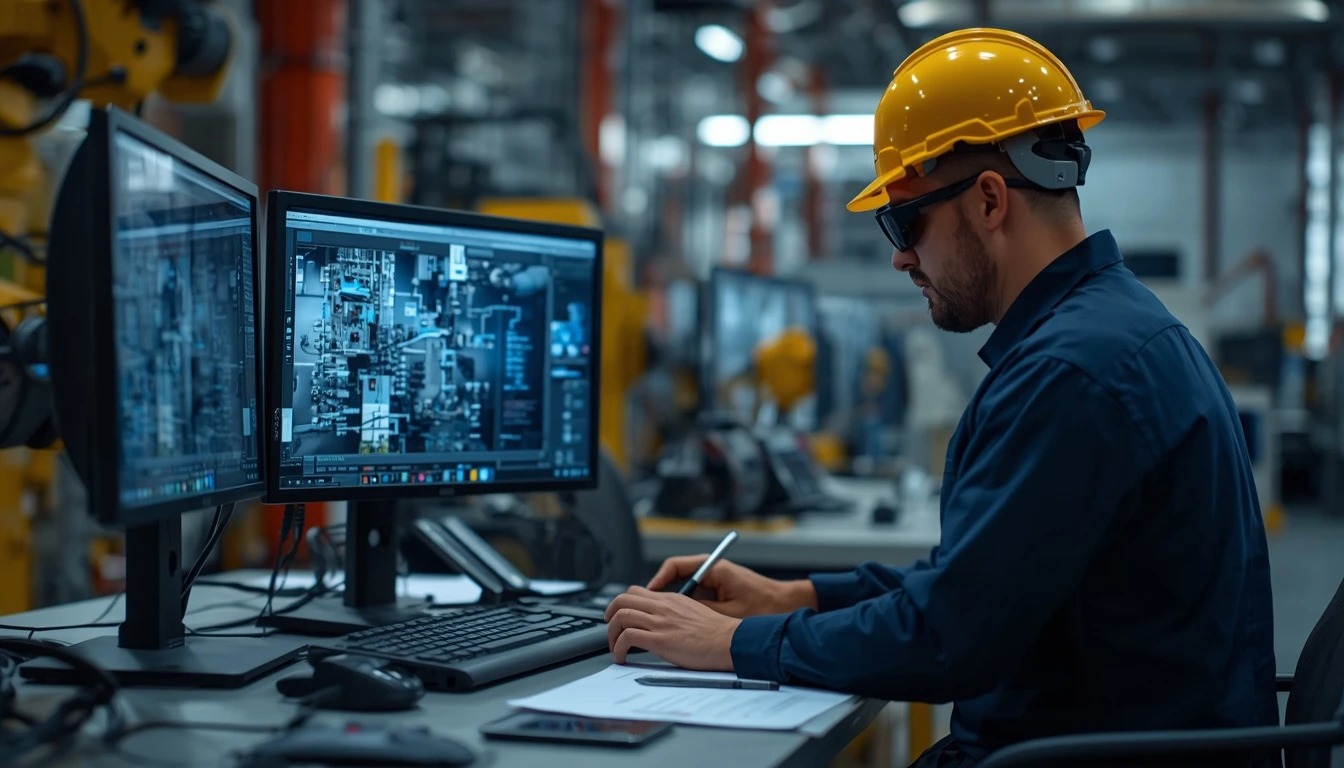
Finally, integrating machine vision with existing industrial equipment requires both software and hardware expertise.
For organizations developing intelligent industrial solutions, experience in artificial intelligence, software engineering, infrastructure, and system integration can be particularly valuable. These are also areas in which Pishgaman Lotus provides technology-focused expertise.
The Future of Machine Vision in Manufacturing
As artificial intelligence, robotics, and Industrial IoT continue to develop, machine vision will become increasingly important in smart factories.
Future vision systems will not simply detect individual defects. They will become part of intelligent ecosystems capable of continuously analyzing production conditions.
The combination of Edge AI, smart cameras, industrial robots, Digital Twins, and manufacturing management systems can enable factories to automate a significant portion of their quality control processes.
One particularly important trend is Edge AI, where AI processing takes place close to the camera instead of sending every image to a centralized server.
This can reduce latency, improve response time, and decrease the amount of data that needs to be continuously transferred across the network.
Conclusion
Industrial machine vision is becoming one of the most important technologies for automated production and intelligent quality control.
By combining industrial cameras, image processing, computer vision, and artificial intelligence, manufacturers can inspect products faster, detect defects, perform precise measurements, and collect valuable production data.
The real value of machine vision is not simply higher inspection speed. It is the ability to create a consistent, data-driven, scalable, and intelligent quality control system.
As manufacturers move toward Industry 4.0 and smart factories, the integration of Machine Vision with AI, robotics, IoT, and industrial automation will become increasingly important.
Companies looking to develop intelligent digital and industrial solutions can benefit from the expertise of technology providers such as Pishgaman Lotus, particularly across areas such as artificial intelligence, software development, infrastructure, and digital transformation.
The factory of the future will not simply produce faster. It will see, understand, analyze, and respond. Machine vision is one of the key technologies making that future possible.
Our articles:"What Is the Difference Between Image Processing and Computer Vision?"
Similar Blogs
Cancer Detection with Image Processing and Artificial Intelligence


Image Processing and Object Detection in Autonomous Vehicles

Text-to-Video: The AI Revolution in Video Creation
Have special project to begin?
Contact us if you need a unique website for your special requirements, if you think having a mobile application help you reach your business’s goals or you still do not recognize which product can help you implement your ideas. Lotus Pioneers accompany you to develop your business through consulting and by designing special products.