Multimodal AI: Understanding Images and Text Together
Multimodal AI

Introduction
When AI Goes Beyond Text
Artificial intelligence has evolved significantly in recent years, moving beyond simple text processing and question answering. Modern AI models can analyze images, interpret documents, and combine information from different sources to generate more relevant responses. These capabilities have contributed to the development of Multimodal AI, an approach that enables machines to process and interpret multiple types of data.
Traditional AI systems often relied on separate models or processing pipelines for different data types. Computer vision handled image analysis, while natural language processing focused on understanding text. Multimodal AI aims to bring these capabilities together, allowing systems to identify relationships between text, images, audio, and video.
This development is particularly valuable for businesses because organizational information is rarely limited to plain text. Product photographs, scanned invoices, charts, audio recordings, and training videos all contain valuable information that can support decision-making and improve customer experiences. Pishgaman Lotus can help businesses explore practical AI solutions that make this diverse information more accessible and useful within digital products and enterprise systems.
What Is Multimodal AI and How Does It Work?
Multimodal AI refers to artificial intelligence systems capable of processing and connecting multiple types of data. These inputs may include text, images, audio, video, and structured information. The primary objective is not simply to analyze each data type independently, but to understand the relationships between them and generate meaningful results.
For example, a user might upload a photograph of a device and ask how it works. A capable multimodal model can examine visible elements in the image, interpret the written question, and generate a response informed by both inputs. In this scenario, the image is not merely an attachment; it becomes an integral part of the information used to answer the question.
The process generally begins by extracting relevant features from each data type. The model transforms visual information into a representation it can process, interprets the meaning of the text, and connects these representations through a shared space or other data-fusion mechanisms. The exact architecture depends on the model, and not all multimodal systems use the same approach.
For Pishgaman Lotus, understanding these mechanisms helps identify opportunities to build AI solutions that address real business problems, from document and image analysis to intelligent assistants that provide contextual support.
How Do Vision-Language Models Enable Image and Text Understanding?
One of the most important technologies in multimodal AI is the Vision-Language Model, commonly known as a VLM. These models are designed to process and connect visual information with language, combining image understanding with the interpretation of questions or written instructions.
For example, when a user uploads a sales chart and asks about its trends, a VLM can examine the visible chart elements and formulate an answer based on both the image and the question. This capability supports applications such as product image analysis, document understanding, visual question answering, and intelligent search.
However, VLMs do not all have the same capabilities. Some specialize in describing images, others are optimized for visual question answering, and more advanced systems may handle complex tasks such as document analysis or reasoning about relationships between objects in an image. Their accuracy depends on factors including input quality, model architecture, and task complexity.
For businesses developing intelligent products, choosing the right model is essential. Pishgaman Lotus can help evaluate project requirements, data quality, security considerations, processing costs, and model capabilities to identify an appropriate technical solution.

How Is Multimodal AI Different from Text-Based AI Models?
Large Language Models, or LLMs, are primarily designed to process and generate language. They can write content, answer questions, summarize information, and assist with a wide range of language-related tasks. Multimodal systems extend these capabilities by incorporating information from additional sources, such as images and audio.
For instance, a text-based model may explain how a device works, but without visual input, it cannot directly examine the specific device shown in an uploaded photograph. A multimodal system with vision capabilities can analyze the image and tailor its response to the visible information.
Nevertheless, multimodal AI is not automatically more accurate in every situation. Text-based models may perform better on certain language tasks, while multimodal systems can struggle with small text, intricate visual details, or ambiguous images. The appropriate approach depends on the product's actual requirements.
Pishgaman Lotus can assess whether a language model alone is sufficient for a particular application or whether combining text and visual inputs offers measurable benefits. This decision can help control costs, reduce technical complexity, and improve product effectiveness.
Business Applications of Multimodal AI
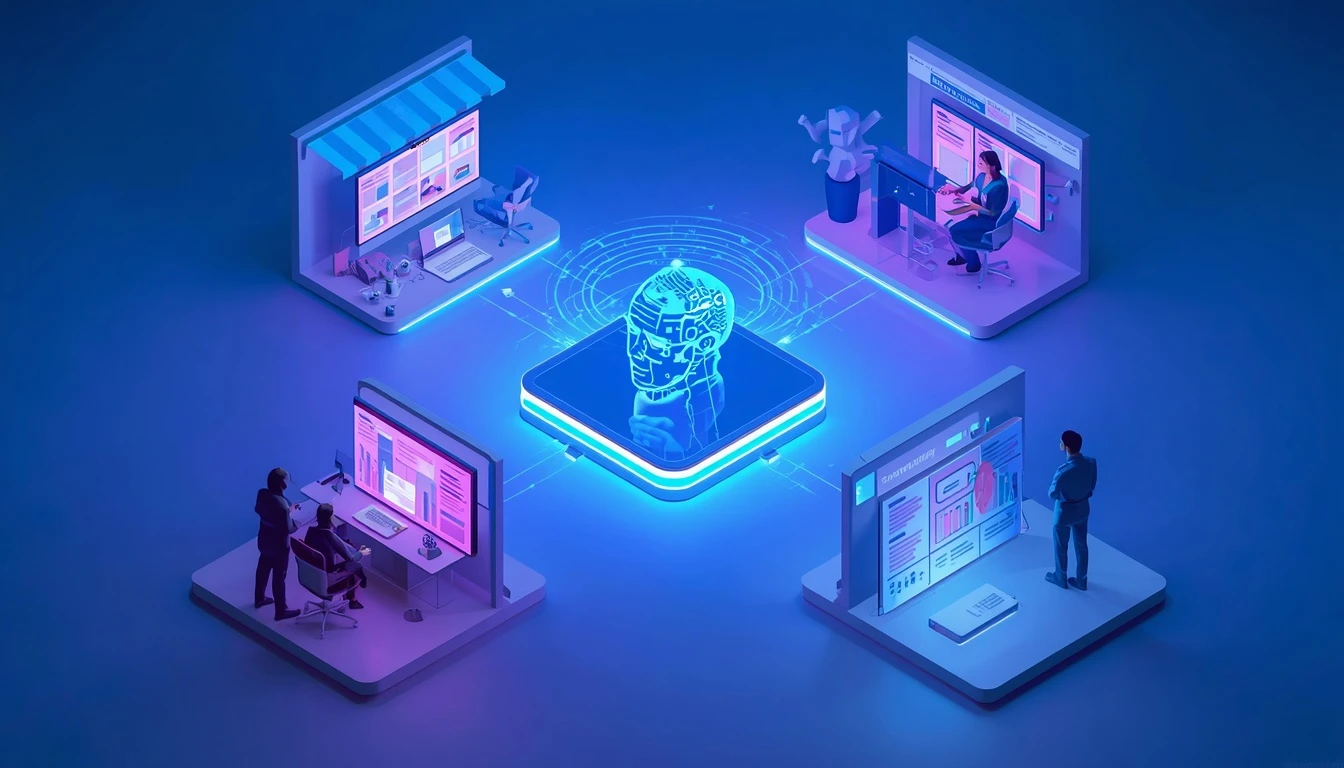
One of the main advantages of multimodal AI is its ability to use information stored in different formats. Businesses often manage substantial amounts of data across product images, scanned documents, visual reports, and multimedia content. Analyzing these resources manually can be time-consuming, while multimodal solutions can automate parts of the process.
In e-commerce, this technology can help identify visual product attributes, categorize images, and answer questions about product appearance. In customer support, users can submit photographs of products or technical problems and receive initial guidance based on the visible information. Human review remains important when responses involve sensitive decisions or specialized expertise.
In administrative and enterprise environments, multimodal models can extract information from scanned documents, interpret charts, and combine textual and visual data. Marketing teams can also use these capabilities to analyze product imagery, organize media assets, and improve visual content workflows.
Pishgaman Lotus can help identify repetitive, time-consuming business processes where multimodal AI offers practical value. Successful implementation depends not only on model selection but also on data quality, integration with existing systems, and ongoing performance evaluation.
Multimodal AI, User Experience, and Intelligent Assistants
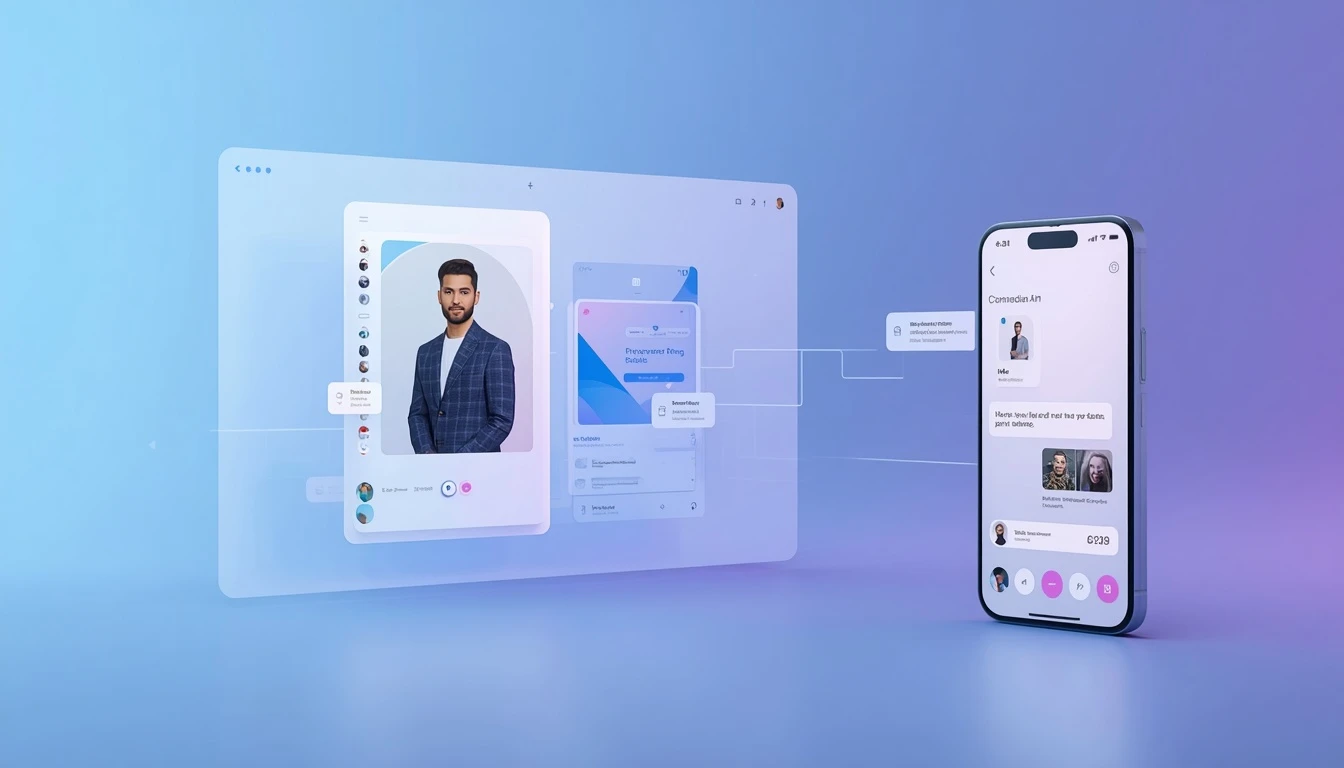
User experience improves when people can interact with digital systems naturally and in ways that match their needs. In many products, limiting users to text input or keyword-based searches can make it difficult to communicate certain requirements. Multimodal AI allows users to provide images and other supported inputs alongside written questions.
For example, a customer using an intelligent support system could upload a photograph of a device malfunction and add a short description. By combining these inputs, the system may provide more relevant guidance. In an online store, customers could ask questions about the color, shape, or visual characteristics of a product shown in an image.
These capabilities can simplify interactions with digital products, but thoughtful interface design remains essential. Users should understand which file types are supported, what the system can and cannot do, and how their information is processed. They should also have ways to correct or supplement information when the model misinterprets an image.
Pishgaman Lotus can combine user experience design with AI development to create products that are more intuitive, accessible, and responsive to user needs. The objective is not simply to add complexity, but to use technology to eliminate unnecessary steps and solve problems more effectively.
Challenges and Limitations of Multimodal AI
Despite its potential, multimodal AI presents several implementation challenges. One of the most important is data quality. Blurry photographs, incomplete documents, poor camera angles, and ambiguous descriptions can lead to incorrect interpretations. Even advanced models may misread visual details or generate information that is not supported by the available input.
Processing costs are another consideration. Analyzing high-resolution images, videos, or multiple simultaneous inputs may require more computational resources than processing simple text. Choosing an appropriate architecture, selecting models suited to specific tasks, and avoiding unnecessary processing can help manage operational expenses.
Security and privacy are equally important. User-submitted images may contain personal information, confidential documents, or sensitive business data. Organizations should determine where information is processed, how long it is retained, and who can access it. Access controls, encryption, and clear data-retention policies can reduce associated risks.
Pishgaman Lotus should account for these limitations from the earliest stages of AI project development. Testing models against real-world data, establishing accuracy benchmarks, evaluating security, and estimating operating costs can help create more reliable and sustainable solutions.

The Future of Multimodal AI and Intelligent Product Development
As AI models continue to advance, interactions between text, images, audio, and video are expected to become more natural across digital products. Intelligent assistants may increasingly combine visual and linguistic information to handle a wider range of tasks, extending user interactions beyond traditional text-based searches.
These developments could support intelligent customer service, document analysis, image-based search, and personalized digital products. However, the success of each application will depend on real user needs, data quality, implementation costs, and the system's ability to deliver trustworthy results.
For companies such as Pishgaman Lotus, the greatest opportunity lies in applying this technology strategically. Before developing a multimodal feature, businesses should identify the problem it will solve, determine which data sources are available, and assess whether the approach offers measurable advantages over simpler alternatives. A limited prototype tested with real-world data can support better investment decisions.
Ultimately, the future of multimodal AI will not depend solely on larger models. Better evaluation methods, lower processing costs, stronger data protection, and effective user experience design will also determine how useful this technology becomes in everyday and enterprise applications.
The Role of Pishgaman Lotus in Developing Multimodal AI Solutions
Effective multimodal AI implementation requires a combination of technical expertise, business process understanding, and thoughtful product design. Selecting a model is only one stage of the project. Data preparation, software architecture, integration with information sources, access controls, and output evaluation must also work together.
Pishgaman Lotus can take a problem-oriented approach to identifying business processes that would benefit from combining text and visual information. For example, if employees spend significant time reviewing image-based documents, a solution could extract relevant information and deliver it to existing enterprise systems. In a customer-facing product, an image-aware assistant might be a more appropriate solution.
For these projects, starting with a limited prototype, defining measurable performance indicators, and testing with real-world data are particularly important. This approach allows teams to evaluate accuracy, response time, processing costs, and user acceptance before committing to a larger implementation.
The goal of Pishgaman Lotus should be to deliver measurable business value through AI. This value may take the form of fewer repetitive tasks, improved access to information, better service quality, or simpler interactions between users and digital products.

Conclusion
Combining Images and Text to Build Smarter Digital Products
Multimodal AI represents an important step toward systems that can process information across different formats. By combining computer vision and natural language processing capabilities, these systems can use images and text together to support applications such as customer service, document analysis, e-commerce, and intelligent assistants.
However, successful implementation depends on choosing suitable models, maintaining data quality, protecting sensitive information, and carefully evaluating performance. Before adopting the technology, businesses should identify the problem they want to solve and determine whether multimodal capabilities offer measurable benefits over simpler solutions.
Pishgaman Lotus can help businesses turn these capabilities into practical tools through business-focused AI development and thoughtful digital product design. The future of intelligent products will depend not simply on processing more data, but on using information more effectively, understanding user needs, and delivering reliable results.
Our articles:"Business Applications of VLMs , From Image Analysis to Intelligent Multimodal Assistants"
Blog Tags
Similar Blogs

Holography and AGI: Intelligent Interaction in a Three-Dimensional World


Innovative Holography Ideas and 3D Displays

VLM Applications in Robotics and Autonomous Vehicles
Have special project to begin?
Contact us if you need a unique website for your special requirements, if you think having a mobile application help you reach your business’s goals or you still do not recognize which product can help you implement your ideas. Lotus Pioneers accompany you to develop your business through consulting and by designing special products.