Business Applications of VLMs , From Image Analysis to Intelligent Multimodal Assistants
Business Applications of VLMs
Introduction
How Vision-Language Models Help Businesses
As artificial intelligence advances, businesses are no longer limited to text and numerical data when analyzing information. Vision-Language Models (VLMs) can interpret images, describe visual content in natural language, and answer questions based on visual inputs. These capabilities create new opportunities to automate workflows, improve customer experiences, and support better business decisions.
For Pishgaman Lotus, these developments offer opportunities to build more intelligent software products that can process visual information alongside text and structured data. By integrating multimodal AI into business applications, organizations can develop services that respond to more complex user needs.
Understanding VLMs and Their Difference from Text-Based AI
Vision-Language Models are AI systems trained to connect visual information with language. They can identify objects and elements in images, describe visible details, and answer questions about visual content.
For example, a conventional language model can analyze a product description written by a customer. A VLM can also examine a photograph of that product and provide information about its visible characteristics, components, or similarities to other images.
This capability is particularly valuable for businesses that manage large volumes of product images, scanned documents, or multimedia content. Pishgaman Lotus can explore VLM integration in intelligent software solutions that combine visual understanding with textual information.
Product Image Analysis and E-Commerce Optimization
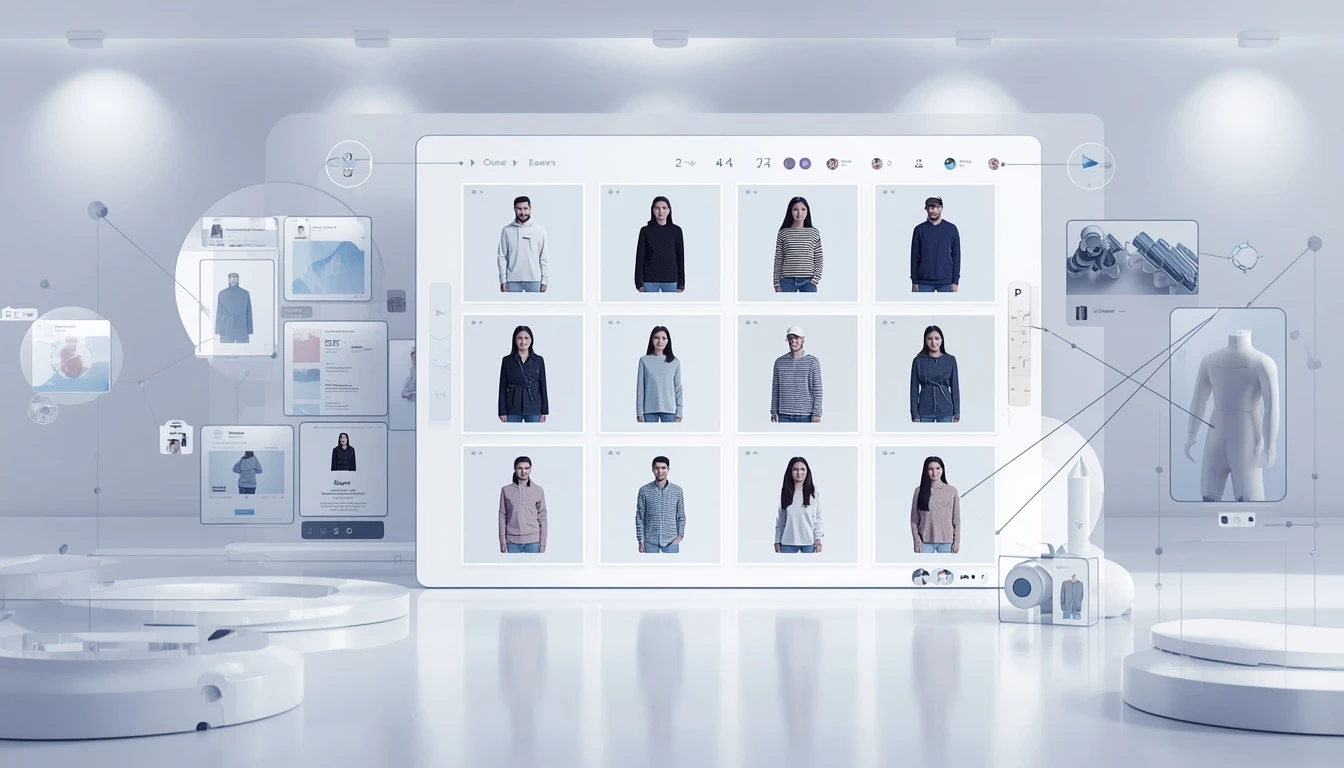
One of the most promising business applications of VLMs is e-commerce. Online stores often manage thousands of product images that must be categorized, described, and organized for customers.
VLMs can analyze product photographs, identify visible characteristics, support preliminary description generation, and improve visual product discovery. For example, customers could upload an image and search for visually similar products instead of relying entirely on text-based queries.
These models can also assist with image categorization, preliminary quality checks, and product catalog management. However, characteristics such as authenticity, precise material composition, or actual product quality cannot always be established from an image alone.
Pishgaman Lotus can integrate visual AI capabilities with e-commerce platforms, product databases, and search systems to streamline catalog management and improve the shopping experience.
Quality Control and Industrial Inspection
Manufacturing companies depend on quality control to maintain product consistency and reduce defects. Traditional inspection processes often rely on human operators, industrial cameras, and specialized computer vision systems.
VLMs can complement these technologies by analyzing images of manufactured components and helping explain potential visual defects. Examples include visible cracks, surface irregularities, deformation, and deviations from reference images.
In practice, VLMs are not always suitable as standalone systems for safety-critical industrial inspection. Their performance depends on image quality, lighting, defect characteristics, and the evaluation data used. Combining specialized computer vision models with VLMs and human verification can provide a more reliable solution.
Pishgaman Lotus can develop customized AI solutions that connect image analysis systems with manufacturing software and enterprise reporting platforms, making inspection workflows easier to manage.

Intelligent Multimodal Assistants for Customer Support
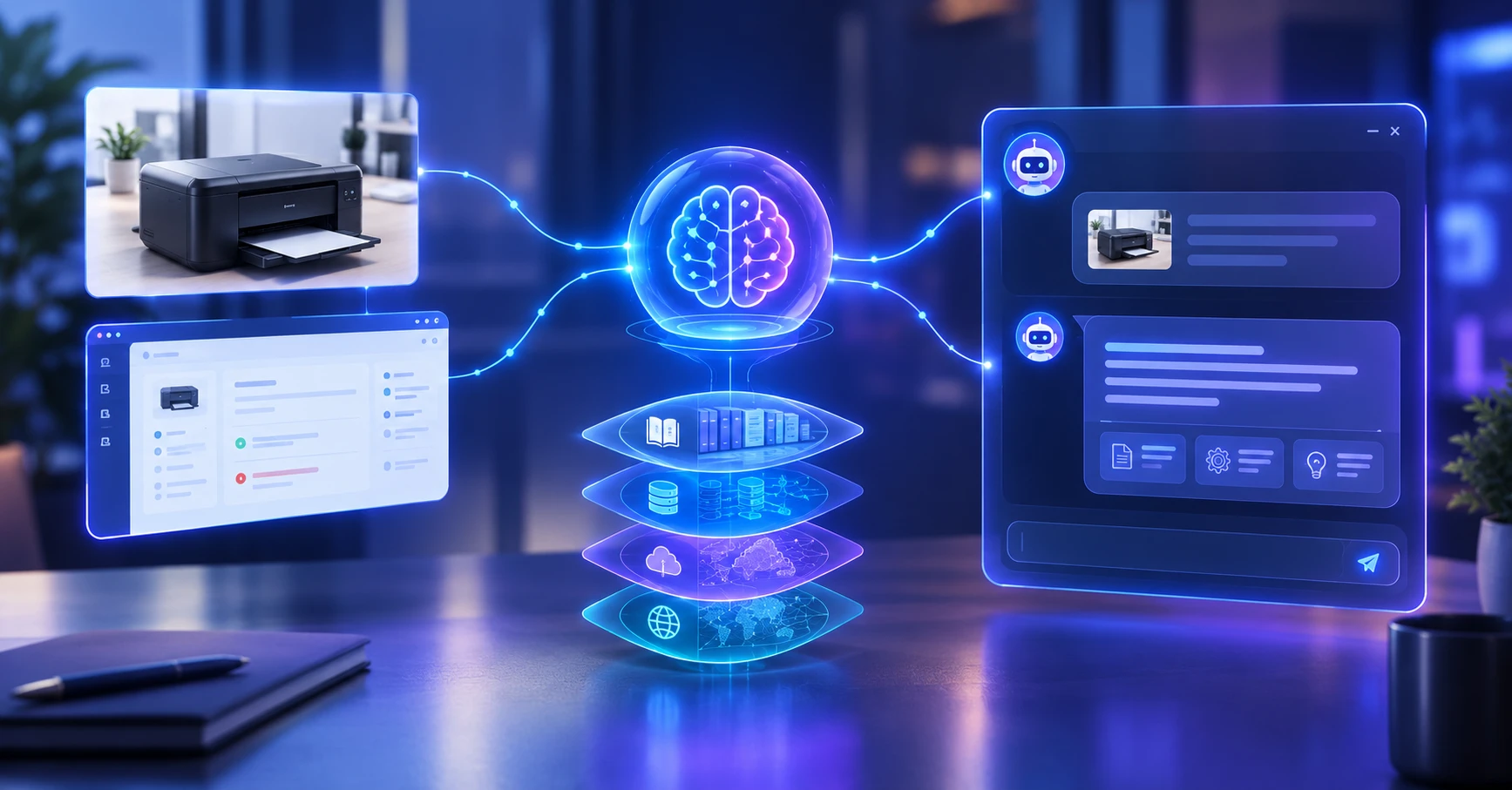
VLM-powered assistants can make customer interactions more flexible by allowing users to share images as well as text. Customers may submit product photographs, screenshots of software errors, or images of individual components to receive relevant guidance.
For instance, a customer purchasing electronic equipment could upload a photograph of a component and ask what it might be used for. Similarly, a software user could submit a screenshot of an error message and request troubleshooting assistance.
Combining VLMs with language models, organizational knowledge bases, and retrieval-augmented generation (RAG) can help assistants provide responses grounded in relevant product documentation and support resources.
Pishgaman Lotus can develop multimodal chatbots and intelligent assistants tailored to business requirements, helping automate routine customer inquiries while allowing support teams to focus on more complex issues.
Document Processing and Administrative Automation
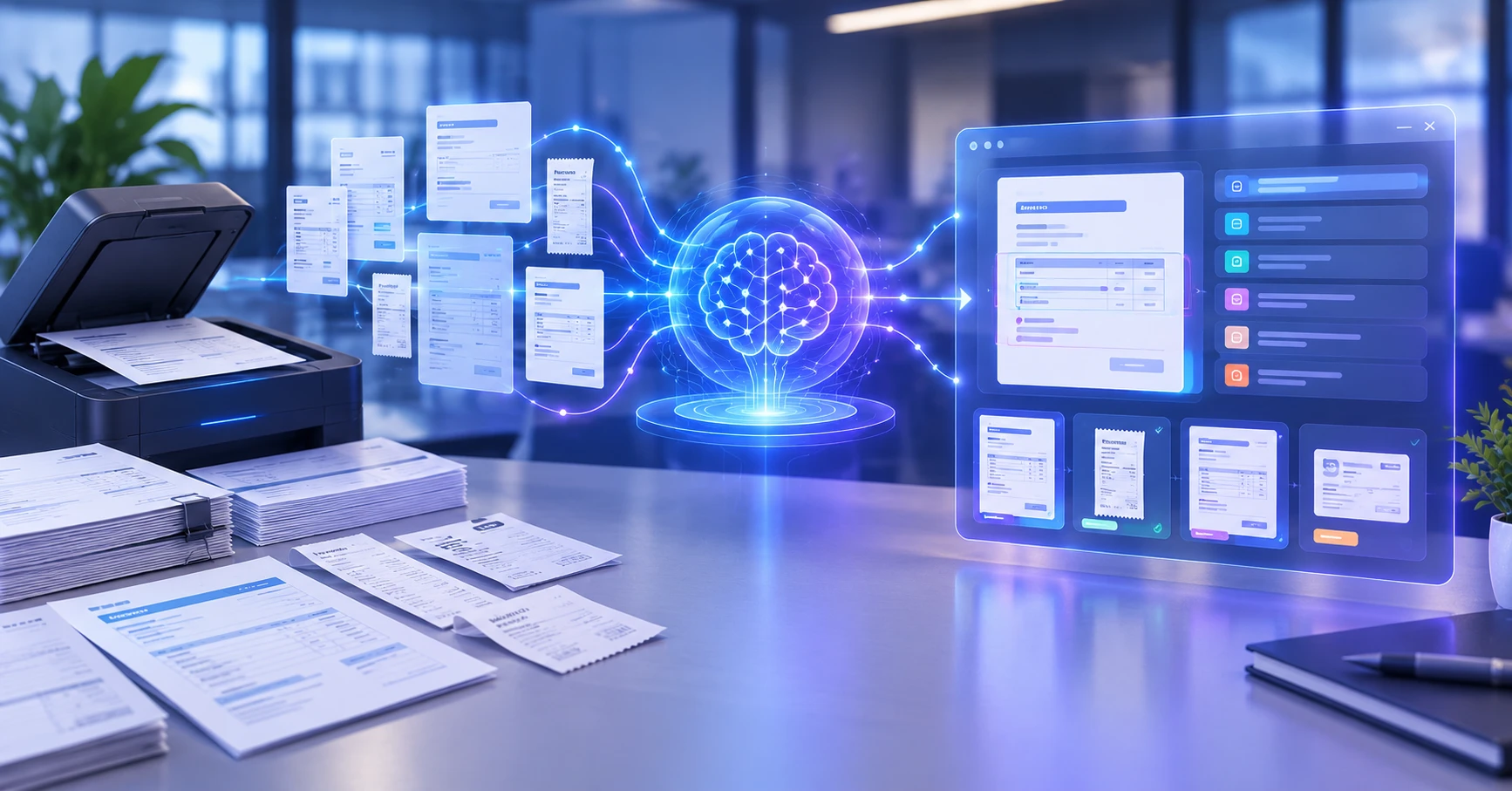
Many organizations handle scanned invoices, receipts, forms, and other documents that require time-consuming manual processing. VLMs can help interpret document layouts, understand the relationships between visual elements, and extract relevant information.
For example, an AI-powered document processing system could analyze an invoice image and identify fields such as the date, total amount, and supplier name. For more complex forms, the model may help interpret the relationships between headings, tables, and their associated values.
In business applications, VLMs can be combined with Optical Character Recognition (OCR), validation rules, and document management systems. Extracted information should be verified before entering financial or operational systems, especially when errors could have significant consequences.
Pishgaman Lotus can implement enterprise AI solutions that automate document classification, data extraction, and information transfer while preserving human review for uncertain cases.
Marketing and Visual Content Analysis
Visual content plays a major role in digital marketing. Businesses need effective ways to organize advertising assets, analyze creative materials, manage visual archives, and identify relevant images across large content libraries.
VLMs can describe visible elements in advertising images, categorize visual themes, and support preliminary brand-compliance reviews. They can also help marketing teams locate images associated with particular campaigns or identify potentially unsuitable content.
When combined with campaign analytics, these capabilities can help businesses investigate relationships between creative characteristics and marketing performance. However, measuring actual campaign effectiveness still requires performance data, including clicks, conversions, and engagement.
Pishgaman Lotus can combine AI, data analytics, and software development to create tools that improve visual content management and support marketing decisions.
Challenges of Implementing VLMs in Business
Despite their potential, VLMs introduce several challenges that businesses must address before deploying them at scale.
Accuracy and reliability: Models may misinterpret visual details or produce descriptions that are not supported by the image. Business-critical applications should include testing, output validation, and human review where appropriate.
Computational costs: Processing high-resolution images or large image collections can require substantial computing resources. Selecting suitable models, optimizing image sizes, and limiting multimodal processing to relevant tasks can help control costs.
Privacy and security: Images may contain personal information, confidential documents, or sensitive business data. Organizations should establish clear data retention policies, access controls, encryption practices, and infrastructure requirements before deployment.
Pishgaman Lotus can support organizations throughout the implementation process, from identifying business requirements and evaluating data readiness to developing software integrations and monitoring deployed AI systems.
How Businesses Can Get Started with VLMs
Businesses should begin with a clearly defined use case rather than attempting a large-scale deployment immediately. Suitable starting points may include product image classification, document processing, or customer support based on visual inputs.
The next step is to define the required accuracy, available data, processing costs, and security constraints. Different models can then be evaluated using representative real-world examples, with performance measured in terms of accuracy, speed, cost, and the level of human intervention required.
Once the initial solution demonstrates value, it can be integrated with existing software, databases, and operational workflows. Monitoring, error handling, and ongoing evaluation are essential for maintaining reliable performance over time.
Pishgaman Lotus can help businesses move from feasibility assessment and prototyping to software development, API integration, and deployment. The goal is to apply VLMs where they deliver measurable business value rather than introducing AI capabilities without a clear purpose.
Conclusion
How VLMs Are Transforming Business
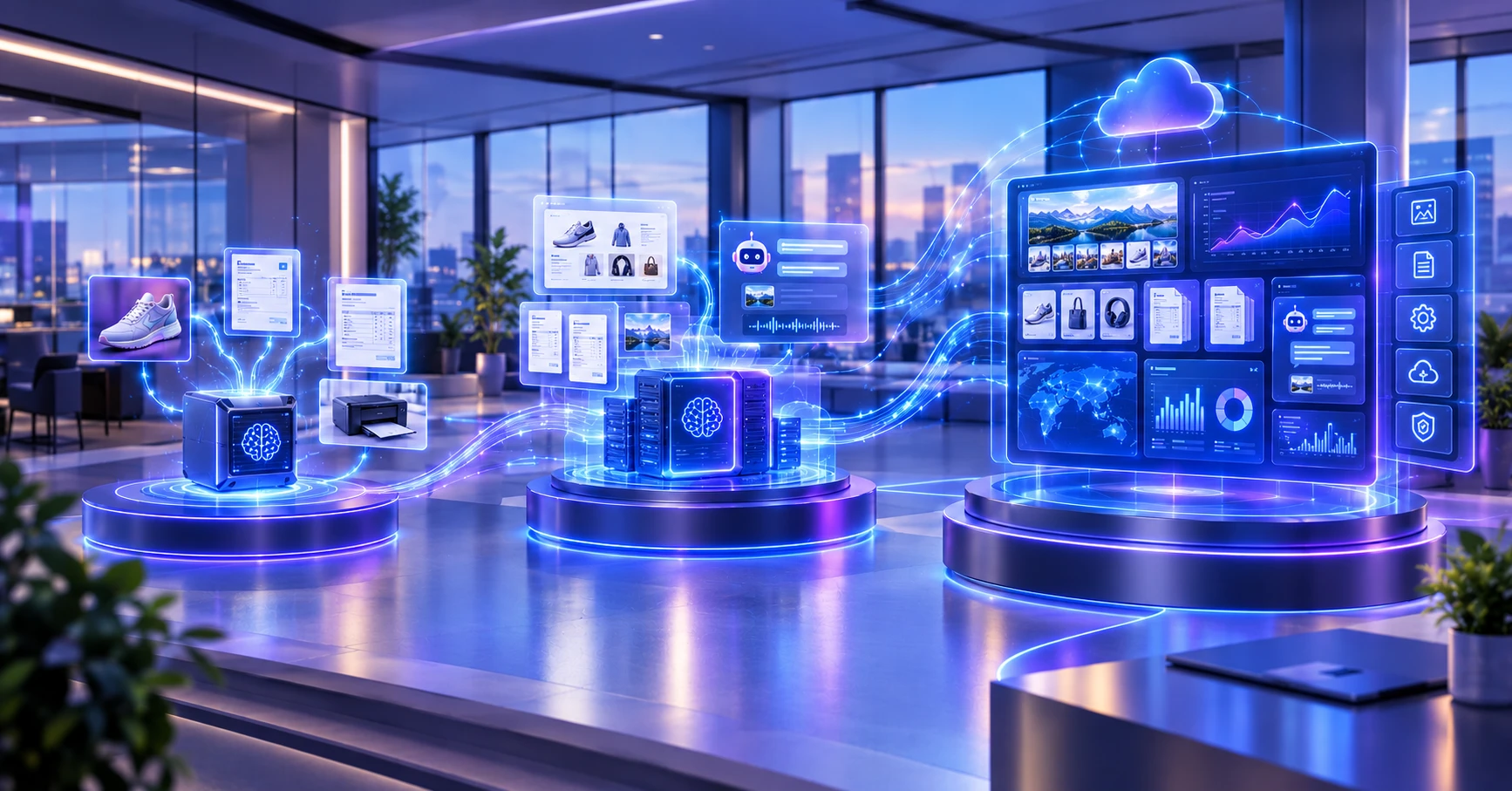
Vision-Language Models create new opportunities by connecting visual understanding with natural language. Their applications range from e-commerce image analysis and industrial inspection to document processing and intelligent multimodal customer support.
However, successful implementation requires more than selecting an AI model. Businesses must integrate the technology into appropriate software systems, evaluate its performance against real-world data, and address security, reliability, and cost considerations.
Through its focus on AI solutions, enterprise software, and system integration, Pishgaman Lotus can help businesses explore practical applications of multimodal AI and transform VLM capabilities into useful operational tools.
Our articles:"VLMs: Combining Computer Vision and AI for Image Understanding"
Blog Tags
Similar Blogs

Holography and AGI: Intelligent Interaction in a Three-Dimensional World


Innovative Holography Ideas and 3D Displays

VLM Applications in Robotics and Autonomous Vehicles
Have special project to begin?
Contact us if you need a unique website for your special requirements, if you think having a mobile application help you reach your business’s goals or you still do not recognize which product can help you implement your ideas. Lotus Pioneers accompany you to develop your business through consulting and by designing special products.