Intelligent Holography: Combining AI and Interactive 3D Images
Intelligent Holography
Introduction
The Entry of Artificial Intelligence into the World of Holographic Images
Holography technology has gone beyond an advanced method for reconstructing three-dimensional images in recent years and has become a platform for creating interactive visual experiences. Combining this technology with artificial intelligence makes it possible to develop a new generation of intelligent systems that not only display three-dimensional images but can also analyze their surrounding environment, respond to user inputs, and change their visual content according to different conditions.
Intelligent Holography refers to the use of artificial intelligence algorithms, image processing, and three-dimensional reconstruction technologies to create and manage dynamic holographic content. In this approach, artificial intelligence acts as a processing and decision-making layer that establishes a connection between environmental data, visual information, and three-dimensional images.
This combination can change the way humans interact with displays, digital environments, and intelligent systems. Pishgaman Lotus follows this field as one of the important areas for the future of interactive experiences by exploring emerging artificial intelligence technologies and developing digital solutions.
What Is Intelligent Holography and How Does It Work?
Intelligent holography is a combination of three-dimensional image recording and reconstruction technology with artificial intelligence algorithms. In traditional holography, information about light and its interference patterns is used to reconstruct a three-dimensional image. However, in intelligent systems, artificial intelligence can automatically manage the processes of generating, processing, optimizing, and displaying images.
In these systems, visual data is first received through cameras, sensors, or digital sources. Then, image processing and computer vision algorithms extract the required information. Artificial intelligence models can analyze the structure of objects, depth, position, and visual characteristics of the environment. Based on this information, appropriate three-dimensional content can be generated or modified.
One of the important capabilities of this technology is the possibility of optimizing the calculations related to holographic image reconstruction. Producing high-quality three-dimensional images requires processing a large amount of information. Artificial intelligence can make some computational processes faster and more efficient by learning visual patterns and predicting the required data.
To learn more about the fundamentals of this technology and its development path, reading the article Innovative Holography Ideas and 3D Displays can provide a suitable perspective on the various applications of three-dimensional image display and the future of holographic displays.
The Role of Artificial Intelligence in Generating and Processing Holographic Images
Artificial intelligence is one of the most important components in the development of intelligent holography because it can automatically perform many complex processes related to analyzing and generating three-dimensional images. In advanced holographic systems, machine learning and deep learning algorithms are used to identify visual patterns, estimate depth, reconstruct details, and optimize image quality.
One of the important applications of artificial intelligence in this field is generating three-dimensional content from two-dimensional images. Intelligent models can analyze ordinary images and estimate information related to the depth, structure, and position of objects. This information helps the system create a processable three-dimensional representation.
On the other hand, deep neural networks can play a role in calculating diffraction patterns and generating computer-generated holographic planes. These planes, known as Computer-Generated Holograms (CGH), are used to reconstruct three-dimensional images through optical systems.
Artificial intelligence can also improve image quality through noise reduction, resolution enhancement, color correction, and visual detail improvement. As a result, holographic images can be displayed with greater accuracy and better coordination with the environment.
In this context, multimodal artificial intelligence technology is also highly important. Models that can analyze visual and textual information simultaneously have significant potential for understanding three-dimensional content and creating intelligent interactions. In this regard, the article Multimodal AI: Understanding Images and Text Together examines the capabilities of models that can process several types of data simultaneously.
Interactive Holography; Beyond Displaying Three-Dimensional Images
One of the most important differences between intelligent holography and ordinary three-dimensional displays is the ability to interact with users and the surrounding environment. In traditional displays, visual content is usually predetermined, and users can only observe it. However, in intelligent holographic systems, images can respond to user behavior, voice commands, hand movements, or environmental changes.
For example, an intelligent holographic display can place a three-dimensional model of a product in the display space and allow the user to rotate it, zoom in, or examine different parts through hand movements. In such conditions, computer vision and motion recognition algorithms analyze user inputs, and the intelligent system changes the displayed content based on them.
Natural language processing can also play an important role in this interaction. Users will be able to receive information about a holographic model through voice commands. For example, in an educational environment, the system can be asked to display a specific part of a three-dimensional model or explain the function of one of its components.
Combining these capabilities transforms holography from a purely display-based technology into an advanced user interface; an interface that can make the connection between humans and digital information more natural and understandable.
The Relationship Between Intelligent Holography, AGI, and Intelligent Agents
One of the important future prospects of holography is its combination with advanced artificial intelligence systems and intelligent agents. In this structure, a hologram is no longer merely a three-dimensional image but can become a platform for displaying and interacting with an intelligent system.
Artificial General Intelligence (AGI) refers to the concept of systems that, if achieved, will be capable of performing a wide range of cognitive tasks across different fields. Combining such systems with holographic interfaces can create a different experience of interacting with artificial intelligence.
Imagine an intelligent assistant appearing in the form of a three-dimensional holographic display, understanding user requests, analyzing the required information, and displaying results as visual models. Such a system can be used as an advanced interactive interface in educational, industrial, medical, and design environments.
Intelligent agents can also dynamically change holographic content by receiving information from the environment, performing the required analyses, and selecting appropriate actions. For example, an intelligent agent in an industrial environment can examine the condition of a device and display a three-dimensional model of its defective component along with analytical information.
The article Holography and AGI: Intelligent Interaction in a Three-Dimensional World also examines the relationship between artificial general intelligence and holographic environments. This relationship shows that three-dimensional displays can become a platform for more direct interaction with intelligent systems in the future.
Applications of Intelligent Holography in Different Industries
The combination of artificial intelligence and holography can be used in various industrial, commercial, and service fields. The ability to analyze data and display information in three dimensions makes this technology useful for situations where visual understanding and fast interaction are important.
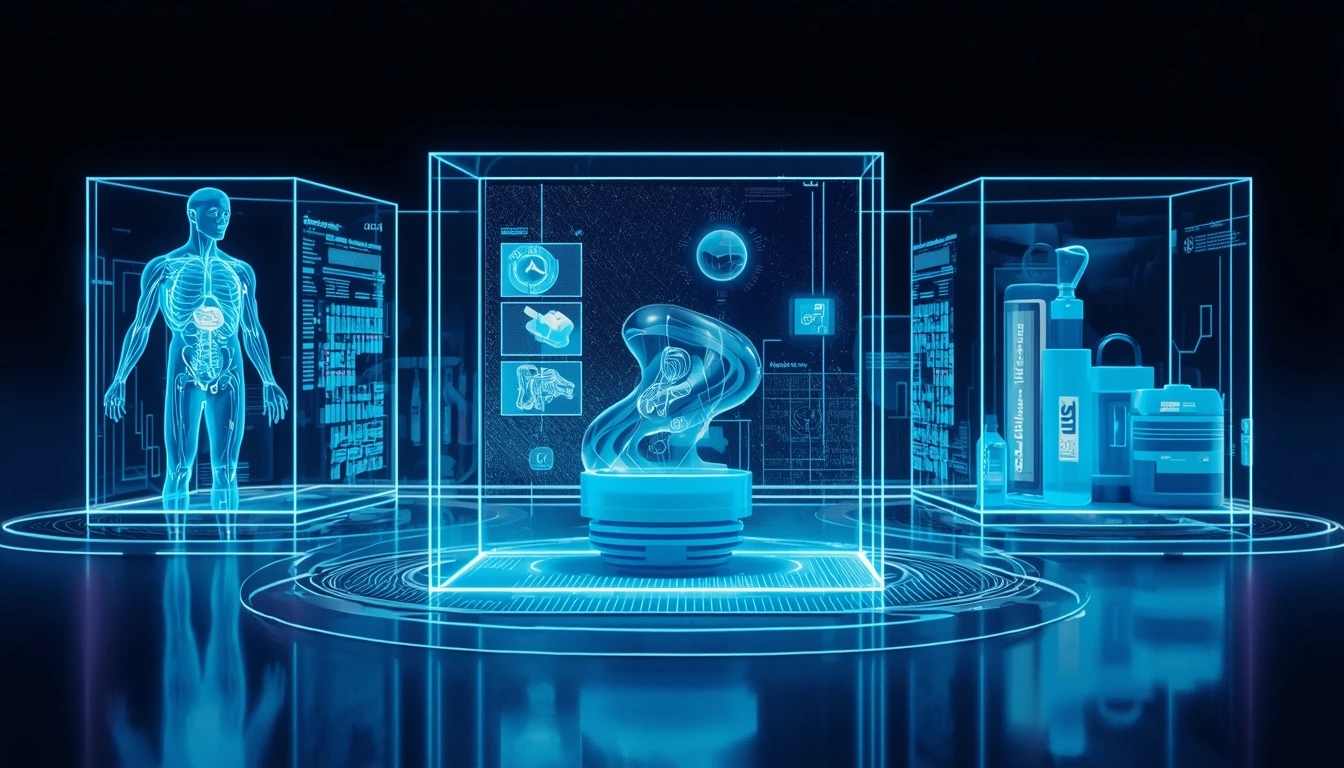
In the medical field, intelligent holography can be used to display three-dimensional models of organs, internal body structures, and images obtained from medical imaging equipment. Artificial intelligence algorithms can help analyze medical images and extract structural information, then display the results as three-dimensional models that can be examined. This capability can be useful in medical education, surgical planning, and examining complex body structures.
In industry and engineering, holographic models make it possible to examine components, equipment, and production lines in three dimensions. Artificial intelligence can analyze sensor data and display possible changes or problems on a three-dimensional model of a device. This approach can help improve maintenance processes and increase the accuracy of technical examinations.
In education, displaying complex scientific concepts in three dimensions can make understanding subjects easier. For example, students can examine the structures of molecules, the solar system, or biological processes through holographic models and interact with them using voice or motion commands.
In e-commerce, intelligent holography can also transform the product examination experience. Users can view three-dimensional models of products from different angles before purchasing and receive additional information through an intelligent assistant. This is particularly important in selling decorative products, electronic equipment, and goods whose appearance and dimensions play an important role in purchasing decisions.
The Role of Audio Processing and Intelligent Recognition in Interacting with Holograms
Interaction with holographic systems is not limited to hand movements and visual inputs. Audio processing and speech recognition technologies can also provide the possibility of more natural communication between users and three-dimensional content.
In an intelligent holographic system, users can request the display of a three-dimensional model, a change in viewing angle, or receive explanations about an object through voice commands. The system first converts speech into processable data. Then, using artificial intelligence models, it recognizes the meaning of the request and finally displays the holographic content that corresponds to it.
However, increasing the use of voice inputs also raises challenges such as speaker identity recognition, communication security, and protection against fake voices. Artificial intelligence voice cloning can be used to generate voices similar to those of real people and, without appropriate security mechanisms, increase the risk of misuse of interactive audio systems.
For this reason, using audio deepfake detection methods and validating voice commands is very important in advanced systems. To learn more about this subject, the article AI Voice Deepfakes — How to Detect Audio Fraud and Prevent Voice Cloning Scams examines methods for generating and identifying fake voices and solutions for dealing with these threats.
In the future, combining speech recognition, natural language processing, voice authentication, and intelligent holography can provide the foundation for creating interfaces through which users communicate with digital systems through voice and images simultaneously.
Challenges and Limitations of Developing Intelligent Holography
Despite the high potential of combining artificial intelligence and holography, the development and widespread use of this technology face various technical and infrastructure challenges. One of the most important challenges is the need for high processing power to generate and reconstruct high-quality three-dimensional images. Processing optical information, calculating depth, and generating dynamic holographic images require powerful hardware resources.
Processing latency is another limitation of this technology. In interactive systems, images must change almost instantly and in coordination with the user's movements or commands. Any delay can affect the interaction experience. For this reason, using powerful graphics processors, edge computing, and artificial intelligence optimization algorithms is very important.
Another challenge is the quality and accuracy of three-dimensional image reconstruction. Limitations of optical equipment, environmental conditions, and the quality of input data can affect the clarity and realism of images. In addition, producing complex holographic content requires accurate data and advanced computational models.
Information security and privacy protection are also important issues in this field. Intelligent holographic systems may use different cameras and sensors to recognize users' movements, voices, and behavior. Therefore, protecting collected data, access control, and using encryption methods must be considered when designing these systems.
Finally, equipment costs, software development complexity, and the lack of integrated standards are other factors that can limit the commercialization speed of intelligent holography.
The Future of Intelligent Holography; Moving Toward Natural Interaction with the Digital World
The future of intelligent holography depends on the simultaneous progress of artificial intelligence technologies, image processing, optical hardware, and computational systems. With the development of intelligent models and an increase in processing power, it is expected that three-dimensional images will become more accurate, interaction with holographic content will become faster, and user experiences will become more natural.
One of the important development paths for this technology is combining holography with Augmented Reality (AR) and Mixed Reality (MR). Such a combination can display digital information in coordination with the real environment and provide the possibility of interacting with three-dimensional models in physical space.
On the other hand, the advancement of multimodal models and intelligent agents can increase the ability of holographic systems to understand user requests, analyze the environment, and generate content appropriate to a specific situation. In these conditions, instead of working with traditional interfaces, users can interact with an intelligent three-dimensional environment and receive the required information visually.
In the business field, this technology can also help develop a new generation of advertising displays, digital assistants, educational environments, and design tools. In addition, the possibility of interactively displaying products and services can improve customer experiences in commercial spaces and digital stores.
Pishgaman Lotus, by focusing on the development of intelligent software, artificial intelligence, and digital experiences, can use the potential of these technologies to create innovative solutions that meet business needs. The future of holography will not be limited to displaying three-dimensional images; rather, it will move toward creating environments in which information, artificial intelligence, and human interaction are integrated together.
Conclusion
Intelligent Holography and the New Generation of Digital Experiences
Intelligent holography is one of the emerging fields at the intersection of artificial intelligence and three-dimensional imaging technologies that can change the way information is displayed and users interact with digital environments. Combining deep learning algorithms, computer vision, natural language processing, and three-dimensional image reconstruction technology makes it possible to create systems that operate beyond displaying static images and respond to user inputs and environmental conditions.
From medical and industrial applications to education, e-commerce, and intelligent assistants, this technology has the potential to create new interactive and practical experiences. However, the widespread realization of these capabilities depends on the advancement of processing infrastructure, reducing equipment costs, increasing image accuracy, and paying attention to information security.
Pishgaman Lotus, by following emerging technology trends and developing artificial intelligence-based solutions, recognizes the importance of this transformation in the future of digital products and services. Intelligent holography can be one of the important paths toward moving from traditional two-dimensional interfaces to three-dimensional, dynamic, and intelligent digital environments.
Our articles:"Holography and AR: The Future of Human Interaction with the Digital Environment"
Blog Tags
Similar Blogs
Multi-Agent AI; How Multiple AI Agents Collaborate to Solve Complex Problems

Holography and AGI: Intelligent Interaction in a Three-Dimensional World
Innovative Holography Ideas and 3D Displays
Have special project to begin?
Contact us if you need a unique website for your special requirements, if you think having a mobile application help you reach your business’s goals or you still do not recognize which product can help you implement your ideas. Lotus Pioneers accompany you to develop your business through consulting and by designing special products.