Brain Hacking: Real Threat or Sci-Fi Fear? Exploring Security in BCI
Exploring Security in BCI

What Does “Brain Hacking” Really Mean?
When we talk about “brain hacking,” we are not referring to direct physical intrusion into the brain. Instead, the focus is on manipulating or exploiting the communication pathways between the brain and digital systems.
This concept can occur at several levels:
- Unauthorized reading of brain data (thoughts, emotions)
- Altering or manipulating signals sent to the brain
- Disrupting cognitive functions
In the field of cybersecurity, this area is known as Neurosecurity—an emerging domain that forward-thinking companies like Pishgaman Lotus are taking seriously.
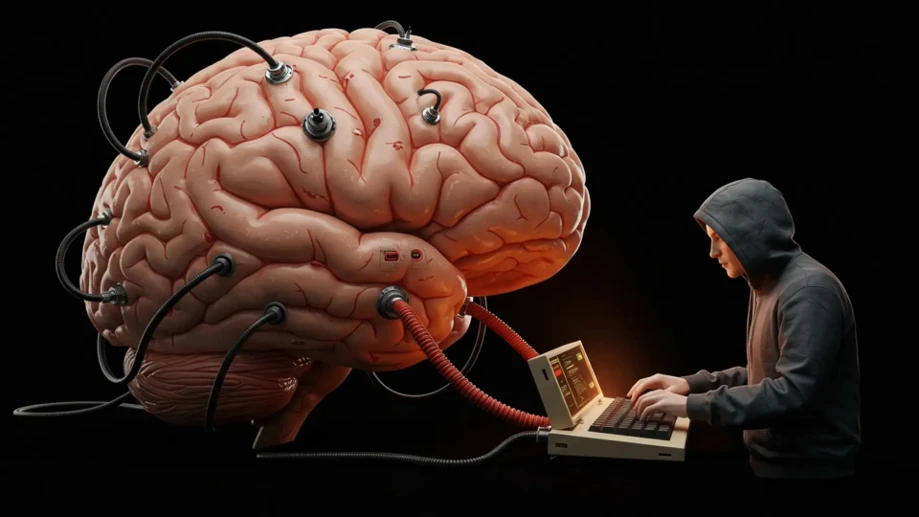
Real-World Scenarios (Not Just Science Fiction)
Contrary to popular belief, some foundations of “brain hacking” already exist:
1. Hacking Neural Medical Devices
Devices such as brain implants or neural stimulators can become targets if they have security vulnerabilities.
2. Manipulating Brain Output Data
If brain signals transmitted to systems are altered:
- Decision-making can be disrupted
- Control systems (like prosthetics) may behave incorrectly
3. Injecting Fake Signals
In the future, attackers might be able to send signals to the brain that:
- Create specific emotions
- Trigger certain reactions
Brain Hacking in the Future: How Concerned Should We Be?
As neural technologies advance, the following scenarios may become more plausible:
- Emotion manipulation: inducing anxiety, fear, or even artificial happiness
- Decision influence: subtly guiding a person’s choices without their awareness
- Memory access: extracting or altering memories
However, an important point:
These scenarios are still largely theoretical and experimental, not widespread or practical today.
That said, companies like Pishgaman Lotus emphasize that without early security standards, this future could become risky.
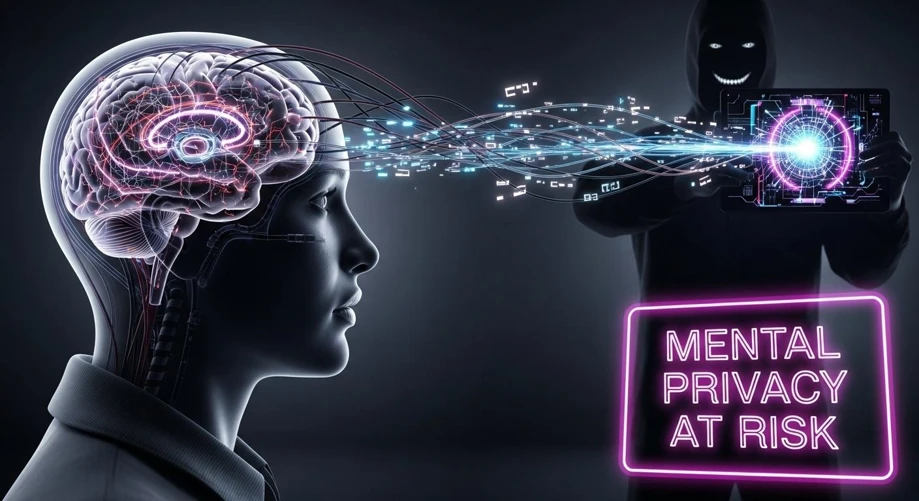
Key Vulnerabilities That Could Enable Brain Hacking
For “brain hacking” to occur, one or more of the following weaknesses must exist:
- Insecure wireless communications
- Lack of strong authentication systems
- Compromised or malicious software updates
- Unencrypted neural data
In reality, the brain itself is not hacked directly, it’s the interfacing systems that act as entry points for attacker.
How Can We Prevent “Mind Hacking”?
Key strategies to mitigate these risks include:
- Advanced encryption for neural data
- Multi-layer authentication systems
- Isolated (air-gapped) system architectures
- AI-based monitoring for intrusion detection
Companies like Pishgaman Lotus emphasize “Security by Design” ensuring that security is built into systems from the very beginning, not added later.
Red Lines: When Technology Outpaces Ethics
This issue is not just technical—it also involves ethics and human rights:
- Is reading thoughts without consent a crime?
- Who owns brain data?
- Can governments use this technology?
These are questions without clear answers yet—but they will shape the future.
Final Summary
- Full brain hacking is not currently real
- However, hacking systems connected to the brain is entirely possible
- The future may blur this boundary
Key takeaway:
The biggest risk is not the technology itself—but ignoring its security.
That is precisely why organizations like Pishgaman Lotus focus on developing technology and security together—because in the future, security won’t just be about data, but about the human mind itself.
Our articles:"When Thoughts Become Code: The Future of BCI and AI"
Similar Blogs
Passive BCI: Interactive Monitoring with Brain-Computer Interfaces

When Thoughts Become Code: The Future of BCI and AI
Brain Typing: A Complete Guide to Mind-Based Typing Technology, Applications, and Future
Have special project to begin?
Contact us if you need a unique website for your special requirements, if you think having a mobile application help you reach your business’s goals or you still do not recognize which product can help you implement your ideas. Lotus Pioneers accompany you to develop your business through consulting and by designing special products.