Web 6 and Space Internet: The Future of Global Connectivity
The Future of Global Connectivity

Introduction
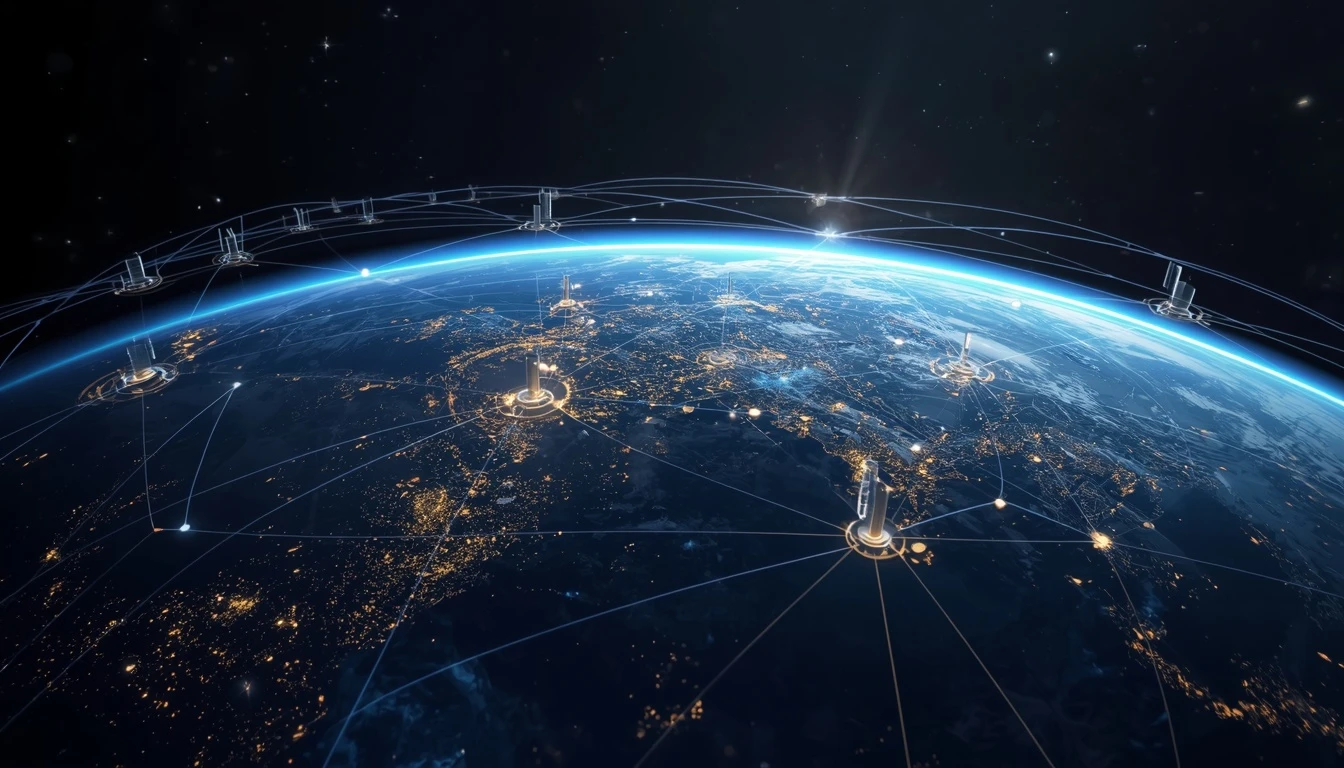
Over the past few decades, the Internet has evolved from simple web pages into interactive platforms, cloud services, social networks, artificial intelligence systems, and connected devices. The next stage of this evolution is expected to go beyond terrestrial infrastructure, bringing satellites, non-terrestrial networks, artificial intelligence, and distributed infrastructure into a broader connectivity ecosystem.
In this context, “Web 6” can be viewed as a future-oriented concept for a more intelligent, distributed, and pervasive Internet. It is important to note that Web 6 is not currently a single established technical standard like HTTP or an officially defined mobile-network generation. Instead, it can be used to describe a possible future shaped by technologies such as non-terrestrial networks, direct-to-device satellite connectivity, distributed computing, and the convergence of terrestrial and space-based networks.
For Pishgaman Lotus, understanding these developments is not simply a matter of technology forecasting. It can also help shape how software, network infrastructure, and digital services are designed for the connectivity environments of the future.

What Is Web 6 and How Could It Differ from Previous Web Generations?
The term “Web 6” does not yet have a single official technical definition. It is better understood as a conceptual framework for imagining a future Internet in which the web is no longer simply a collection of websites and applications, but an intelligent, distributed, and continuously connected digital environment.
In such a future, data, services, devices, artificial intelligence systems, and communication infrastructure could interact more seamlessly. Users may not always need to open a website or application themselves. Instead, intelligent agents and connected services could perform certain interactions on their behalf.
Pishgaman Lotus can examine these developments from the perspective of software architecture, complex platform development, and infrastructure designed to support future digital ecosystems.

How Does Space Internet Work?
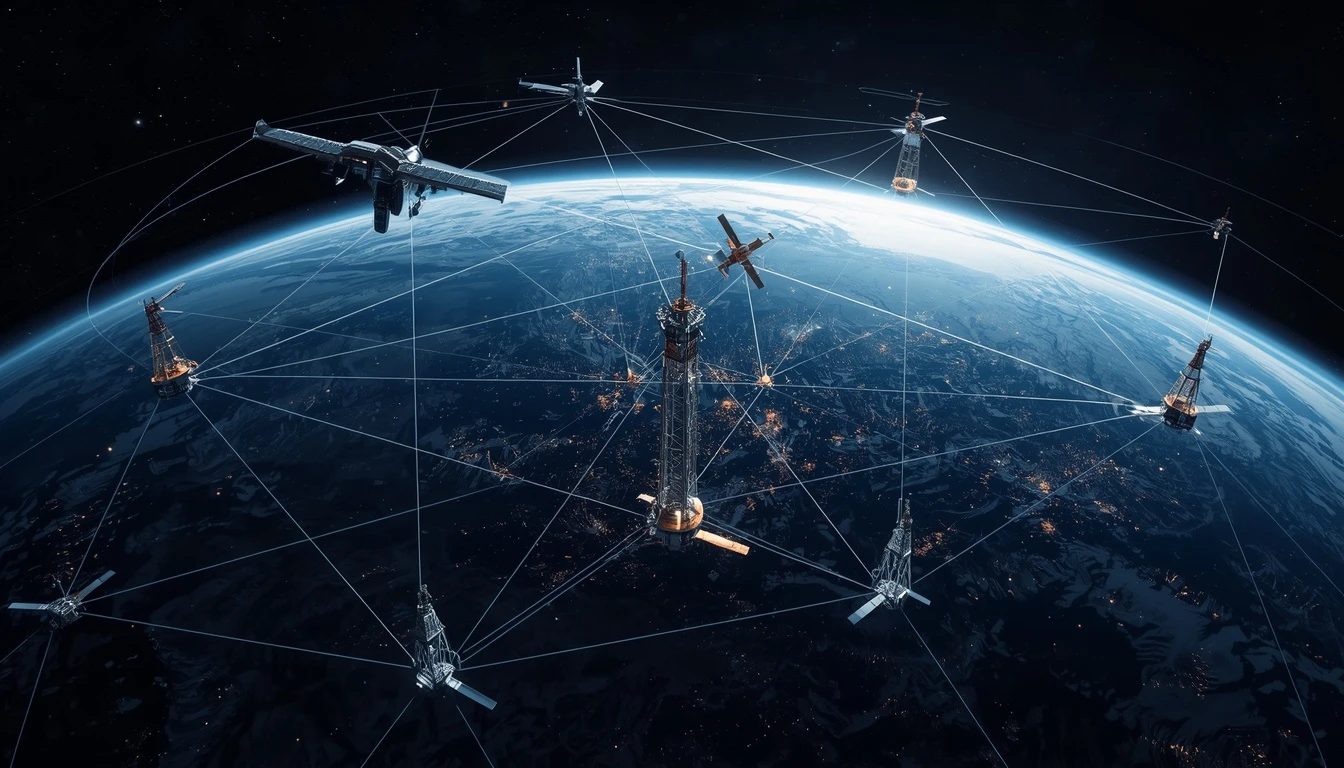
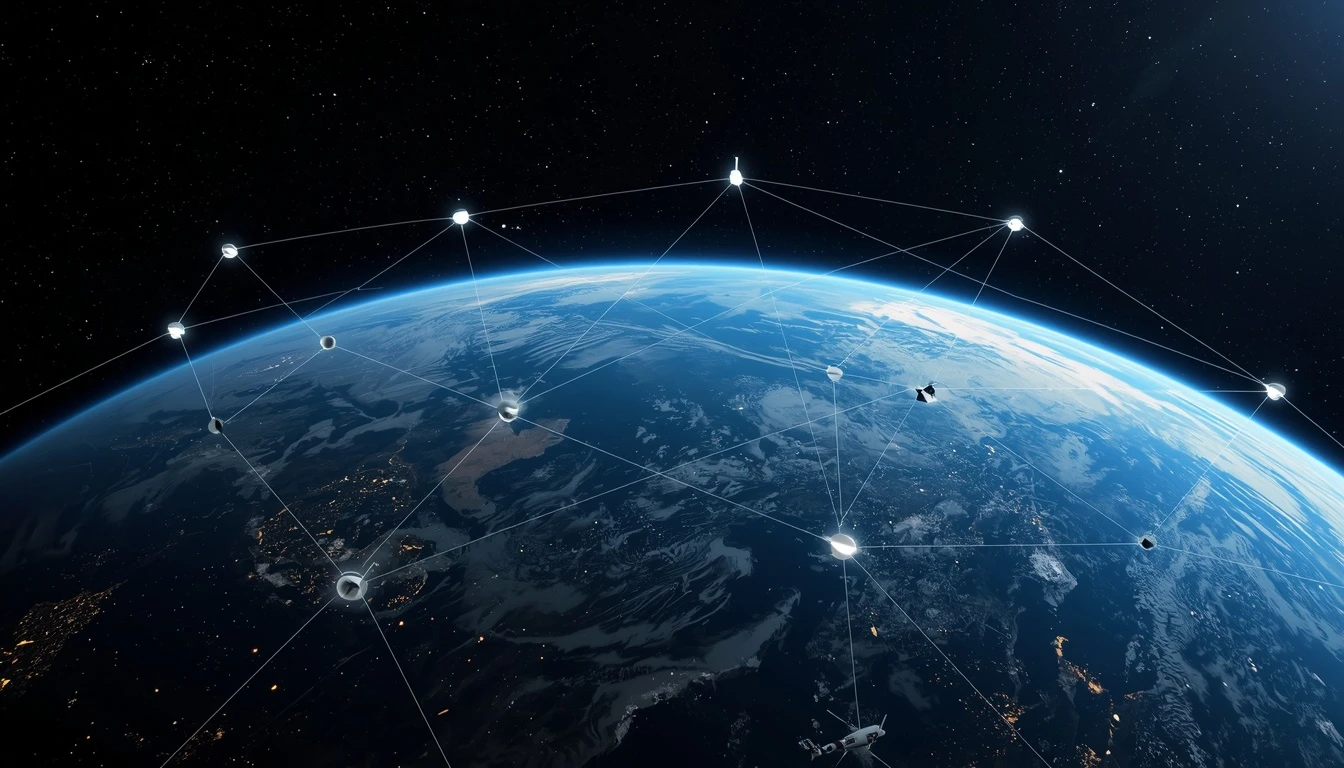
Space Internet refers to communication architectures that use satellites to transmit data and provide connectivity. These satellites can operate in different orbital regimes, including GEO, MEO, and LEO.
Low Earth Orbit or LEO satellites can offer lower communication latency than geostationary satellites because they operate much closer to Earth. The European Commission, for example, describes typical propagation-related latency as approximately 600 milliseconds for GEO and around 20–40 milliseconds for LEO, although actual performance depends on the network architecture, routing, and operating conditions.
Modern architectures increasingly combine satellites with terrestrial networks. The future Internet therefore does not necessarily have to be either terrestrial or space-based; it can be a combination of both.
Pishgaman Lotus can examine these developments from the perspective of network architecture, infrastructure integration, security, scalability, and distributed service management.

The Role of Non-Terrestrial Networks in the Future Internet
One of the important concepts in future connectivity is Non-Terrestrial Networks (NTN). These networks can include LEO, MEO, and GEO satellites as well as certain high-altitude platforms.
The main objective of NTN is to reduce some of the limitations of purely terrestrial networks and provide connectivity in areas where traditional infrastructure is difficult or expensive to deploy. Research into 6G architectures increasingly considers NTN an important component of future networks, with topics such as satellite mobility, handover, access management, and network integration receiving significant attention.
This can be particularly relevant for rural regions, maritime routes, aircraft, remote locations, and emergency situations. The ITU has also highlighted the role of satellite connectivity in extending access to underserved areas and integrating space-based systems with terrestrial networks.
Pishgaman Lotus can consider NTN as an important infrastructure trend when designing software systems that need to operate across diverse and changing network environments.
Direct Satellite Connectivity to Mobile Devices
One of the important developments in space connectivity is the transition from traditional satellite communication models toward technologies that can establish more direct connections with consumer devices.
Direct-to-Device and Direct-to-Cell technologies are being developed to enable satellites to communicate with devices such as smartphones. In 2026, the ITU described these technologies as an emerging pathway for filling coverage gaps and moving toward greater integration between terrestrial and space-based communications.
In such an architecture, users in remote areas may be able to access certain communication services without relying entirely on terrestrial cellular towers. However, bandwidth, service type, spectrum, equipment, regulations, and environmental conditions still affect the actual quality of connectivity.
Pishgaman Lotus, with experience in mobile software development and communication-oriented platforms, can examine these trends from the perspective of applications that may eventually need to operate across hybrid connectivity environments.

Will the Future Internet Be Completely Space-Based?
Probably not. Current developments point more toward convergence between terrestrial and space-based networks than the complete replacement of terrestrial infrastructure.
Fiber-optic networks, data centers, mobile networks, Wi-Fi, Edge Computing, and cloud infrastructure will continue to play important roles. Satellites can add another connectivity layer and provide additional coverage and resilience where terrestrial infrastructure is limited.
The ITU describes the emerging direction as a convergence of satellite and mobile networks toward integrated terrestrial-space systems.
Such hybrid architectures require software capable of operating across changing network conditions, communication paths, and distributed computing resources. Pishgaman Lotus can take these requirements into account when designing scalable software and infrastructure architectures.
What Role Will Artificial Intelligence Play in Web 6?
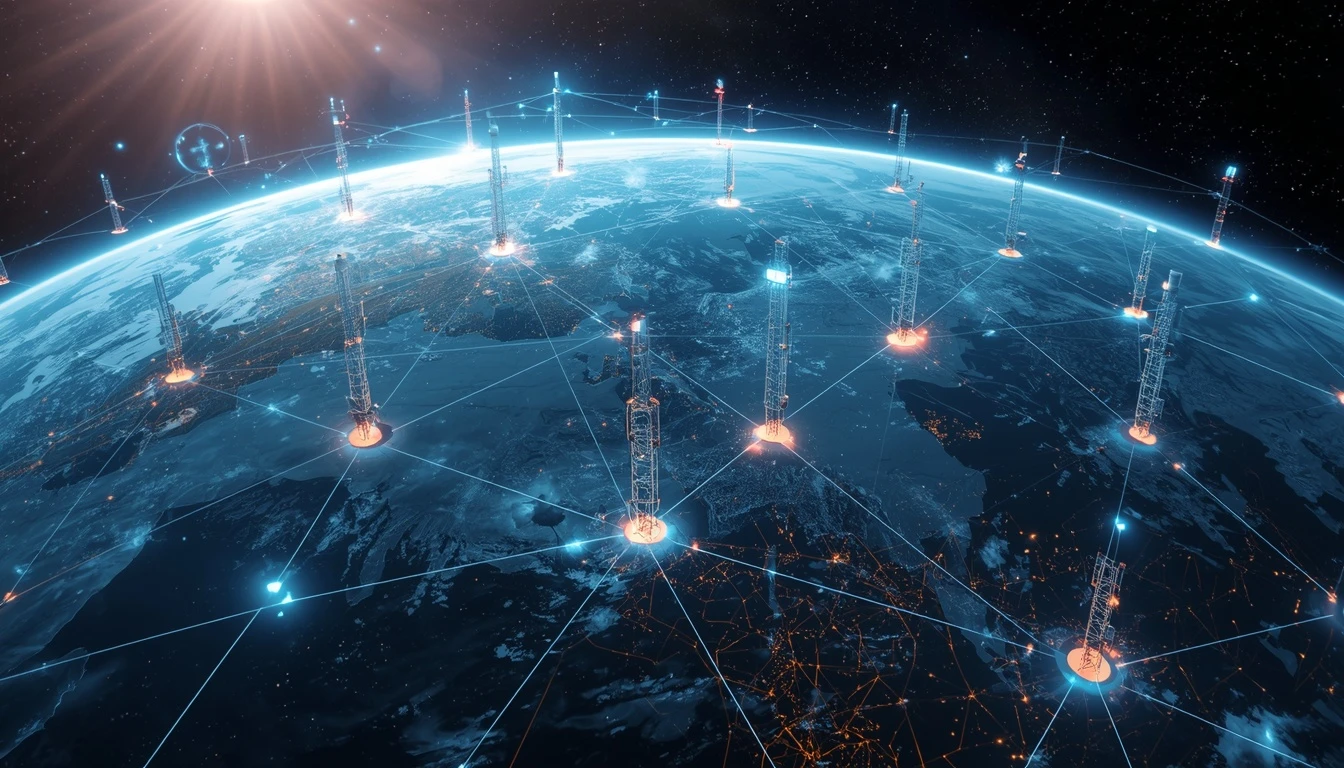
A major characteristic of future connectivity may be the increasing role of artificial intelligence in managing communication networks and digital services.
Future networks may not simply transfer data. They could use AI to analyze network conditions, resource consumption, communication paths, and service requirements.
For example, an intelligent system could evaluate different network conditions and determine which communication path or computing resource is more appropriate for a particular task.
Recent research has already explored AI-driven orchestration for integrated satellite-terrestrial 6G networks, including network analytics, service orchestration, and AI-agent frameworks.
Pishgaman Lotus can view these developments from its AI perspective, where artificial intelligence becomes not only a software feature but also part of the decision-making layer of future communication infrastructure.

Challenges of Space Internet and Web 6
Despite their potential, space Internet and future network architectures face significant technical and regulatory challenges.
Latency, link capacity, satellite mobility, handover between satellites and terrestrial networks, cybersecurity, spectrum management, equipment costs, and international regulations are all important considerations.
LEO networks, for example, have highly dynamic topologies because satellites continuously move relative to users and ground infrastructure. Research into NTN therefore examines issues such as handover, access management, mobility, and inter-network connectivity.
The ITU also highlights spectrum management, regulatory frameworks, investment models, and long-term space sustainability as important considerations for the growth of space connectivity.
For Pishgaman Lotus, these challenges demonstrate why future software systems must be designed with security, scalability, resilience, and interoperability in mind.
Potential Applications of Web 6 and Space Internet
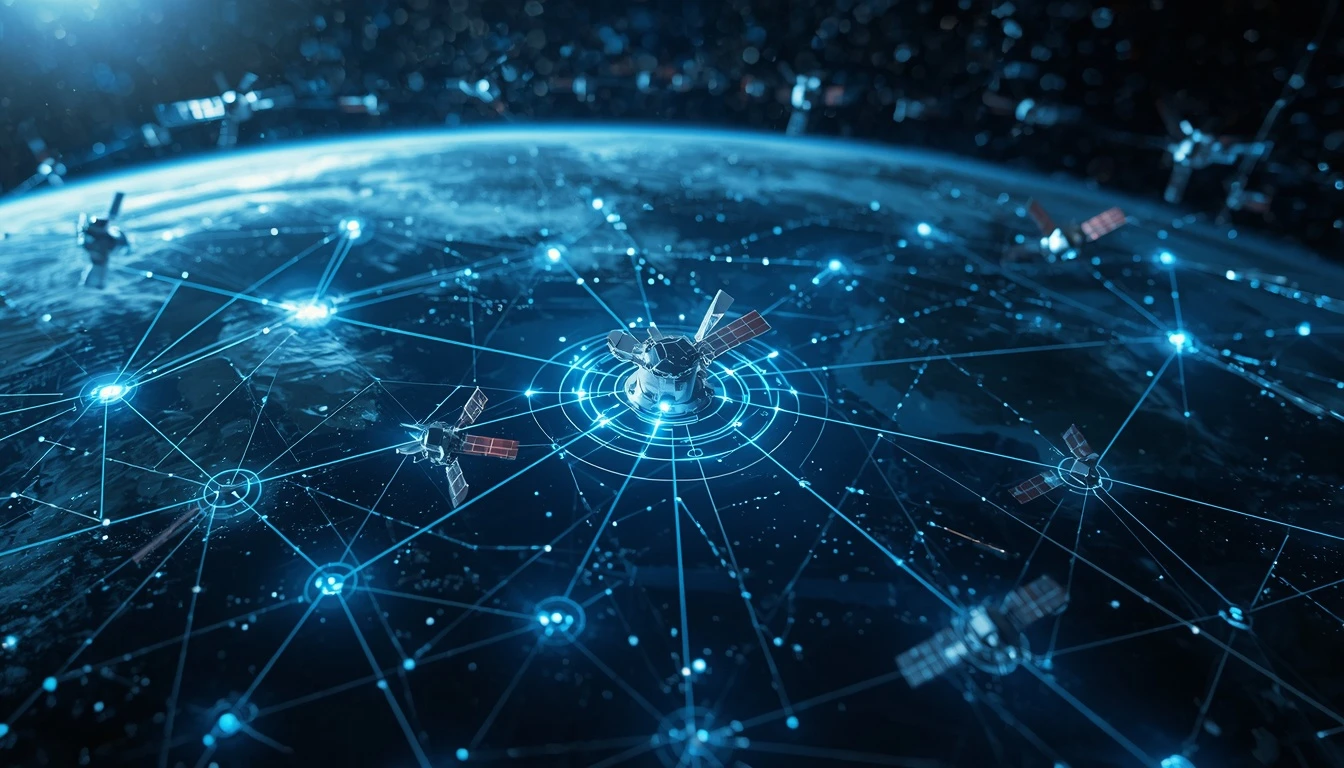
Space-based connectivity can potentially support remote-area communications, aviation and maritime connectivity, disaster response, Internet of Things applications, environmental monitoring, and critical infrastructure.
During natural disasters, damage to terrestrial infrastructure can disrupt communication. Satellite networks can provide a complementary communication layer that helps maintain connectivity in such circumstances. The ITU specifically identifies satellite connectivity as relevant to disaster response, early warning, remote communities, maritime operations, and aviation.
Expanded connectivity can also be valuable for ships, aircraft, remote industrial facilities, and IoT systems operating outside the coverage of traditional networks.
Pishgaman Lotus can combine software development, artificial intelligence, and network infrastructure capabilities to explore digital solutions for environments where reliable connectivity and data access are critical.
The Future of Software Development in the Space Internet Era
The growth of hybrid terrestrial-space networks could also change the way software is designed. Future applications may need to deal with changing connectivity quality, different latency levels, temporary disconnections, and distributed computing resources.
Architectures that support scalability, edge processing, caching, intelligent synchronization, fault tolerance, and adaptive communication can become increasingly important.
For Pishgaman Lotus, this trend points toward software systems that are not designed around a single fixed network environment, but can adapt to different infrastructure conditions and connectivity scenarios.

Web 6: An Internet Beyond Earth
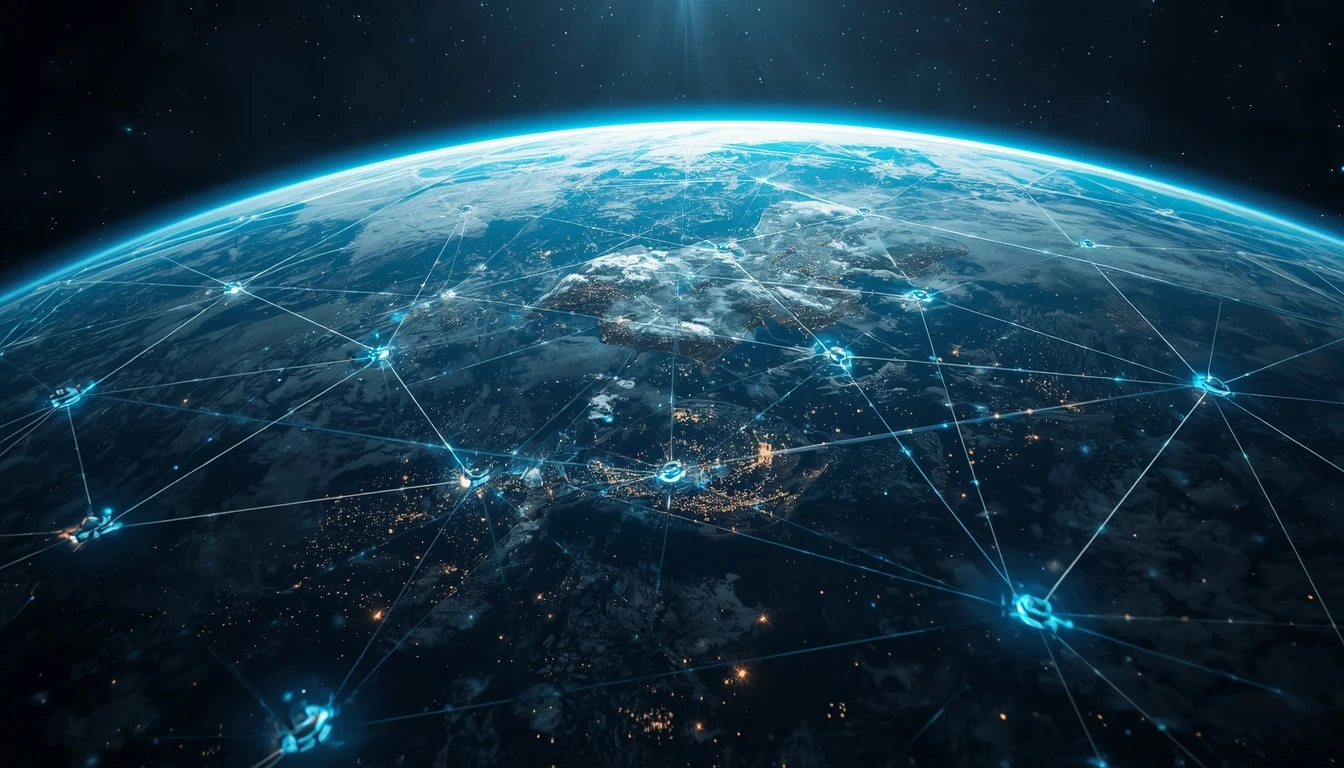
If current trends continue, the future Internet may no longer be limited to terrestrial infrastructure. Satellites, non-terrestrial networks, Edge Computing, artificial intelligence, smart devices, and cloud infrastructure could operate as parts of a shared digital ecosystem.
However, “Web 6” should not currently be treated as a ready-made or officially standardized technology. The term is more useful as a future-oriented concept describing an Internet in which connectivity, intelligence, and distributed infrastructure become increasingly important.
At the same time, the development of satellite networks and NTN is bringing space-based and terrestrial communications closer together, while 6G research is exploring architectures capable of integrating these environments.
Pishgaman Lotus, through its work in artificial intelligence, complex software development, network infrastructure, and digital platforms, can follow these developments as part of the broader evolution of future technology.
Conclusion
Web 6 is not yet an official, clearly defined standard, but a range of emerging technologies is already shaping a possible future for the Internet—one that may be more intelligent, distributed, and less constrained by geography.
Space Internet and non-terrestrial networks can complement terrestrial infrastructure and extend connectivity to areas that are difficult to serve through conventional networks. The convergence of satellites with mobile networks and future 6G technologies may also contribute to a more integrated global connectivity infrastructure.
For Pishgaman Lotus, understanding these developments means looking at the future of software, artificial intelligence, and infrastructure from a broader perspective—a future in which the boundaries between terrestrial Internet, cloud computing, Edge Computing, and space-based connectivity may become increasingly blurred.
Our articles:"5G and 6G: The Future of High-Speed Internet"

Have special project to begin?
Contact us if you need a unique website for your special requirements, if you think having a mobile application help you reach your business’s goals or you still do not recognize which product can help you implement your ideas. Lotus Pioneers accompany you to develop your business through consulting and by designing special products.