5G and 6G: The Future of High-Speed Internet
The Future of High-Speed Internet

Introduction: The Internet Is Entering a New Era
The internet is no longer simply a tool for browsing the web, watching videos, or communicating with other users. With the rapid growth of the Internet of Things, artificial intelligence, connected vehicles, robotics, and smart systems, the number of devices that need to communicate with one another simultaneously is increasing rapidly.
In this environment, communication networks need to provide more than high speeds. They must also offer ultra-low latency, greater reliability, high capacity, and the ability to connect massive numbers of devices.
5G has become an important part of this transformation, while the next generation, 6G, is being developed with the vision of creating faster, smarter, and more integrated communication networks.
For technology companies such as Pishgaman Lotus, which operates in areas including artificial intelligence, software development, infrastructure, and emerging technologies, understanding these developments can play an important role in designing next-generation digital solutions.

How Is 5G Different from Previous Generations?
5G is not simply a faster version of 4G. It has been designed to support a wide range of applications that require high speed, large capacity, low latency, and reliable connectivity.
One of the most important features of 5G is its ability to connect a large number of devices within the same environment. This capability is particularly important for smart factories, smart cities, and Internet of Things applications.
Technologies such as Network Slicing can also enable separate and optimized portions of a network for different applications. For example, a private 5G network in a factory can be optimized for industrial robots, sensors, and control systems.
As a result, 5G can serve as an important connectivity infrastructure for many emerging digital solutions.
What Is 6G and Why Does It Matter?
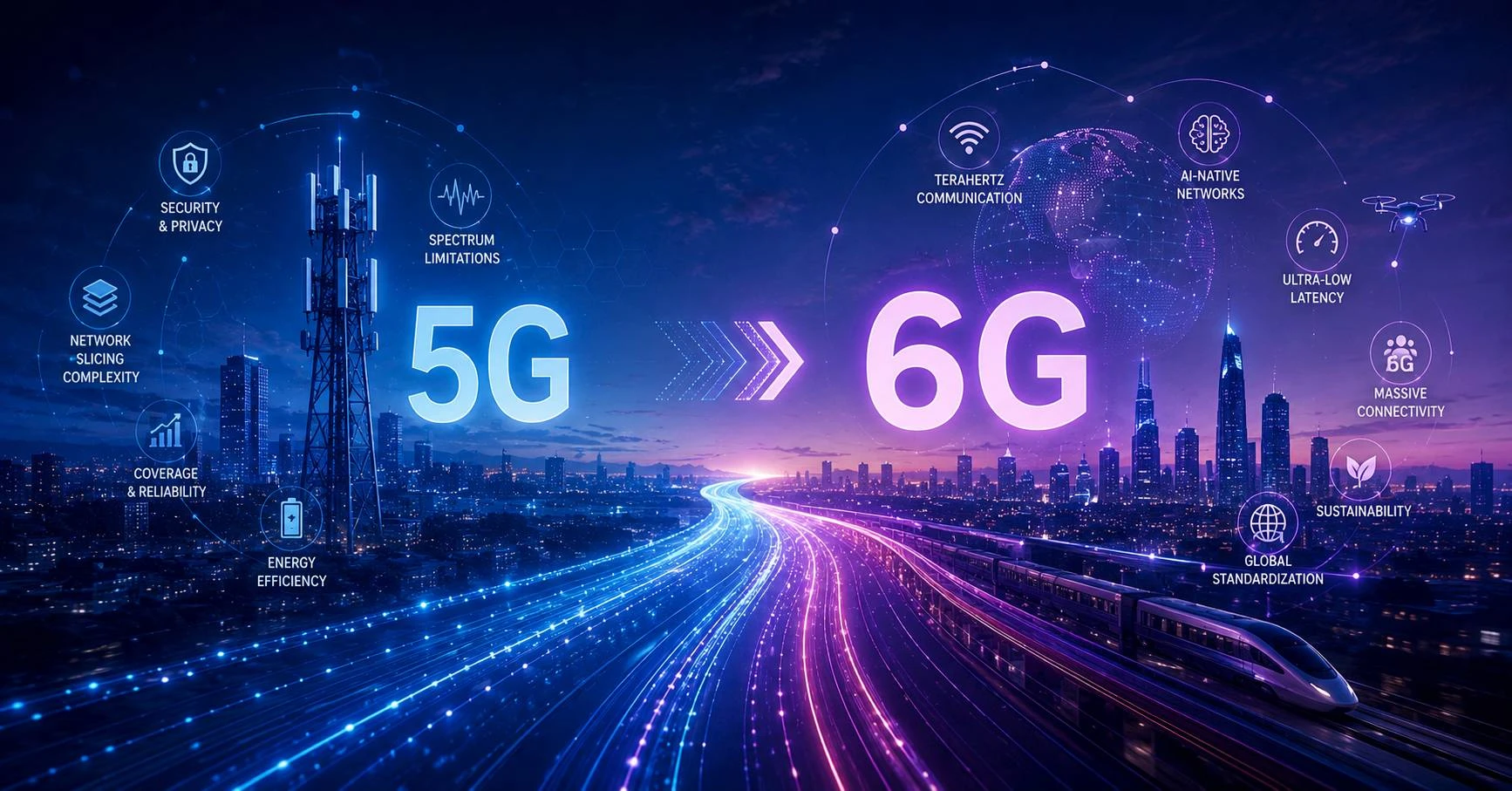
6G is the next generation of wireless communication technology and is still in the research, development, and standardization stages.
The goal of 6G is not simply to increase data transfer speeds. Its broader vision is to integrate communications, artificial intelligence, computing, and sensing into a unified infrastructure.
Current 6G research includes technologies such as terahertz communications, advanced antenna systems, AI-based networks, Edge Computing, and reconfigurable intelligent surfaces.
This means that future networks may not simply transmit information; they could also become an important part of how data is processed and how environments are understood.
Which Industries Will 5G and 6G Transform?
One of the most exciting aspects of next-generation networks is their potential impact across different industries.
Smart Manufacturing and Industry
Smart factories rely on large numbers of sensors, cameras, robots, and industrial machines that need to continuously send and receive data.
5G can provide the low-latency and reliable connectivity required for industrial robots, control systems, and machine vision applications. In the future, combining 6G with Industrial IoT, Edge Computing, and artificial intelligence could enable even higher levels of automation.
For example, smart cameras could analyze product images in real time and allow production systems to respond immediately to detected defects.
Connected Vehicles and Smart Transportation
Future vehicles will not simply be transportation tools. They will become part of a larger connected ecosystem.
Vehicle-to-vehicle, vehicle-to-infrastructure, and vehicle-to-network communication can contribute to improved road safety, traffic management, and intelligent transportation systems.
In the 6G vision, terrestrial, aerial, and satellite networks may also become more closely integrated, enabling broader and more seamless connectivity.
Healthcare and Digital Medicine
Healthcare is another field that can benefit significantly from high-speed and low-latency connectivity.
Wearable devices, medical sensors, remote monitoring systems, and connected medical equipment can generate large amounts of data.
The combination of IoT, artificial intelligence, and future 6G networks could support advanced applications such as telemedicine, intelligent healthcare systems, remote monitoring, and immersive medical technologies.
Smart Cities
Smart cities require large-scale networks capable of connecting many different systems.
Traffic lights, urban cameras, pollution sensors, transportation systems, parking systems, and energy infrastructure can all become part of a connected ecosystem.
5G and, eventually, 6G could provide the connectivity infrastructure required to collect, transfer, and process the massive amounts of data generated by these systems.
Future 6G networks may also integrate terrestrial, satellite, and aerial communication systems to create broader connectivity across cities and regions.
The Role of 5G and 6G in the Internet of Things
The Internet of Things is one of the major areas that can benefit from advances in communication networks.
A smart environment may contain thousands or even millions of connected devices. These devices continuously generate data and need reliable communication with other systems.
5G is already enabling many IoT and Industrial IoT applications, while 6G could make these ecosystems even more intelligent.
One of the most important future combinations is AI + IoT + Edge Computing + 5G/6G. Together, these technologies can move data processing closer to where the data is generated, potentially reducing response times and improving system performance.
Edge Computing: An Important Partner for Next-Generation Networks
As the number of connected devices increases, sending all data to a centralized cloud is not always the most efficient solution.
Edge Computing moves part of the processing closer to the location where data is generated. This can be especially valuable for applications that require real-time responses.
For example, in a smart factory, a machine vision system can process camera images closer to the production line and deliver analysis results to the control system much faster.
Combining Edge Computing with 5G—and eventually 6G—can create a powerful infrastructure for real-time systems, robotics, autonomous vehicles, and AI applications.
What New Devices Can 5G and 6G Enable?
The impact of next-generation networks will not be limited to large infrastructure. These technologies can also enable a new generation of connected products and devices.
Examples include smart wearables, augmented reality glasses, connected robots, intelligent drones, autonomous vehicles, smart cameras, and connected industrial equipment.
The 6G vision also includes more advanced possibilities such as holographic communications, autonomous systems, and potentially wireless brain-computer interfaces.
This means that the network may eventually become more than a platform for connecting devices. It could become an integral part of a broader intelligent ecosystem.
The Connection Between 5G, 6G, and Artificial Intelligence
Artificial intelligence and next-generation networks can strengthen each other.
AI can help manage, optimize, and automate network operations, while faster and lower-latency networks can make it easier to deploy AI applications in real-world environments.
For Pishgaman Lotus, this intersection between AI, networking, and Edge Computing is particularly important because developing future intelligent products requires more than an AI model. It also requires the appropriate communication and computing infrastructure.
Challenges Ahead for 5G and 6G
Despite their potential, these technologies also face significant challenges.
Network security, privacy protection, infrastructure costs, massive data management, energy consumption, and standardization are among the key issues that need to be addressed.
For 6G in particular, many core technologies are still under research and development, and the final standards are still being established. Therefore, there is still a significant gap between current research visions and commercially mature 6G products.
The Future: From the Internet of Things to the Intelligent Internet
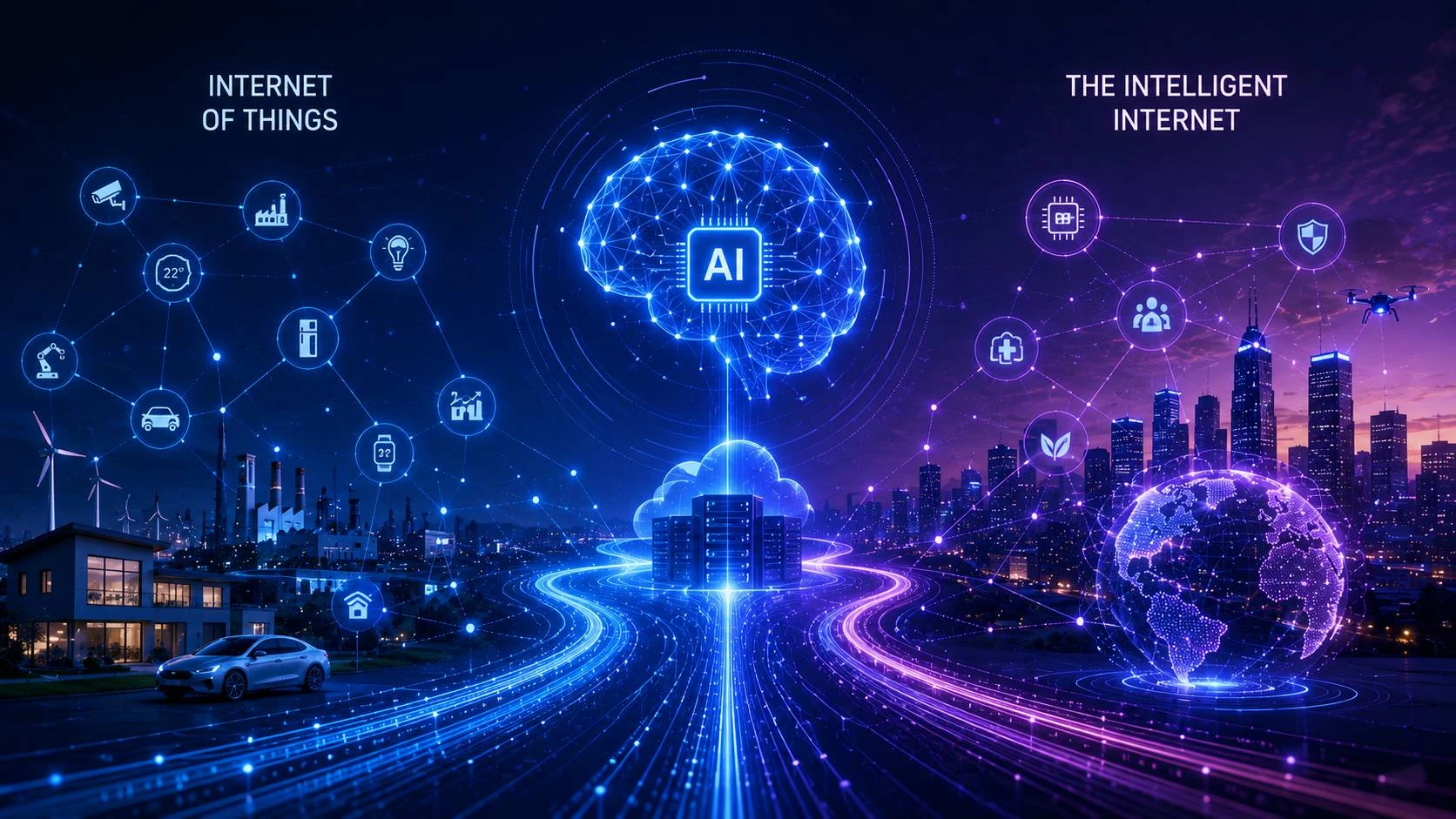
The evolution of communication networks can be viewed as a transition from connecting people, to connecting devices, and eventually to connecting intelligent systems.
5G is already providing infrastructure for communication between devices, vehicles, machines, and smart systems. The future vision of 6G goes one step further by integrating communication with artificial intelligence, sensing, and computing.
In this future, a factory could autonomously manage many of its processes, vehicles could exchange information about their surroundings, and medical devices could analyze patient data in real time.
This is where the internet evolves from a simple communication network into an intelligent infrastructure for the physical world.
Conclusion
5G and 6G are much more than new generations of mobile internet. They are becoming an important part of the infrastructure behind digital transformation.
5G is already being used in areas such as smart manufacturing, IoT, connected vehicles, and enterprise connectivity. Meanwhile, 6G is still under development, with its future vision focused on integrating communication, artificial intelligence, sensing, and computing into a unified ecosystem.
From manufacturing and healthcare to transportation, smart cities, robotics, and extended reality, many future technologies will depend on fast, reliable, and low-latency connectivity.
With its expertise in artificial intelligence, software development, network and infrastructure, and digital solutions, Pishgaman Lotus can support businesses in designing and implementing solutions that are ready to take advantage of next-generation connectivity.
Our articles:"Cybersecurity in the Age of IoT"
Have special project to begin?
Contact us if you need a unique website for your special requirements, if you think having a mobile application help you reach your business’s goals or you still do not recognize which product can help you implement your ideas. Lotus Pioneers accompany you to develop your business through consulting and by designing special products.