Agentic Web: When AI Browses the Web for You
Agentic Web

Introduction
Until recently, most of our internet experience followed a simple pattern: users opened a browser, searched for something, visited different websites, compared information, made a decision, and completed the required action themselves.
The Agentic Web is changing this model. Instead of manually completing every step, users can delegate a goal to an AI Agent. The agent can search the web, read and analyze information, compare available options, and, when authorized, perform certain actions on the user's behalf.
For example, instead of visiting dozens of e-commerce websites to find a suitable laptop, a user could simply tell an AI agent: “Find me the best laptop for programming within this budget and compare the top options.” The agent can browse different websites and return a recommendation based on the user's requirements.
This means that the web is no longer designed exclusively for humans. AI agents are becoming an important new class of web users.

What Is the Agentic Web?
The Agentic Web can be understood as a new stage of the internet in which intelligent agents interact with the web on behalf of users.
On the traditional web, websites wait for users to click links, fill out forms, navigate pages, and complete workflows manually. In an Agentic Web environment, an AI system can receive a user's goal and plan a sequence of actions to accomplish it.
Agentic Web is therefore much more than adding a chatbot to a website. An agent-ready website can expose structured information, provide machine-readable capabilities, and allow AI agents to interact with its services.
The web's audience is consequently expanding from human users to humans and intelligent agents working on their behalf.
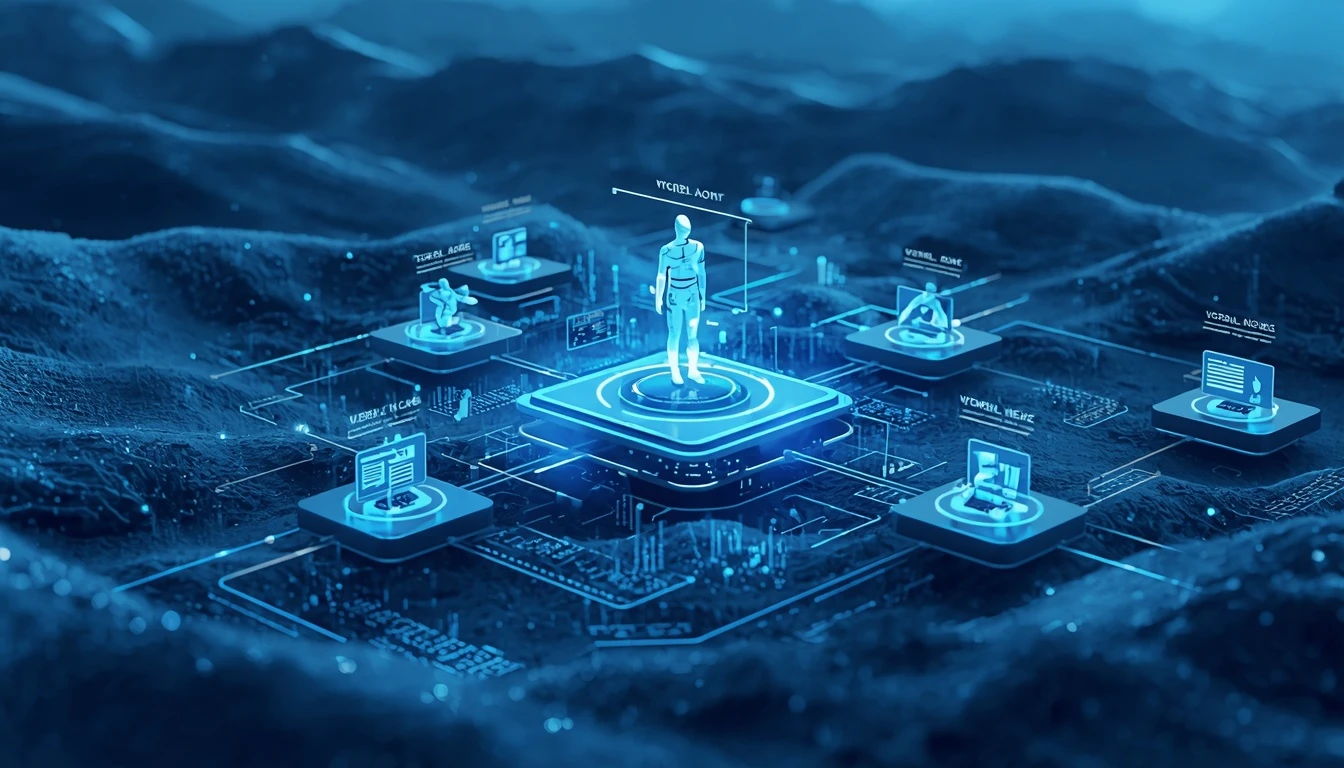
Traditional Web vs. Agentic Web
Traditional web interaction generally follows this pattern:
User → Search → Website → Review Information → Decision → Action
The Agentic Web can transform it into:
User → Goal → AI Agent → Search → Analysis → Comparison → Action → Result
Consider travel planning. Traditionally, users need to open multiple websites, compare prices and dates, review options, and complete several forms.
With an agentic system, users can simply define their requirements while the AI agent searches, evaluates and compares options according to those constraints.
This represents a fundamental change: the web evolves from an environment where humans click to an environment where software can act.

How Does AI Browse the Web for Users?
An Agentic Browser or Web Agent typically combines several capabilities.
First, it interprets the user's request and identifies the intended goal. It can then plan the steps required to achieve that goal. Depending on its permissions and technical capabilities, it can open web pages, read content, follow links, extract information, interact with page elements, and complete multi-step workflows.
This may include clicking, filling forms, navigating between pages, and gathering information from different sources.
The key difference from traditional search is that an agent does not merely return information. It can also execute parts of the process required to reach the desired result.
For example, a user could ask:
“Find three project-management platforms that work with our existing technology stack.”
The agent could inspect different websites, extract features and pricing, eliminate unsuitable options, and return a shortlist with reasons.
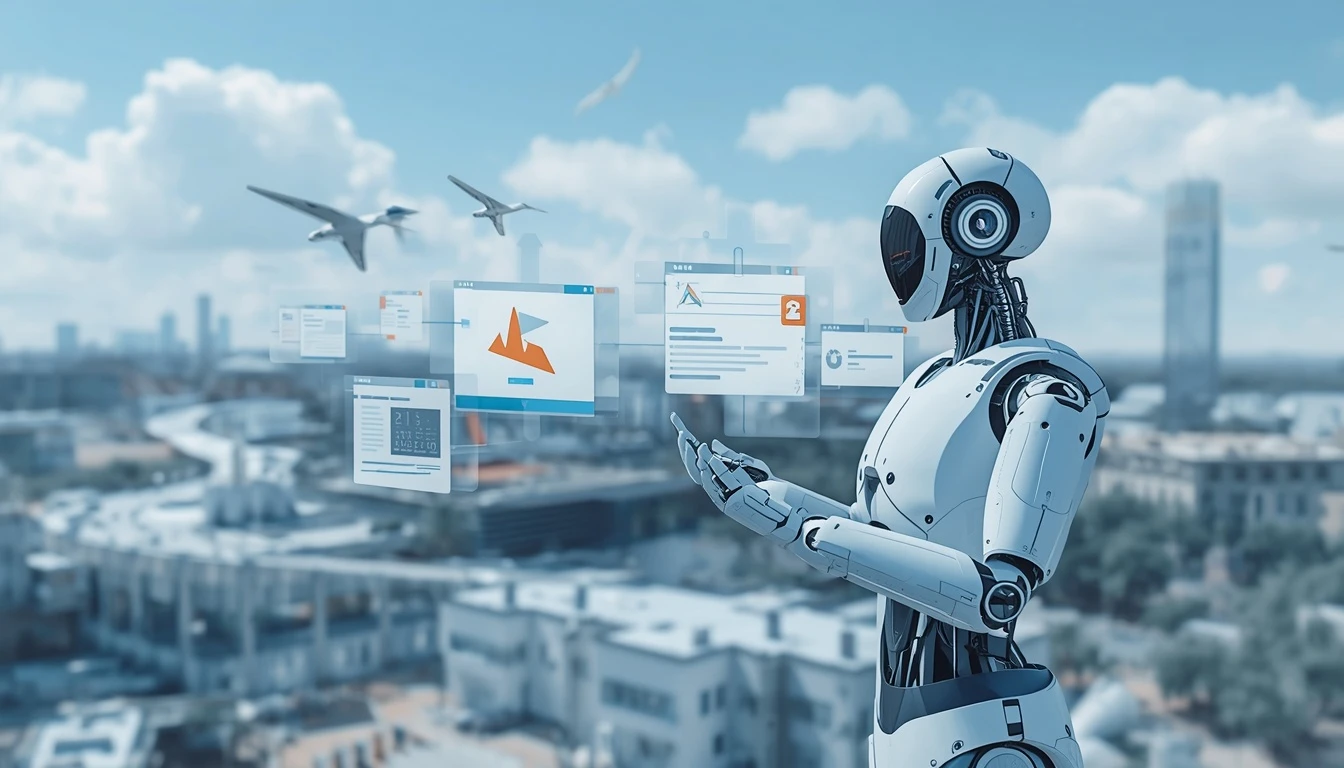
Agentic Commerce: When AI Shops for You
One of the most significant applications of the Agentic Web is Agentic Commerce.
In today's e-commerce environment, users typically find products, read specifications, compare prices, and complete purchases themselves.
With Agentic Commerce, an AI agent can perform parts of this process on behalf of the user. It can discover products, compare specifications and prices, check availability, and, where the infrastructure supports it, proceed through the purchasing process.
This creates a major shift for online businesses. A website must no longer be merely attractive and understandable to humans. It must also be machine-readable, comparable, and actionable.
If pricing, specifications, inventory, shipping information, or return policies are unclear, an AI agent may exclude the website from its recommendation process.

Websites Need to Become Agent-Ready
As the Agentic Web grows, web design will no longer be limited to visual interfaces and human interaction.
Websites need to present information in ways that both humans and machines can understand. Semantic HTML, structured data, reliable APIs, accurate product and service information, and clearly defined workflows will become increasingly important.
Future websites may therefore need to consider both Human Experience and Agent Experience.
Developers will increasingly need to ask:
“If the user does not directly visit this website and an AI agent visits on their behalf, can the website still be effectively used?”
This is particularly relevant to Pishgaman Lotus, because complex web development in the Agentic era will require architectures that support not only human interaction but also secure, structured interaction with intelligent systems.
APIs and Infrastructure: The Common Language Between Websites and Agents
Reliable interaction between AI agents and online services is one of the foundations of the Agentic Web.
If an AI agent has to behave exactly like a human and perform dozens of clicks for every task, the workflow can become fragile and inefficient. This is why well-designed APIs and standardized interfaces are becoming increasingly important.
A website can expose capabilities such as product search, inventory checking, price retrieval, order creation, or information retrieval through clearly defined interfaces.
Emerging research is also exploring semantic action interfaces that allow agents to discover and execute reliable web capabilities rather than depending entirely on low-level operations such as clicks and keystrokes.
For development teams such as Pishgaman Lotus, this increases the importance of backend architecture, API design, authentication, security, observability, and scalable infrastructure.

Security in the Agentic Web
As AI agents gain more autonomy, security becomes increasingly important.
An agent may have access to sensitive information, user accounts, payment services, or enterprise systems. It therefore cannot simply be given unlimited access based on the assumption that the AI will always make the right decision.
One important threat is prompt injection, where content on a webpage attempts to influence the agent into performing an unintended action.
Permission management, authentication, activity logging, access controls, approval mechanisms, and clear boundaries around sensitive actions are therefore essential.
A secure agentic system must define exactly what an agent is allowed to do, what information it can access, and which actions require explicit human approval.
The future of the Agentic Web will therefore depend not only on intelligence, but also on security, governance, and human oversight.

How Will Agentic Web Change SEO?
SEO can also change significantly in an Agentic Web environment.
Traditionally, websites aim to rank well in search results and attract users to click through to their pages. In an agentic environment, an AI agent may visit websites, extract relevant information, and provide the final answer directly to the user.
This makes machine-readable information increasingly important.
Well-structured content, accurate data, structured markup, clear product and service specifications, reliable APIs, and trustworthy information can make websites easier for AI agents to understand and evaluate.
As a result, web optimization may evolve beyond traditional Search Engine Optimization toward broader Agent Optimization—making websites understandable and actionable for intelligent agents as well as humans.

Opportunities for Businesses
The Agentic Web is not simply a technological change. It can fundamentally reshape how businesses interact with customers.
In e-commerce, agents can compare products. In financial services, they can gather relevant information. In education, they can identify suitable programs. In B2B platforms, they can evaluate suppliers and products. In enterprise systems, they can execute parts of complex workflows.
Businesses that prepare their digital infrastructure early can gain a competitive advantage.
With expertise in AI, complex web development, enterprise software, infrastructure, and digital product development, Pishgaman Lotus can help build digital products that are designed not only for human users but also for interaction with the intelligent agents of the next generation of the web.

The Future of the Web: From Clicking to Giving Goals
Perhaps the most important change introduced by the Agentic Web is that users will increasingly define what they want, rather than specifying every step required to achieve it.
Traditional web interaction is often:
“I need to perform these actions.”
Agentic interaction becomes:
“Get this result for me.”
This seemingly simple difference can reshape how we think about web design, software development, and user experience.
In the future, users may visit individual websites less frequently and instead rely on AI agents that move between websites and services on their behalf.
The most successful websites will therefore not necessarily be the ones with the most visually impressive interfaces. They will also need accurate information, machine-readable structures, reliable APIs, strong security, and agent-compatible workflows.
The Agentic Web could ultimately become the next major phase of the internet—an environment where intelligent agents do more than find information: they act within the web to accomplish human goals.

Conclusion
The Agentic Web represents one of the most significant developments in the evolution of the internet. AI agents are moving beyond systems that simply generate answers toward systems capable of searching, reasoning, comparing, planning, and taking authorized actions.
For businesses, this transformation means rethinking website architecture, APIs, data structures, security, and user experience.
The website of the future must be understandable and actionable not only for humans, but also for intelligent agents working on their behalf.
For Pishgaman Lotus, this evolution creates an important opportunity to combine AI, complex web development, enterprise software, infrastructure, and digital product development to create a new generation of intelligent digital products that can participate in the Agentic Web ecosystem.
Our articles:"Generative UI; The User Interface That Builds Itself"
Similar Blogs

AI Voice Deepfakes — How to Detect Audio Fraud and Prevent Voice Cloning Scams


AGI-Powered Intelligent Agents: The Future of Automation and Autonomous Decision-Making

AI Voice Cloning: Business Opportunities and Security Threats
Have special project to begin?
Contact us if you need a unique website for your special requirements, if you think having a mobile application help you reach your business’s goals or you still do not recognize which product can help you implement your ideas. Lotus Pioneers accompany you to develop your business through consulting and by designing special products.