AGI-Powered Intelligent Agents: The Future of Automation and Autonomous Decision-Making
The Future of Automation and Autonomous Decision-Making
Introduction
From Responsive AI to Decision-Making Agents
Artificial intelligence has evolved beyond answering questions and generating content. Modern intelligent systems can analyze information, plan toward specific goals, use software tools, and complete multiple tasks with limited human intervention. This evolution has accelerated the development of AI agents—systems designed to manage entire workflows rather than simply provide individual responses.
Artificial General Intelligence (AGI) refers to the concept of an AI system capable of learning and solving problems across a broad range of cognitive tasks with general-purpose flexibility. AGI-powered intelligent agents represent a future vision of systems that could understand complex objectives, adapt their strategies, and make decisions in changing environments. However, AGI has not yet been established as a generally capable, proven technology, and today's AI agents still face significant limitations in reasoning, memory, and reliability.
For Pishgaman Lotus, understanding this emerging field creates opportunities to develop advanced solutions for business process automation, intelligent software development, and digital assistant systems.
What Are AGI-Powered Intelligent Agents?
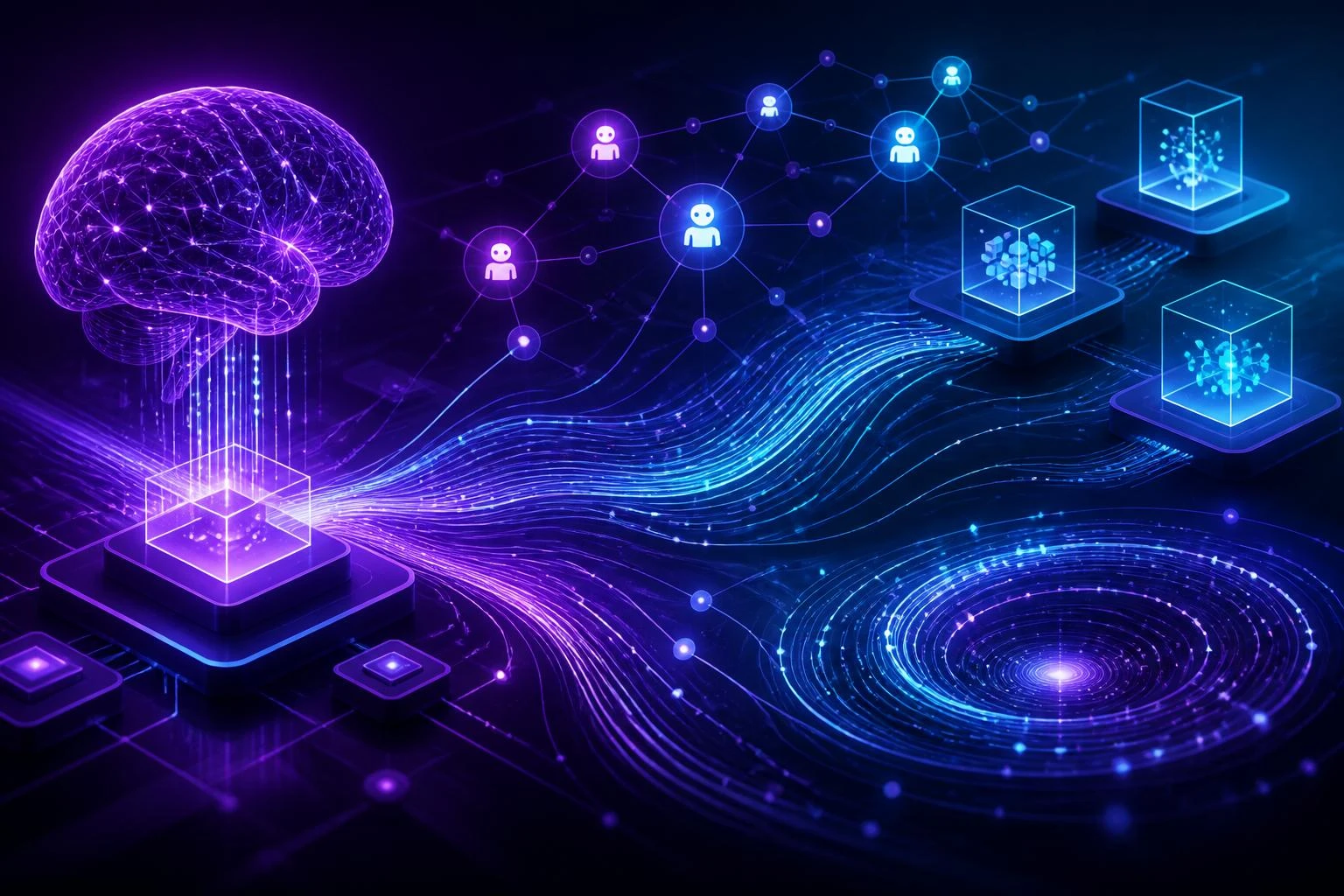
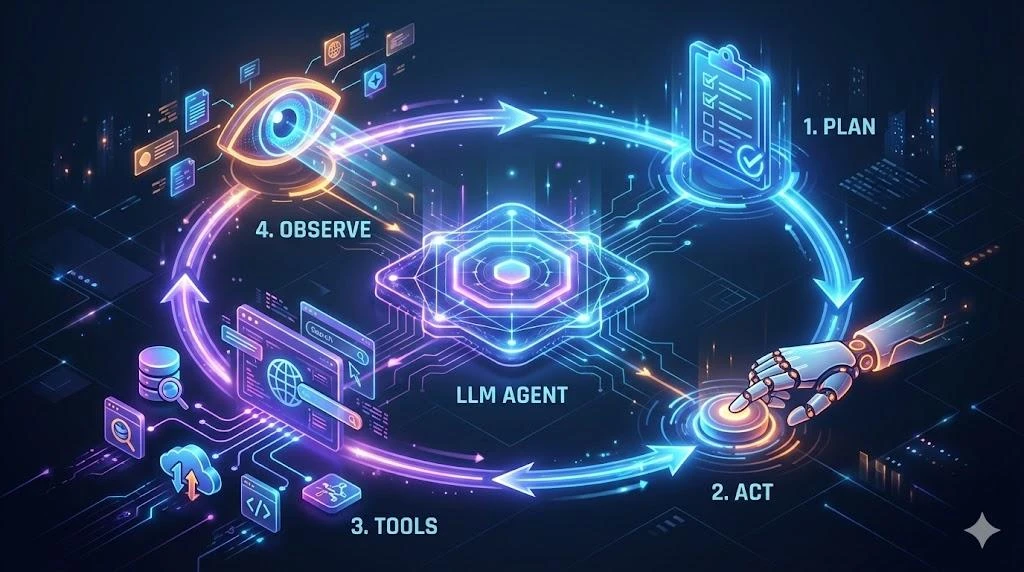
An intelligent agent is a software system designed to achieve a specific objective by examining its environment or input data, deciding what to do next, and using available tools to carry out actions. For example, an enterprise agent could receive a customer request, review relevant records, retrieve information from internal systems, and prepare an appropriate response or recommendation.
Today's AI agents generally rely on large language models, predefined rules, software tools, and structured workflows. In contrast, hypothetical AGI-powered agents could offer greater flexibility, allowing them to analyze unfamiliar problems, apply previous experience, and adapt their problem-solving strategies to changing circumstances rather than following a fixed sequence of instructions.
This distinction matters in software product development. Pishgaman Lotus can use agent-based architectures to create systems that collect information, manage tasks, and request human approval at critical stages without requiring AGI to become a reality first.
The Role of AGI in Enterprise Automation
Traditional automation typically operates according to predefined rules. When the input conditions are known, the system executes the specified steps. However, unexpected situations may require human intervention. Intelligent agents can improve this approach by combining information from different sources, evaluating available options, and planning subsequent actions.
For example, in a sales workflow, an AI agent could analyze a customer request, check product availability, compare order information against historical records, and prepare a draft commercial proposal. In technical support, an agent could classify an error report, retrieve relevant documentation, and recommend a potential solution.
Pishgaman Lotus can develop these capabilities through intelligent automation solutions, enterprise assistants, and software integration. Implementation should be gradual: begin with low-risk, measurable tasks and expand the system's authority only after evaluating its performance.

Autonomous Decision-Making: From Data Analysis to Action
One of the most important characteristics of intelligent agents is their ability to move from analysis to action. A conventional analytics system might generate a business report, whereas an AI agent can evaluate different options, select an appropriate action based on a defined objective, and execute it when authorized.
For example, in supply chain management, an agent could analyze inventory changes and demand patterns to anticipate potential shortages. It could then recommend a replenishment order or submit a purchase request if the necessary permissions are available. In IT infrastructure management, an agent could identify early warning signs of a disruption and recommend low-risk corrective actions.
However, autonomous decision-making does not guarantee correct decisions. AI systems can generate inaccurate information, misunderstand context, or overlook the consequences of an action. Therefore, Pishgaman Lotus should incorporate clearly defined permissions, controlled data access, action-reversal mechanisms, and decision logs into intelligent products. Sensitive operations, such as financial transactions, data deletion, and access-control changes, should generally remain subject to human approval until the system's reliability has been demonstrated.
Applications of Intelligent Agents Across Industries
Intelligent agents could transform the way organizations perform a wide range of activities. In e-commerce, they can help customers select products, review order information, and route support requests to the appropriate department. In financial services, they can analyze data and identify unusual patterns, although sensitive financial decisions require additional controls and supervision.
In software development, agents can assist with code reviews, test generation, error analysis, and technical documentation. For infrastructure management, they can examine system logs, identify signs of potential disruptions, and recommend corrective measures. Many of these applications can already be implemented without AGI by combining language models, specialized tools, and controlled access to business systems.
Pishgaman Lotus can design intelligent agents around specific project requirements, from customer-facing assistants to systems that connect multiple enterprise applications into a unified workflow. The primary value of these solutions lies in solving practical problems and reducing processing time, costs, or operational errors—not simply in adopting the AGI label.
Security Challenges and the Limitations of Autonomous Agents
As intelligent agents gain more authority, the risks associated with errors and unintended consequences become increasingly important. An agent connected to enterprise systems might expose sensitive information to an unauthorized department, follow malicious instructions embedded in external content, or perform an action that conflicts with the organization's original objectives.
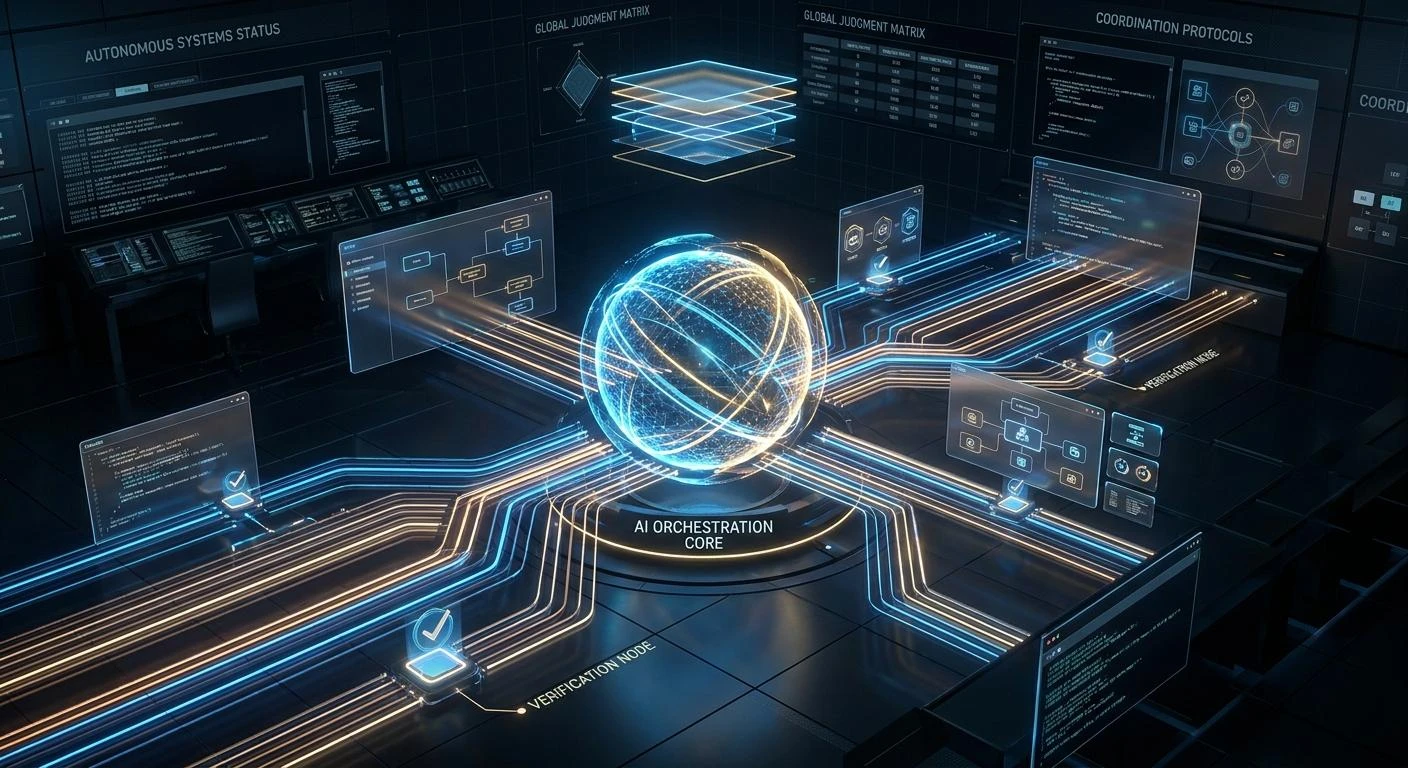
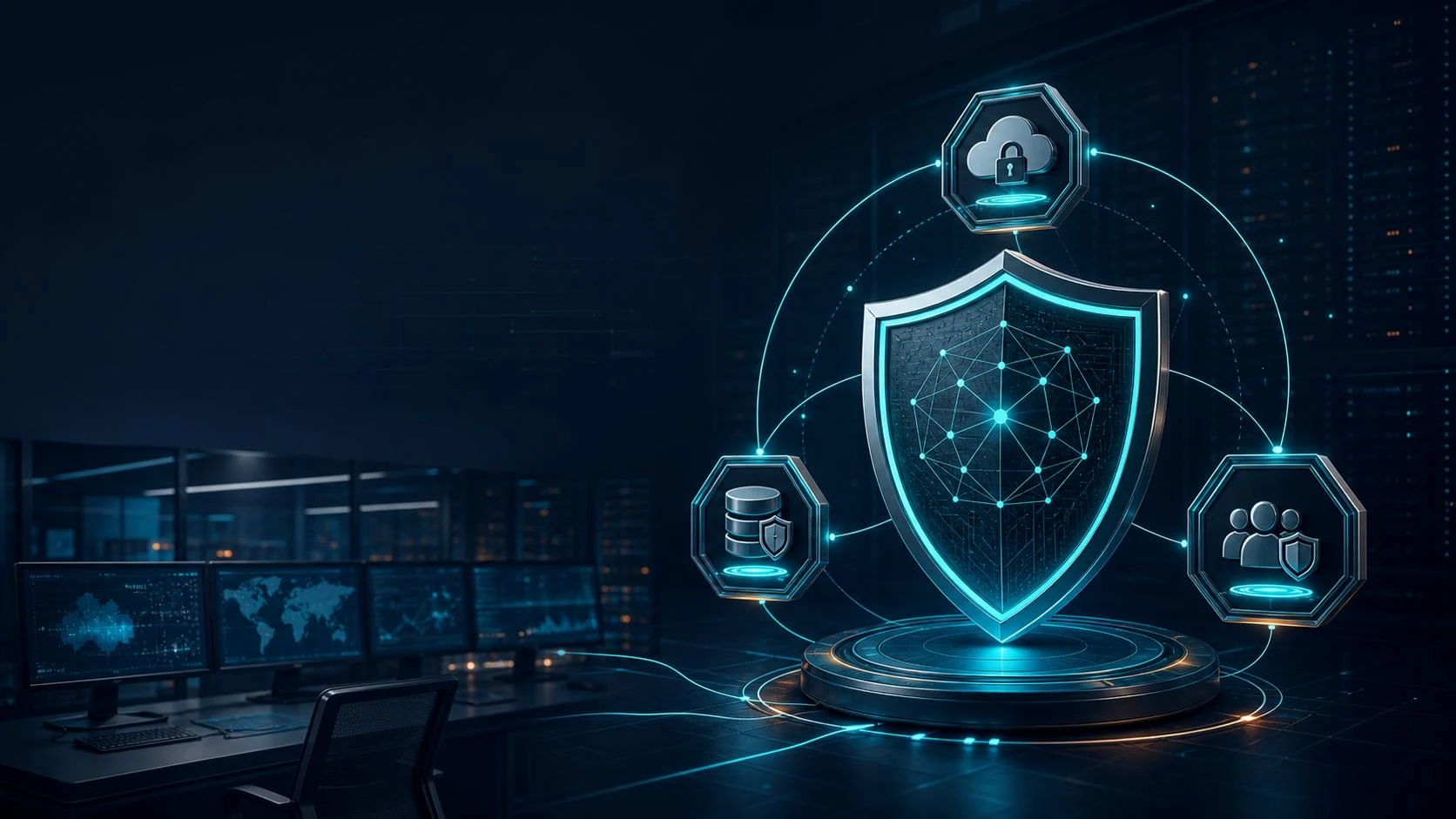
Access management is one of the most important safeguards. An agent should only have access to the data and tools required for its assigned task. Restricted permissions, separation of testing and production environments, activity logging, and explicit operational limits can reduce risk. External content must also be treated as data to evaluate rather than instructions that should automatically be executed.
Reliability is another major challenge. Agents must be evaluated against realistic scenarios, including unusual or unexpected conditions. Organizations should define when an agent must stop, when it must escalate a task to a human, and how an incorrect action can be reversed.
Pishgaman Lotus can incorporate security and oversight from the earliest stages of intelligent product development. Under this approach, autonomy becomes a controlled capability rather than unlimited permission to perform any operation.
How Businesses Can Prepare for the Age of Intelligent Agents
Preparing for intelligent agents does not begin with choosing the most advanced AI model. It starts with identifying business processes that offer the greatest potential for improvement. Organizations should determine which activities are repetitive, what data is available, and what consequences could arise from an incorrect result.
The next step is to define the agent's scope. A business might begin with a specific task, such as classifying customer requests or preparing draft reports. A prototype can then be developed and evaluated against measurable criteria, including time savings, cost reduction, and output quality. Once the results have been validated, integration with additional systems and a gradual expansion of the agent's authority can be considered.
Software integration, data quality, user experience design, and human oversight are all essential. By combining AI development, UI/UX design, software engineering, and infrastructure implementation, Pishgaman Lotus can help organizations move from experimental projects to practical, scalable products.
The most effective strategy is to progress from limited, measurable automation toward more sophisticated, multi-step agents. Businesses do not need to wait for AGI to emerge before benefiting from intelligent automation. Many valuable applications are already possible with existing technologies.

Conclusion
The Future of Automation Is Human–AI Collaboration
Intelligent agents are moving automation beyond fixed rules toward systems that can analyze information, plan toward objectives, and execute actions through software tools. AGI could eventually extend these capabilities toward broader and more flexible forms of intelligence, but the realization of such general intelligence remains uncertain.
For businesses today, competitive advantage depends on identifying appropriate use cases, designing reliable architectures, and managing operational risks. Pishgaman Lotus can support this transition through intelligent software development, application integration, and user-centered product design.
The future of automation does not necessarily mean eliminating the human role. A more realistic vision involves collaboration between people and intelligent systems, with agents handling repetitive tasks and multi-step analysis while sensitive decisions remain subject to appropriate human oversight and accountability.
Our articles:"AI Voice Cloning: Business Opportunities and Security Threats"
Blog Tags
Similar Blogs

AI Voice Deepfakes — How to Detect Audio Fraud and Prevent Voice Cloning Scams


AI Voice Cloning: Business Opportunities and Security Threats
The Future of Browsers: Replacing Traditional Search with AI
Have special project to begin?
Contact us if you need a unique website for your special requirements, if you think having a mobile application help you reach your business’s goals or you still do not recognize which product can help you implement your ideas. Lotus Pioneers accompany you to develop your business through consulting and by designing special products.