What Is the Difference Between Image Processing and Computer Vision?
Difference Between Image Processing and Computer Vision

Introduction
With the rapid growth of artificial intelligence technologies, terms like image processing and computer vision are being heard more than ever. Many people consider these two concepts to be the same, while in reality, there are important differences between them. Understanding these differences helps businesses choose more suitable solutions for industrial, security, medical, and smart automation projects.
In this article, Pishgaman Lotus specialists examine the differences between image processing and computer vision and introduce their applications.
What Is Image Processing?
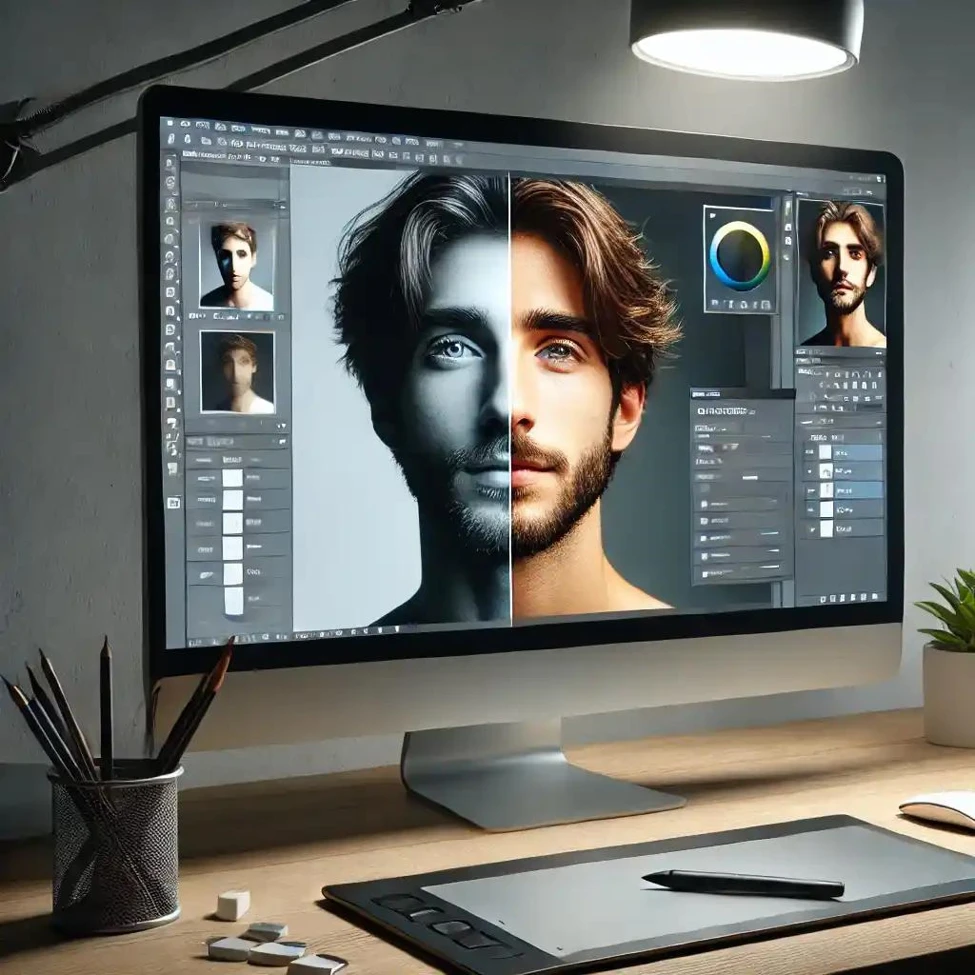
Image processing is a collection of techniques and algorithms used to enhance, modify, or extract information from digital images.
The main goal of image processing is to transform or analyze an image in order to achieve better quality or extract specific features.
Some common image processing operations include:
- Image enhancement
- Noise reduction
- Brightness and contrast adjustment
- Image resizing
- Edge detection
- Image filtering
For example, when surveillance cameras sharpen blurry images or medical software improves the quality of MRI scans, image processing techniques are being used.
What Is Computer Vision?
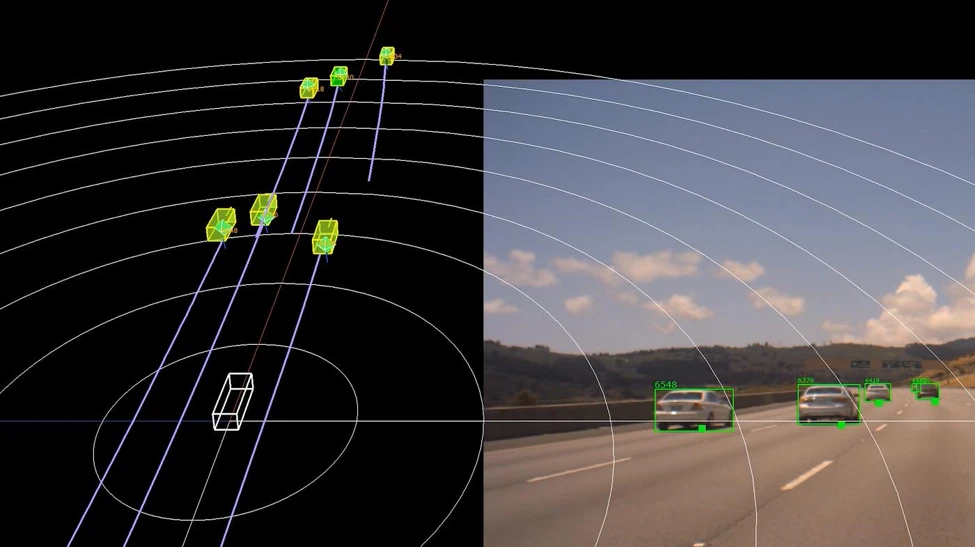
Computer vision is a branch of artificial intelligence that enables systems to understand and interpret images and videos similarly to humans.
In fact, computer vision goes a step beyond image processing. It not only processes images but also recognizes their meaning and content.
Key capabilities of computer vision include:
- Face detection
- Object recognition
- License plate recognition
- People counting
- Detection of defective products
- Human behavior analysis
- Motion and activity recognition
Smart solutions provided by Pishgaman Lotus in the field of computer vision help organizations manage monitoring and control processes intelligently.
The Main Difference Between Image Processing and Computer Vision
To better understand:
Image Processing = Preparing the image
Computer Vision = Understanding and interpreting the image
In other words, image processing is usually one of the initial stages in computer vision systems.
Simple Example
Imagine a camera installed on a factory production line:
- If the system only enhances the image or removes noise, it is performing image processing.
- If the system can detect defective products and remove them from the production line, it is using computer vision.
Comparison Between Image Processing and Computer Vision
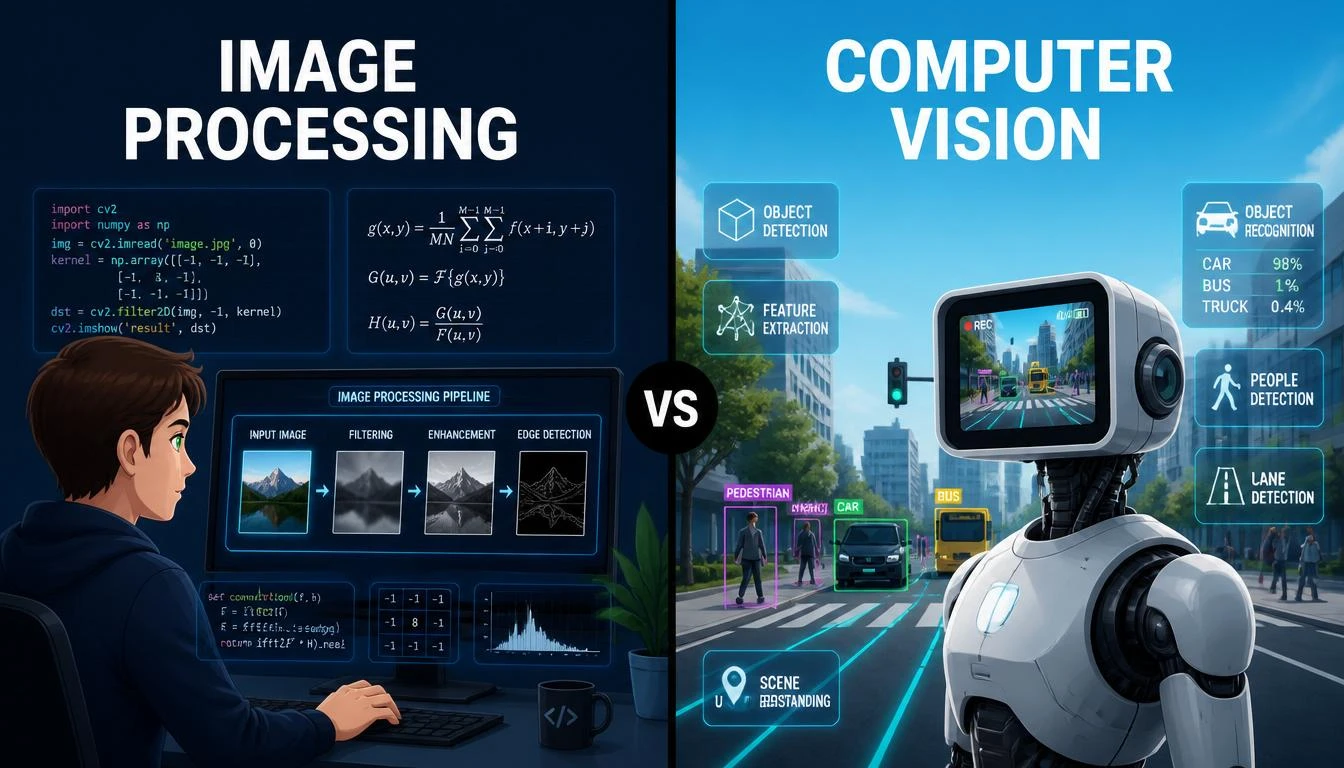
Although closely related, image processing and computer vision serve different purposes.
Image processing mainly focuses on enhancing, correcting, and preparing images. Its output is usually an improved image or a set of extracted features. Therefore, it is often considered a preliminary step for visual data analysis.
In contrast, computer vision goes beyond image enhancement and aims to understand and interpret the content of images. Its output can be object detection, identity recognition, event analysis, or even intelligent decision-making. For this reason, computer vision relies more heavily on artificial intelligence and machine learning algorithms and is technically more complex.
In simple terms:
- If the goal is to improve image quality, remove noise, or adjust colors → use image processing.
- If the goal is to detect faces, identify defective products, read license plates, or analyze behavior → use computer vision.
In essence, image processing helps systems “see better,” while computer vision helps them “understand what they see.”
Applications of Image Processing
- Medical Field
Enhancing radiology, MRI, and CT scan images. - Satellite Imaging and Mapping
Improving satellite image resolution and analyzing geographic data. - Security Systems
Enhancing CCTV footage for better detail visibility. - Photography and Media
Noise reduction, color correction, and digital image enhancement. 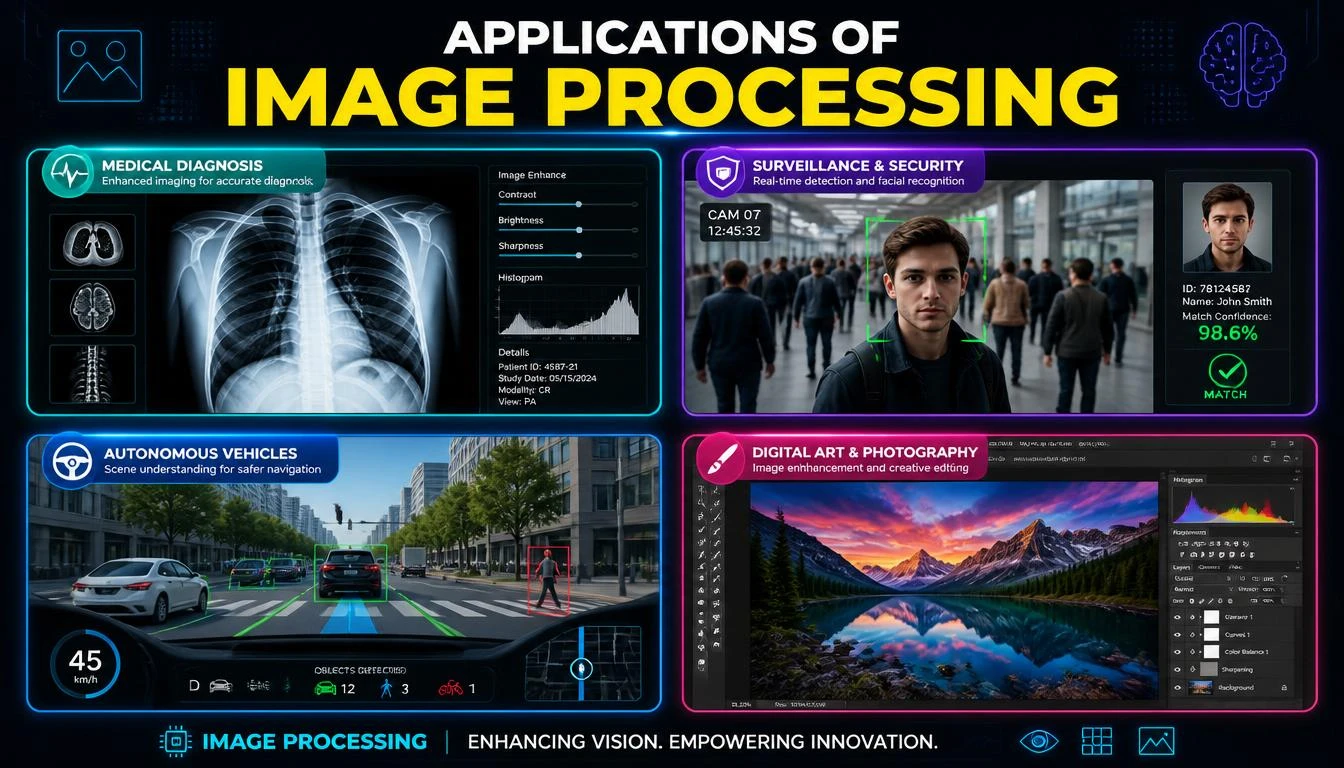
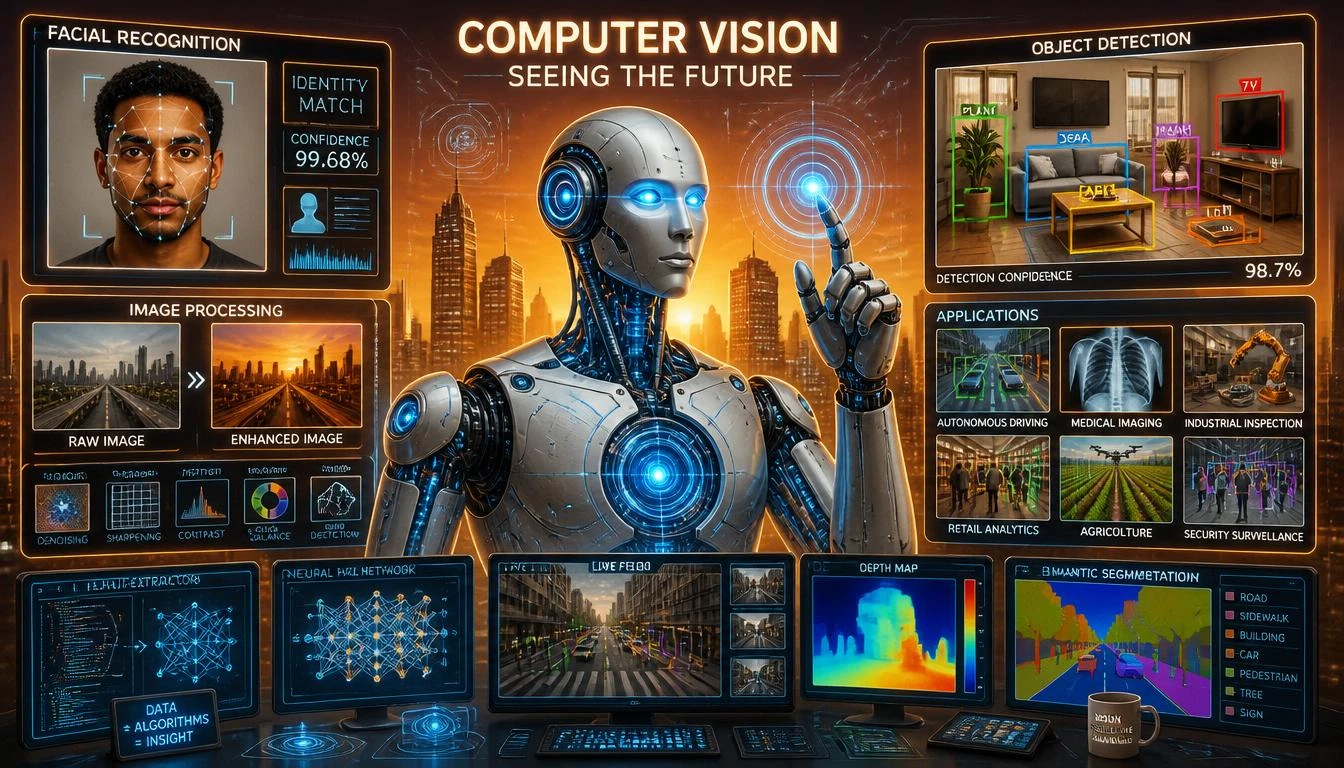
Applications of Computer Vision
- Industrial Quality Control
Automatic detection of defective products in production lines. - Smart Cities
Traffic monitoring, license plate recognition, and driver behavior analysis. - Security and Surveillance
Face recognition and identification in sensitive environments. - Smart Retail
Customer behavior analysis and intelligent inventory management. - Autonomous Vehicles
Detection of obstacles, traffic signs, and navigation paths.
Lotus Pioneers leverages advanced AI and computer vision technologies to provide innovative solutions for industries, organizations, and security centers, enabling faster and more accurate monitoring and decision-making.
Relationship Between Image Processing and Computer Vision
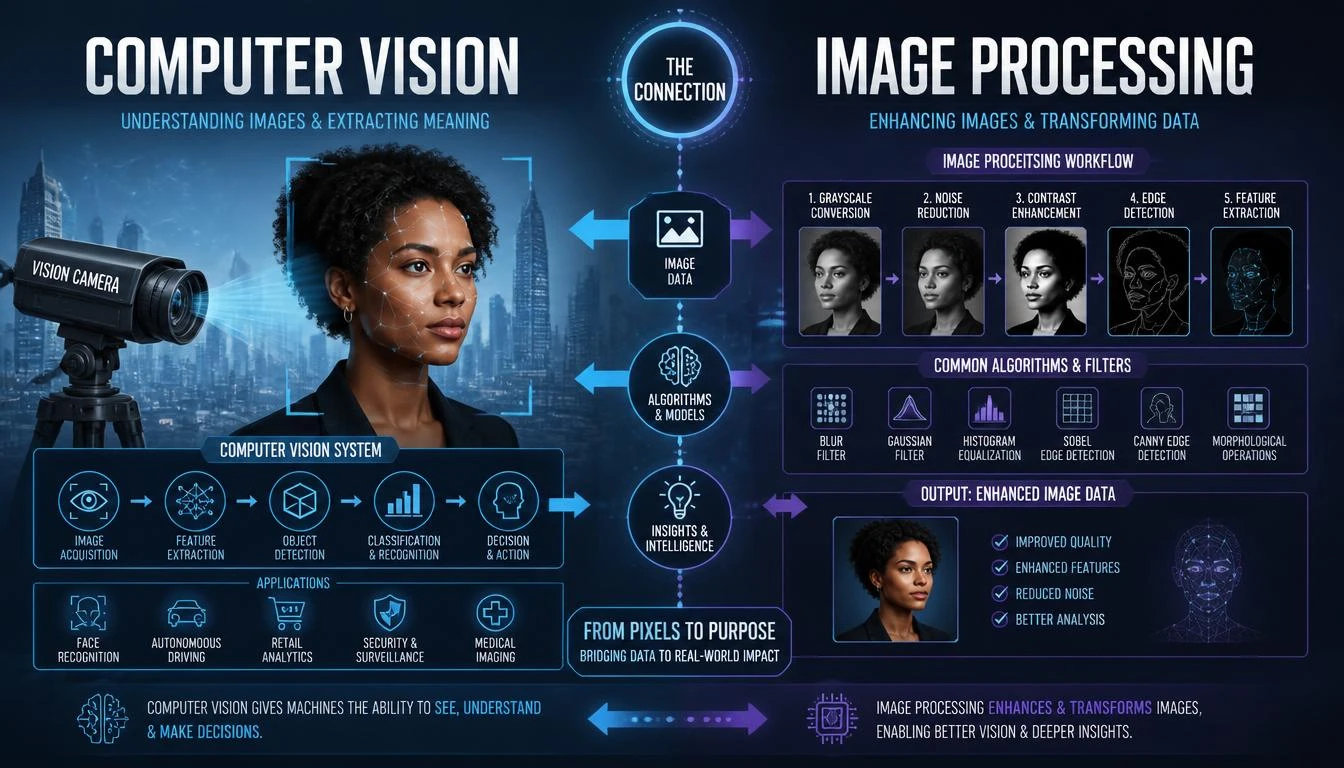
These two technologies are not competitors—they complement each other.
In most computer vision projects, image processing is performed first to prepare visual data for analysis. Then, artificial intelligence and machine learning algorithms interpret the images.
Therefore, the success of a computer vision system largely depends on the quality of the image processing stage.
Conclusion
Image processing and computer vision are two important and interconnected technologies in the field of artificial intelligence. Image processing focuses on improving and preparing images, while computer vision aims to understand image content and make decisions based on it.
With the continuous advancement of AI, the use of these technologies is rapidly expanding across industries. Pishgaman Lotus, by offering specialized solutions in image processing, computer vision, and industrial automation, helps organizations benefit from digital transformation and intelligent automation.
Have special project to begin?
Contact us if you need a unique website for your special requirements, if you think having a mobile application help you reach your business’s goals or you still do not recognize which product can help you implement your ideas. Lotus Pioneers accompany you to develop your business through consulting and by designing special products.