Using Artificial Intelligence in Mobile Apps (From Chatbots to Image Recognition)
Using Artificial Intelligence in Mobile Apps

In recent years, Artificial Intelligence (AI) has become one of the most important driving forces behind technological transformation. If AI was once limited to research labs and large corporations, today it sits right in our pockets—inside mobile applications. From intelligent chatbots to advanced image recognition systems, AI has revolutionized user experience and set new standards.In this article, we take a deep and professional look at how AI is used in mobile apps, its advantages, and what the future holds.

Smart Chatbots: Always-On Assistants
One of the most common uses of AI in mobile apps is chatbots. These bots use Natural Language Processing (NLP) to simulate human-like conversations.
Applications:
Customer support
Automated responses in e-commerce apps
Personal assistants (task reminders, scheduling)
Today, many innovative companies like “Pishgaman Lotus” integrate smart chatbots into their software projects to increase user engagement. This reduces support costs while improving customer satisfaction.
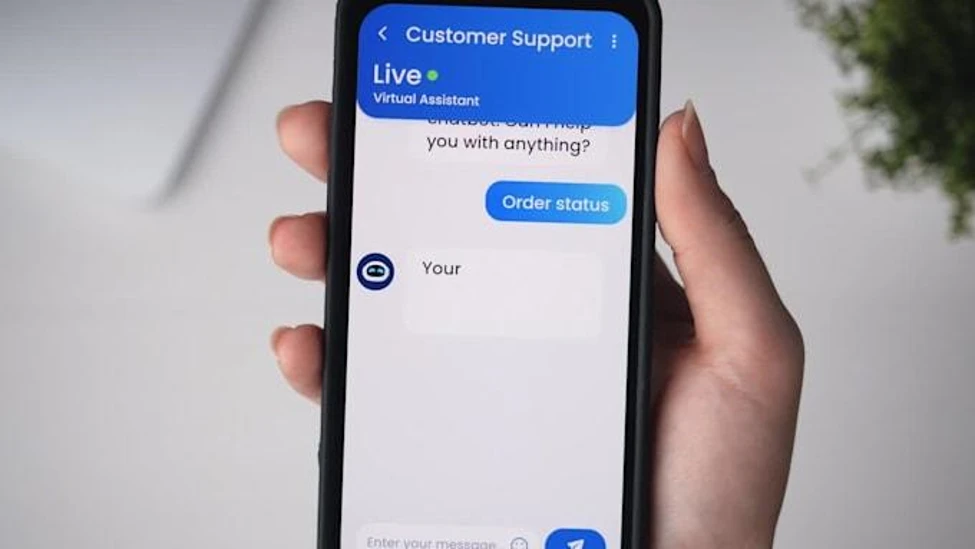
Image Recognition: When Your Phone Sees and Understands
Image recognition is another exciting AI application in mobile apps. This technology allows apps to analyze images and extract meaningful information.
Use cases:
Face recognition
Optical Character Recognition (OCR)
Object and product detection
Medical image analysis
For example, apps that identify plants using your camera or detect product prices from images rely on this technology.
Companies like “Pishgaman Lotus” have developed computer vision–based solutions that elevate user experience to a whole new level.

Machine Learning: The Brain Behind Smart Apps
Machine Learning enables apps to learn from user behavior and continuously improve their performance.
Examples:
Movie and music recommendations
Product suggestions in online stores
Personalized content feeds
This technology ensures each user gets a unique experience. Many professional development teams, including those associated with “Pishgaman Lotus,” focus on implementing intelligent algorithms to make apps more accurate and efficient.
Voice Processing and Commands
Today, users prefer speaking to their devices instead of typing. This is where AI shines.
Applications:
Speech-to-text conversion
Voice assistants
Real-time translation
These features are especially useful in service and educational apps, providing faster and more convenient interactions.
Benefits of AI in Mobile Apps
Using AI offers many advantages:
Faster and more accurate performance
Personalized user experience
Reduced operational costs
Increased user engagement
Big data analysis
That’s why many companies—from startups to organizations like “Pishgaman Lotus”—are heavily investing in this field.
The Future of AI in Mobile Apps
The future of mobile apps is undeniably tied to AI. Some emerging trends include:
On-device AI (Edge AI) without internet dependency
Integration of AI with Augmented Reality (AR)
Fully self-learning applications
More natural human-machine interaction
In this evolving landscape, companies like “Pishgaman Lotus” can play a key role in developing advanced and localized solutions.
Conclusion
Artificial Intelligence is no longer a futuristic or luxury technology—it has become a fundamental pillar in modern mobile app development. Today, users expect applications not only to be fast and visually appealing but also intelligent—capable of understanding their needs, analyzing their behavior, and delivering highly personalized experiences.
From smart chatbots that simplify communication between users and services, to advanced image recognition systems that transform the real world into analyzable data, and machine learning algorithms that continuously learn and optimize—AI has clearly become the beating heart of mobile applications.
Importantly, the impact of AI goes far beyond user experience. It empowers businesses to make more accurate decisions, reduce operational costs, automate processes, and ultimately gain a strong competitive advantage. That is why many forward-thinking companies, including organizations like “Pishgaman Lotus,” are heavily investing in AI-driven solutions and innovations.
Looking deeper into the future, we can envision a world where applications are no longer just tools, but intelligent assistants capable of decision-making. Apps will understand user behavior, provide highly relevant recommendations, and even anticipate needs before users explicitly express them.
Therefore, adopting Artificial Intelligence is no longer optional—it is a strategic necessity. Businesses that embrace this transformation early will have a significantly higher chance of success, growth, and sustainability in an increasingly competitive market. On the other hand, ignoring this shift could mean falling behind in a rapidly evolving digital landscape shaped by AI.
Our article:"The Future of Mobile Development in 2026: Trends That Will Change the Game"
برچسبهای بلاگ
Have special project to begin?
Contact us if you need a unique website for your special requirements, if you think having a mobile application help you reach your business’s goals or you still do not recognize which product can help you implement your ideas. Lotus Pioneers accompany you to develop your business through consulting and by designing special products.